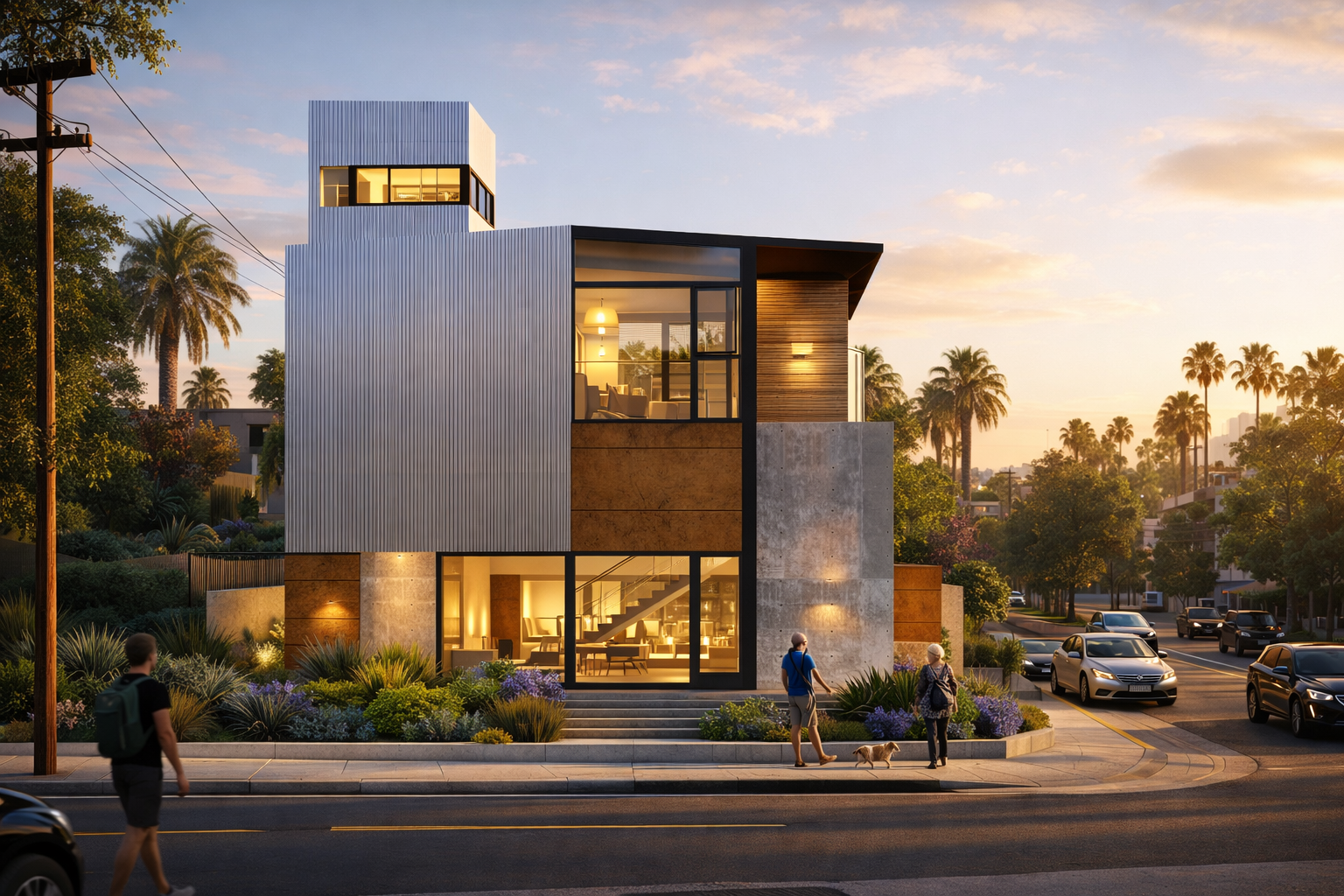
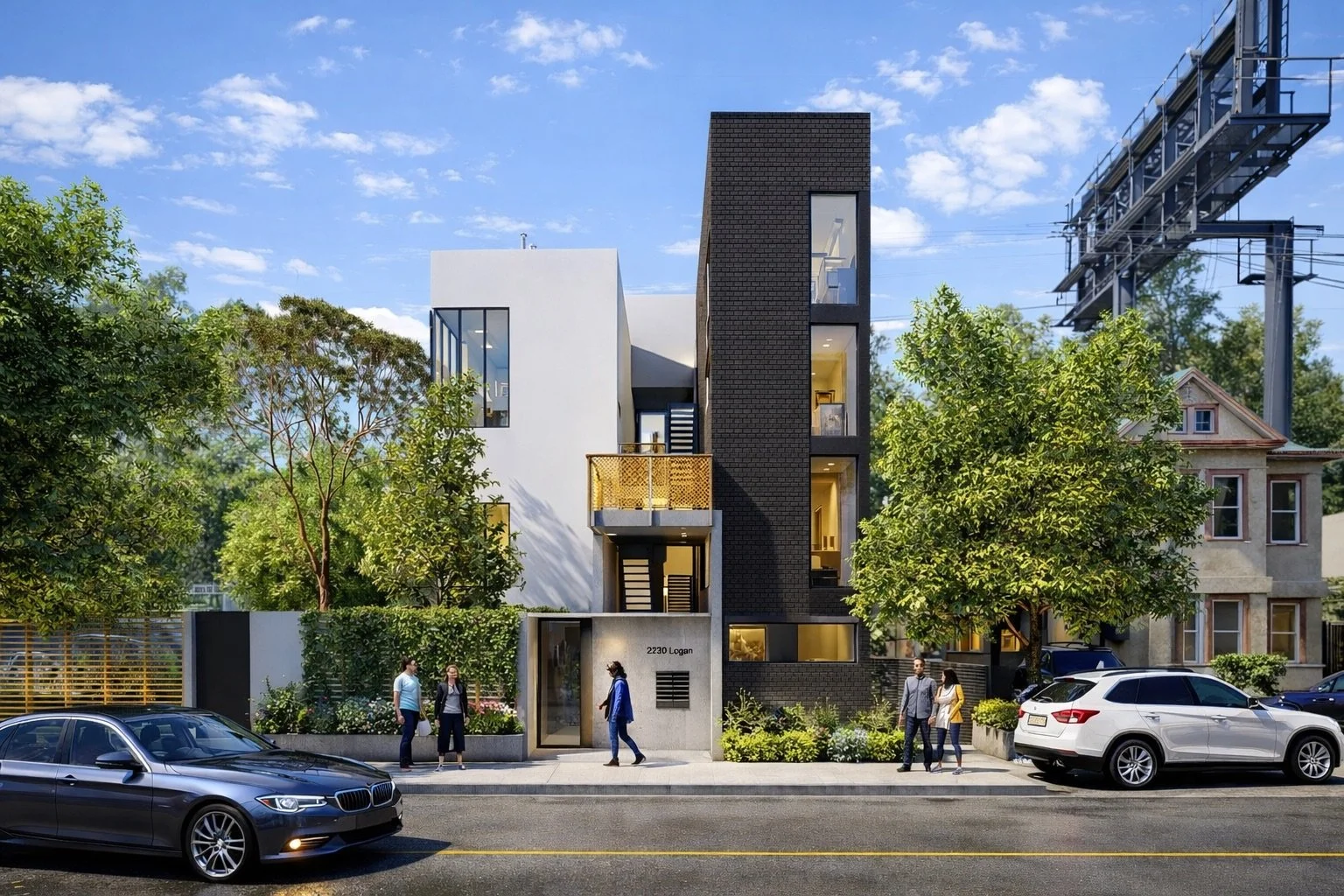
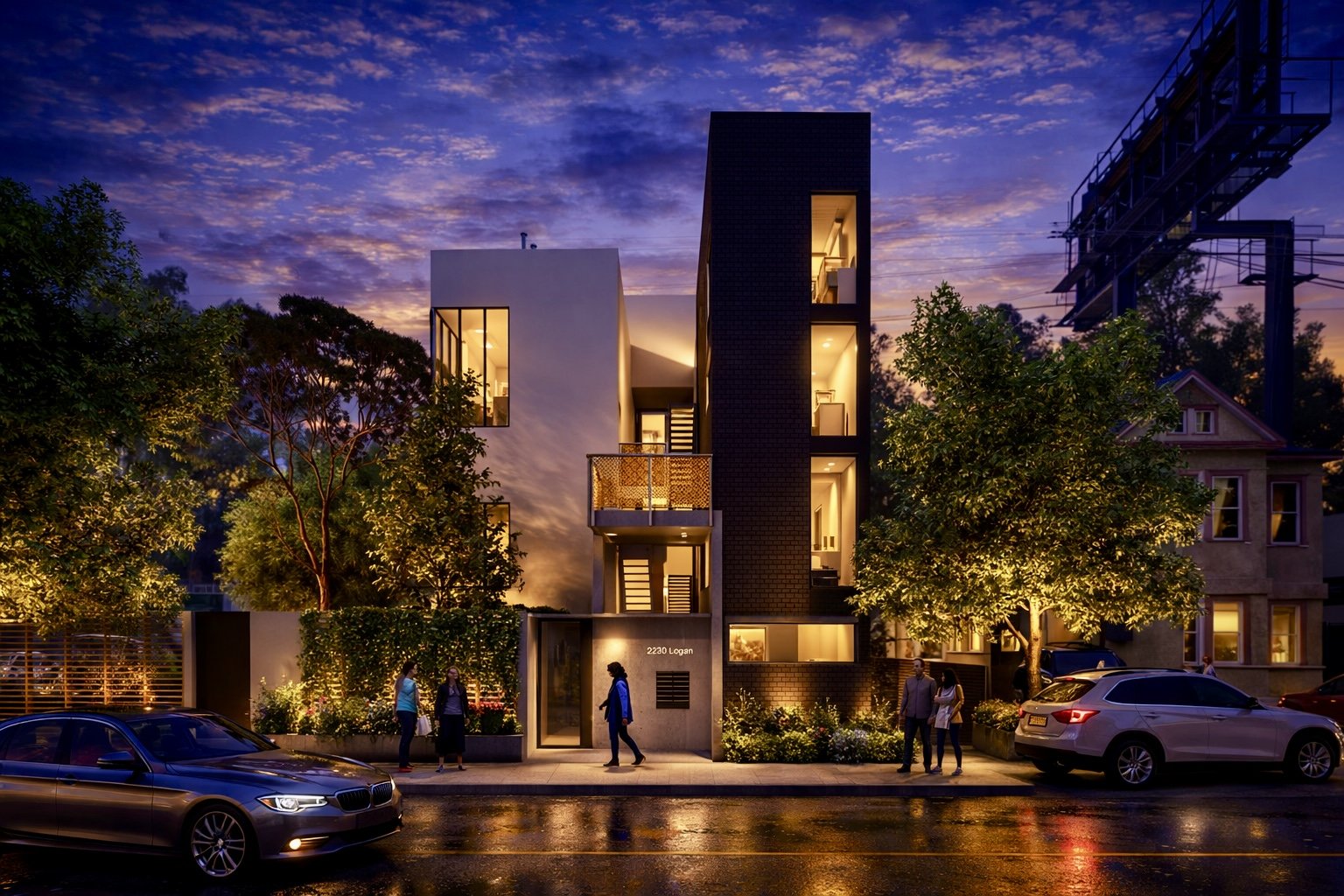
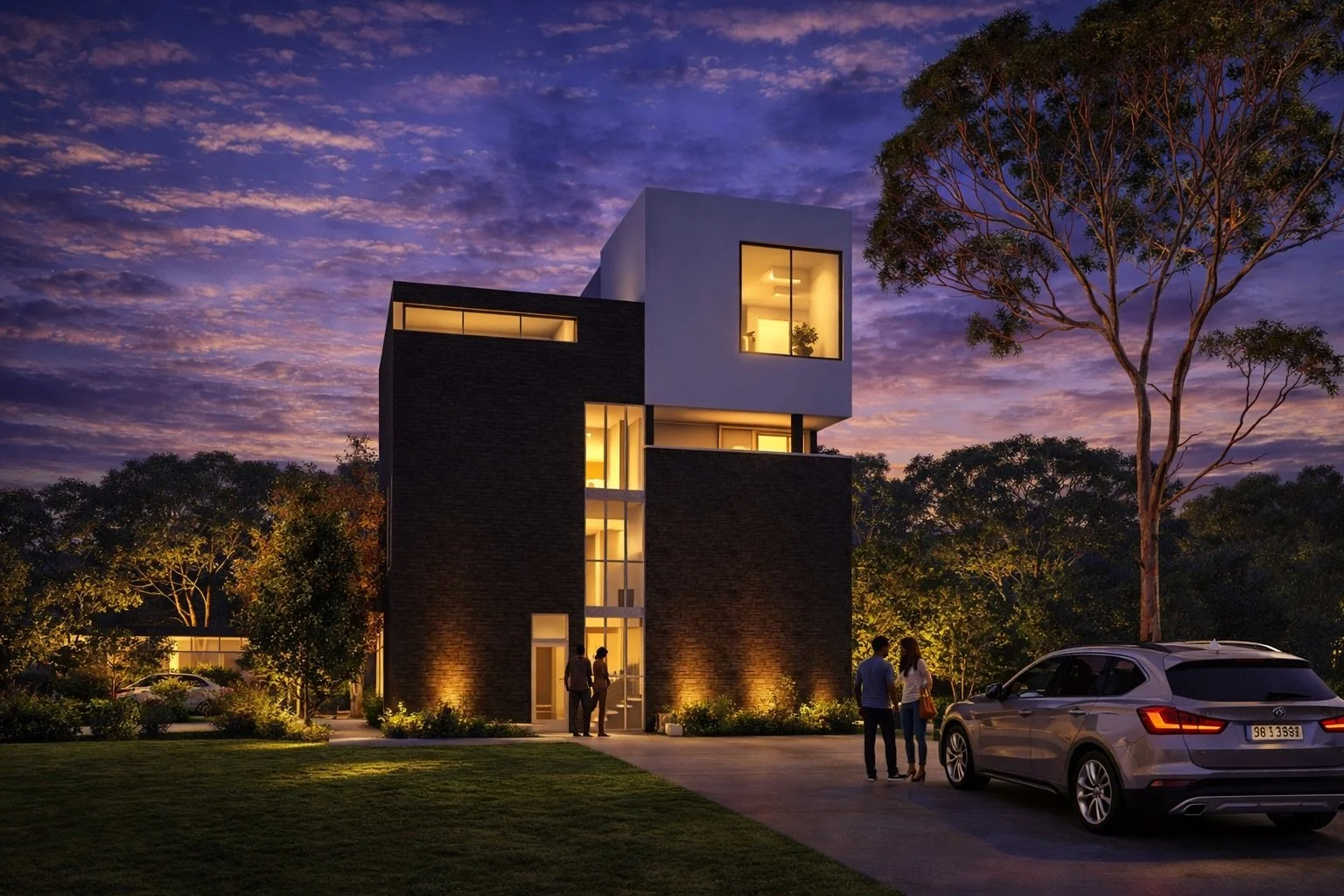
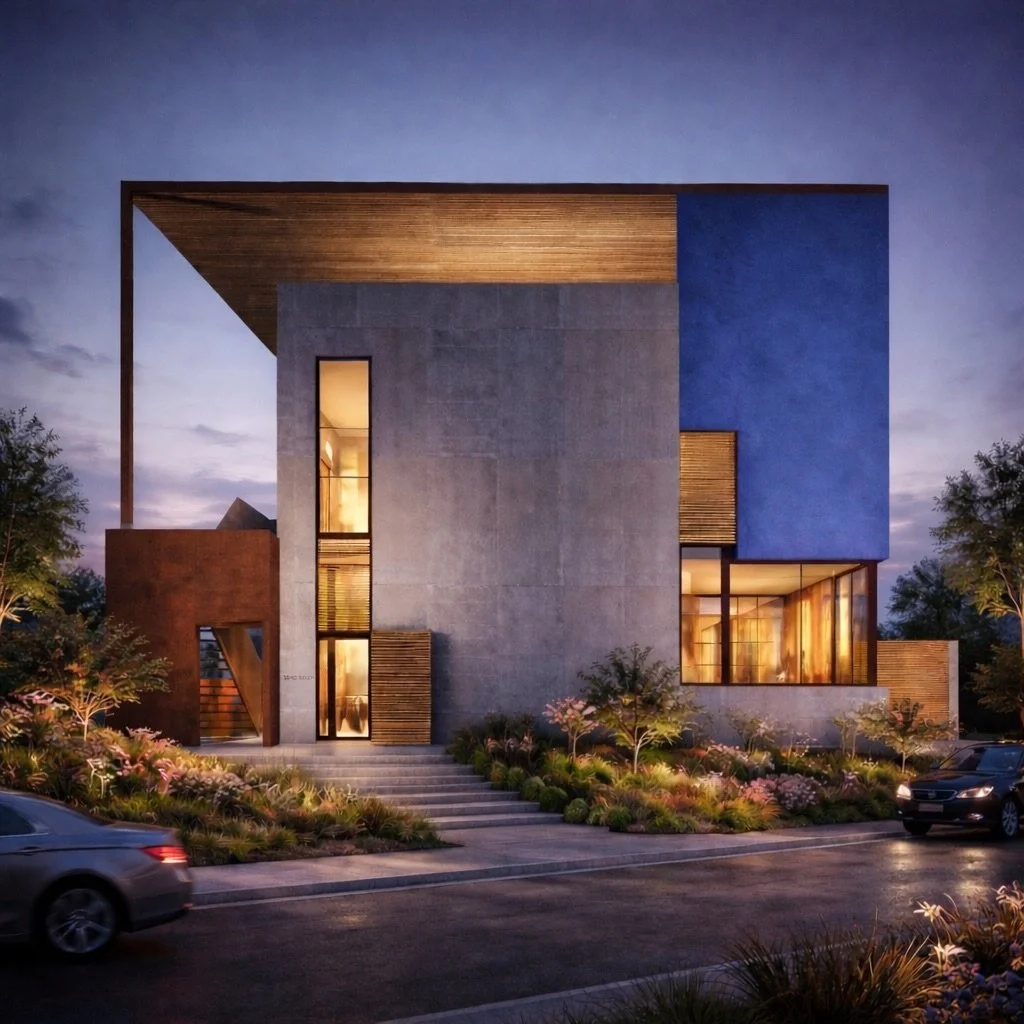
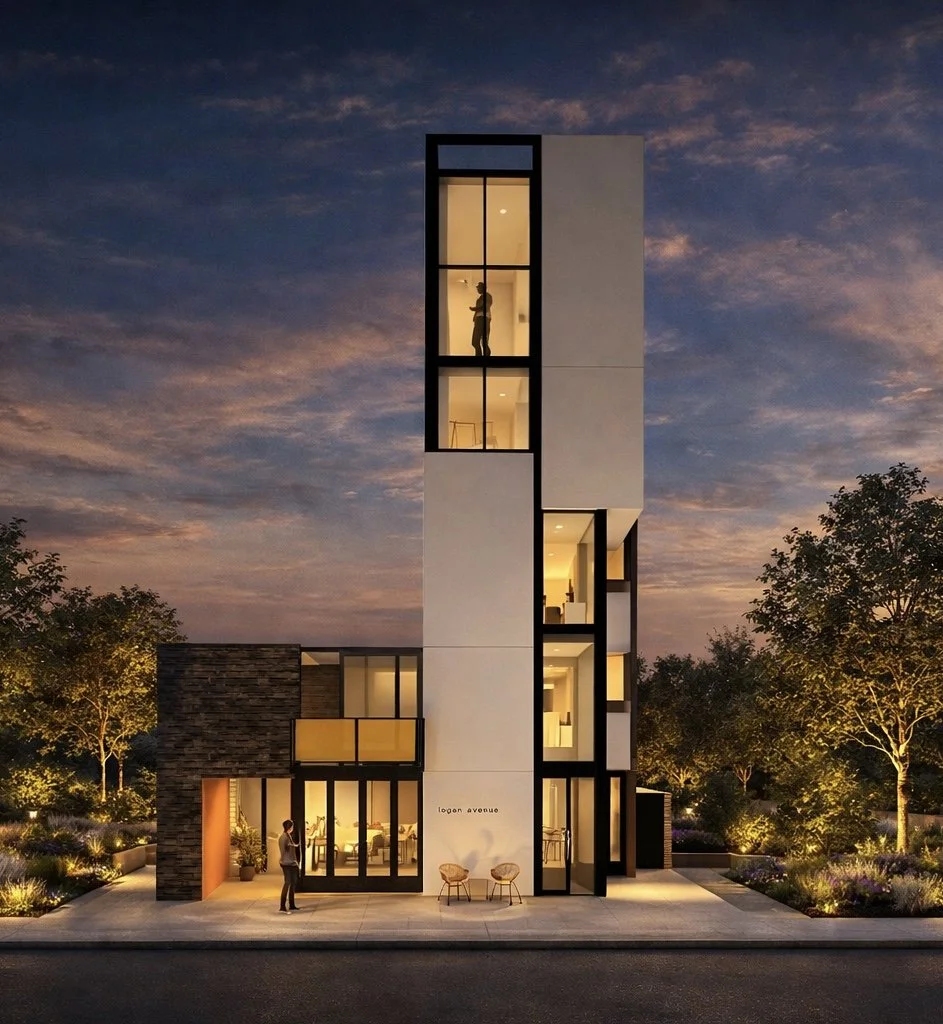
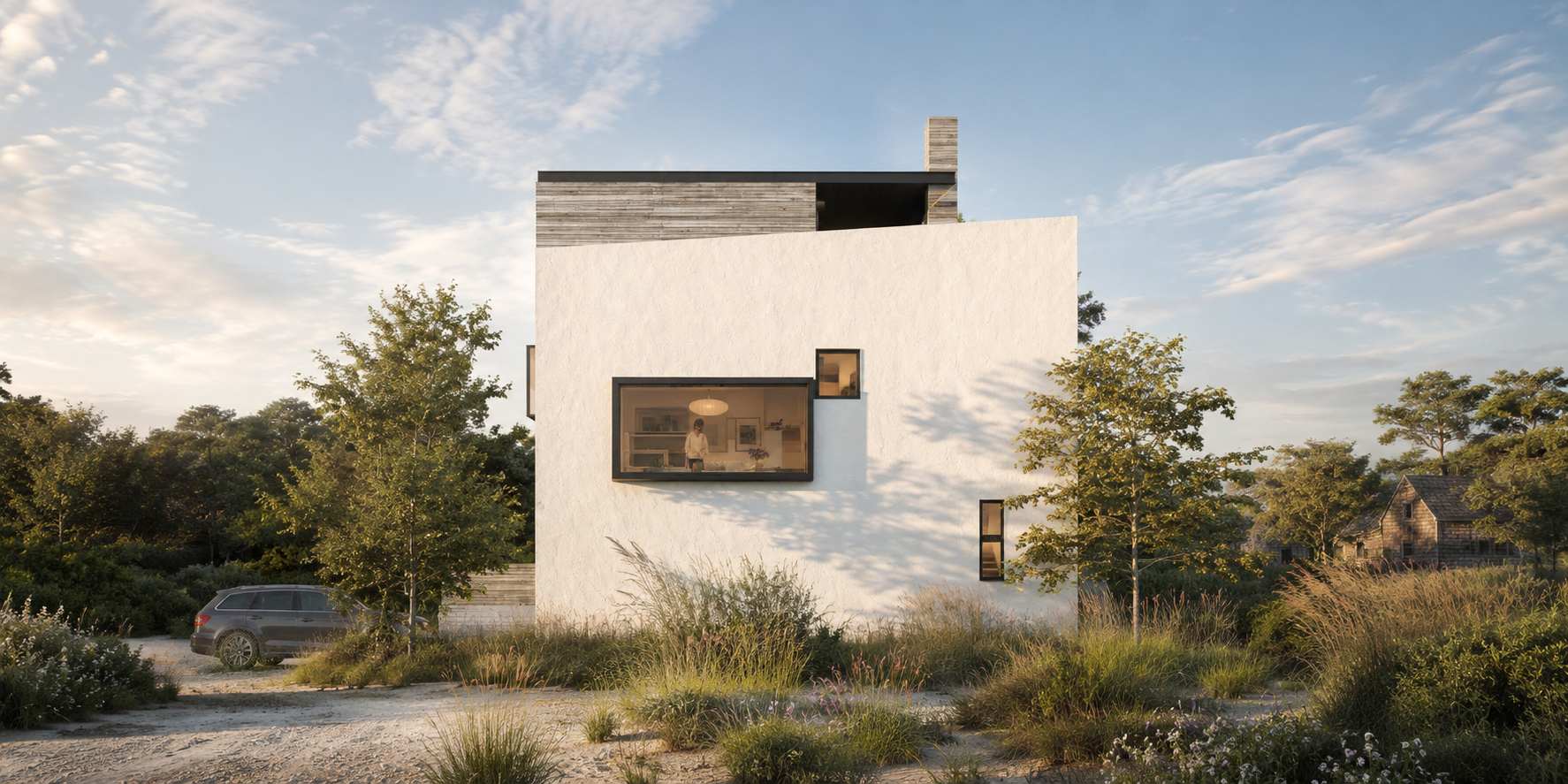
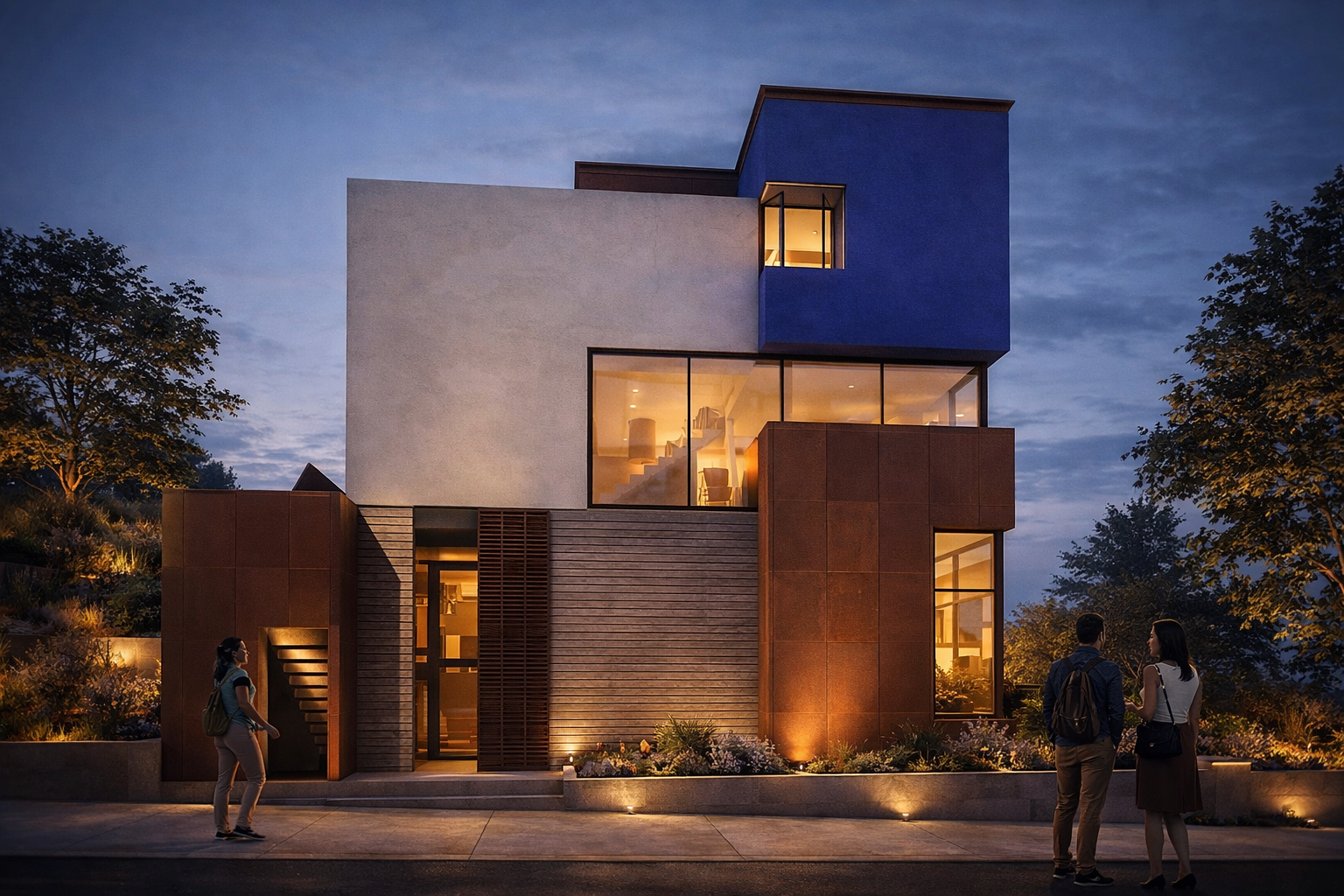
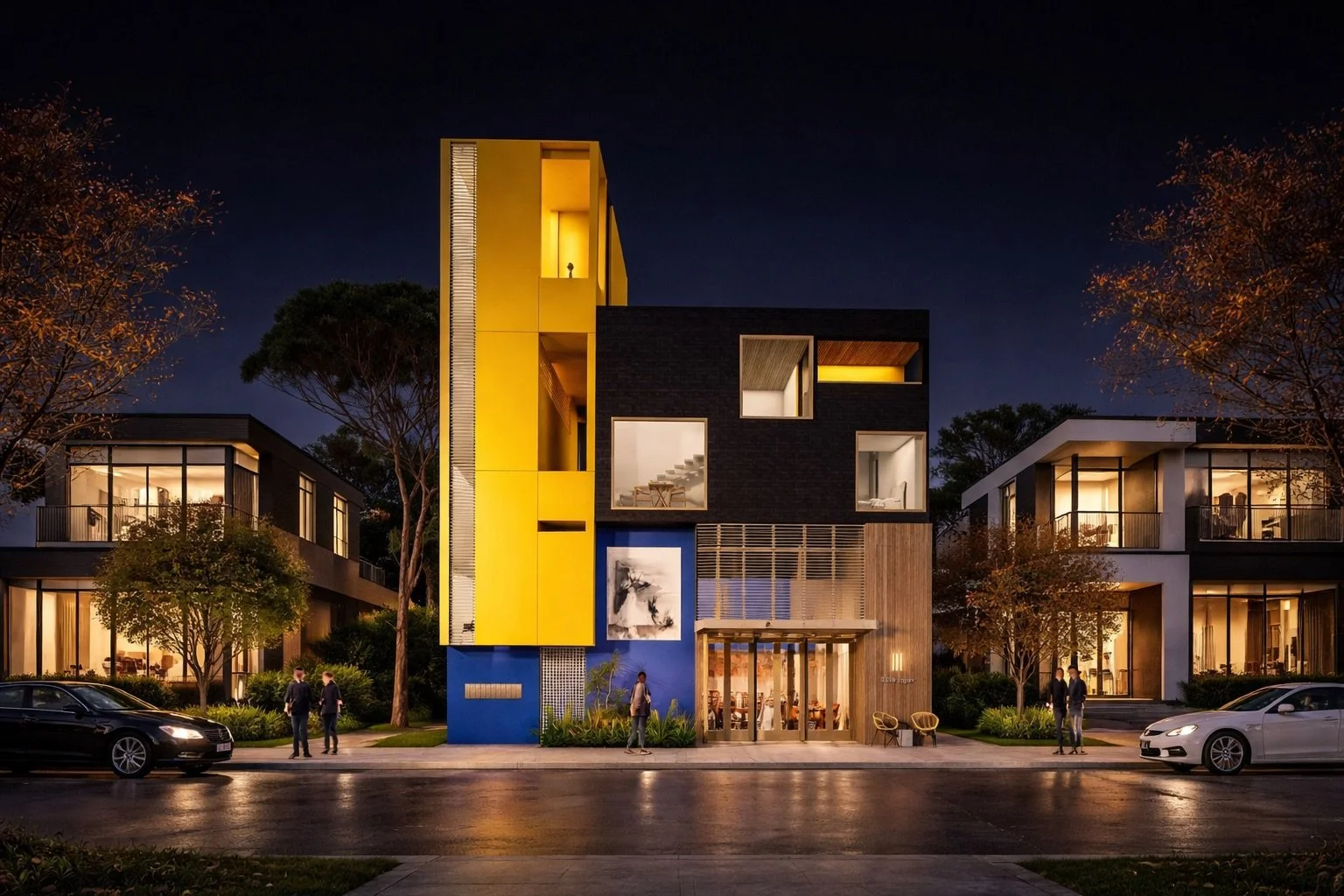
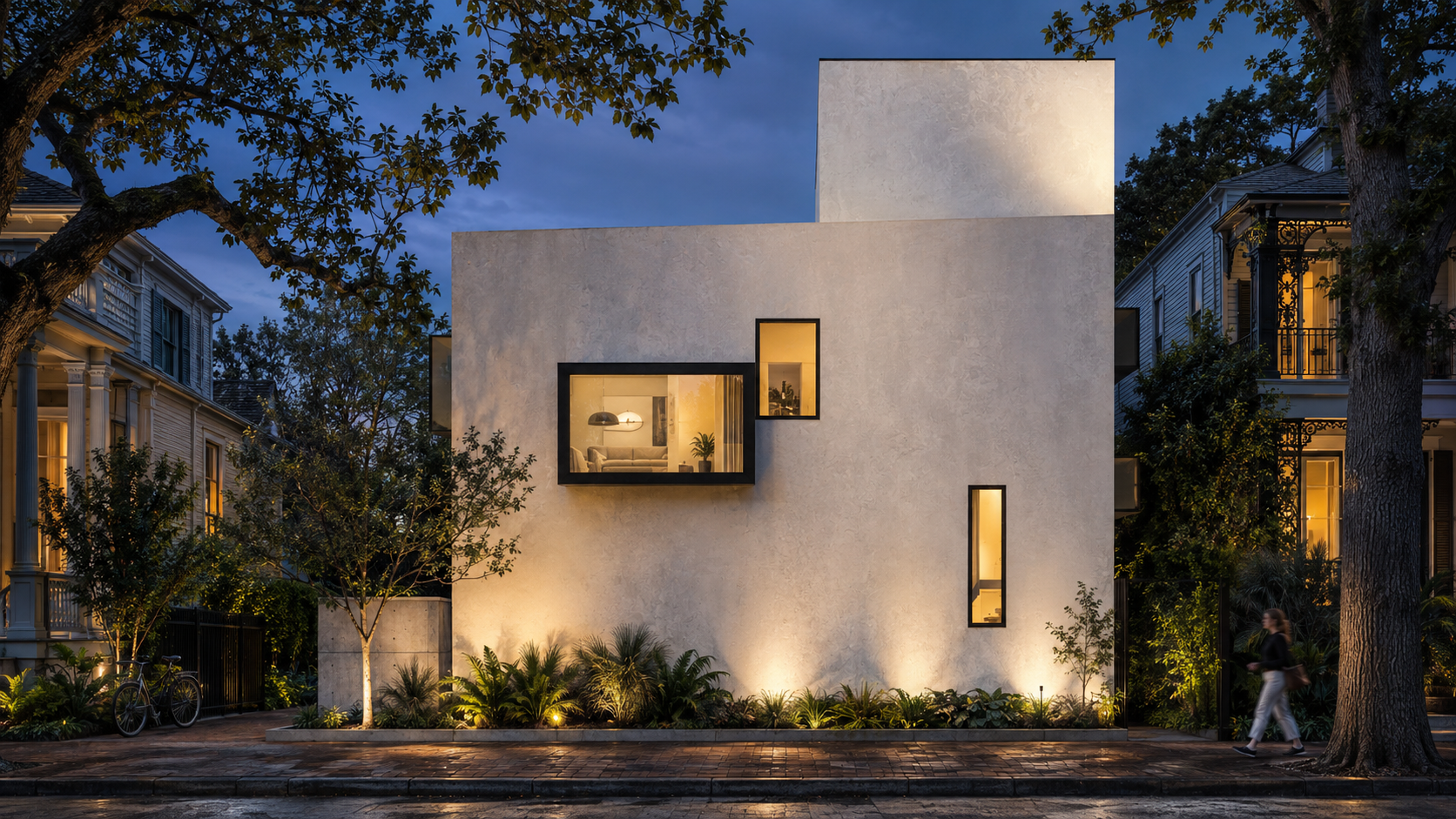
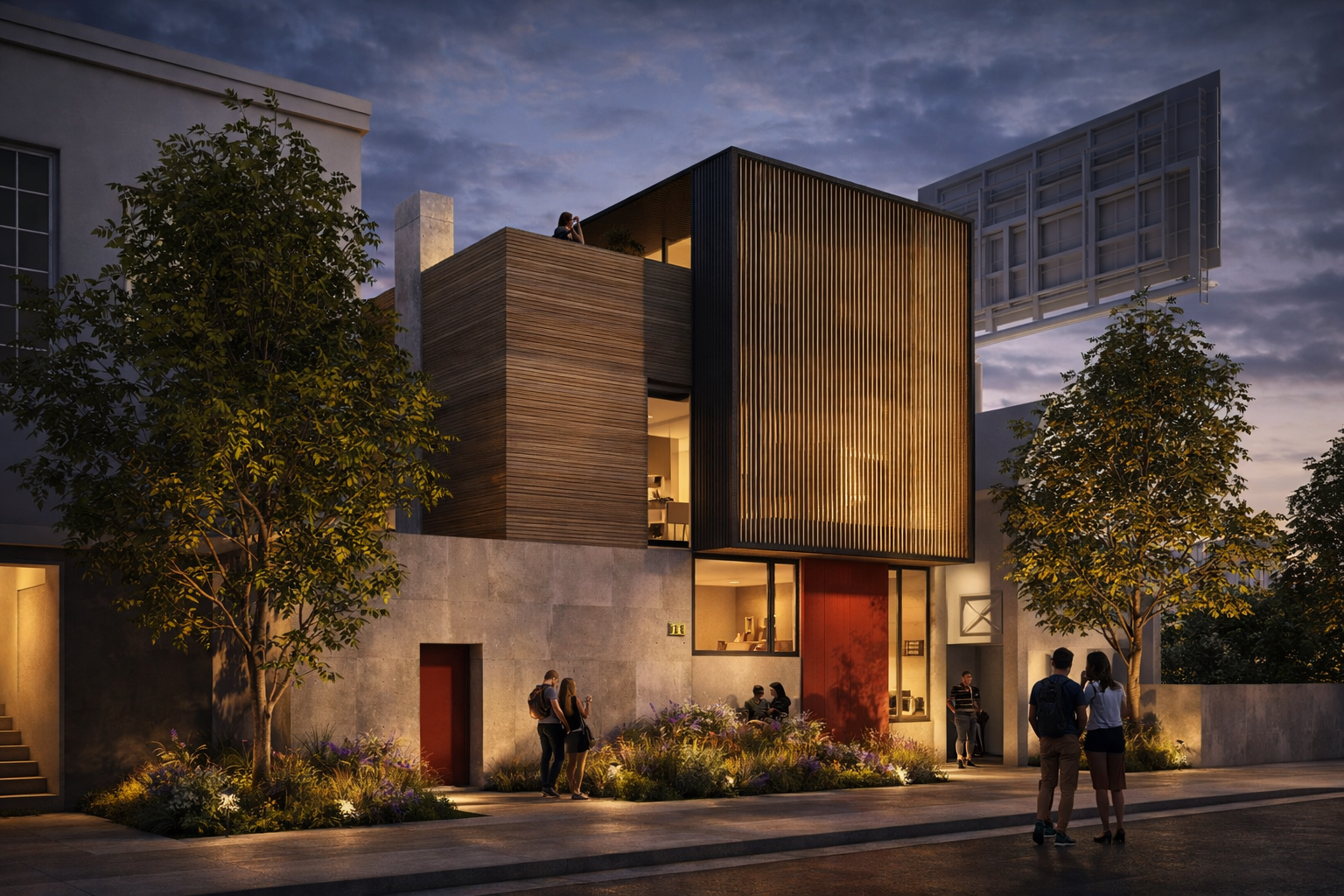
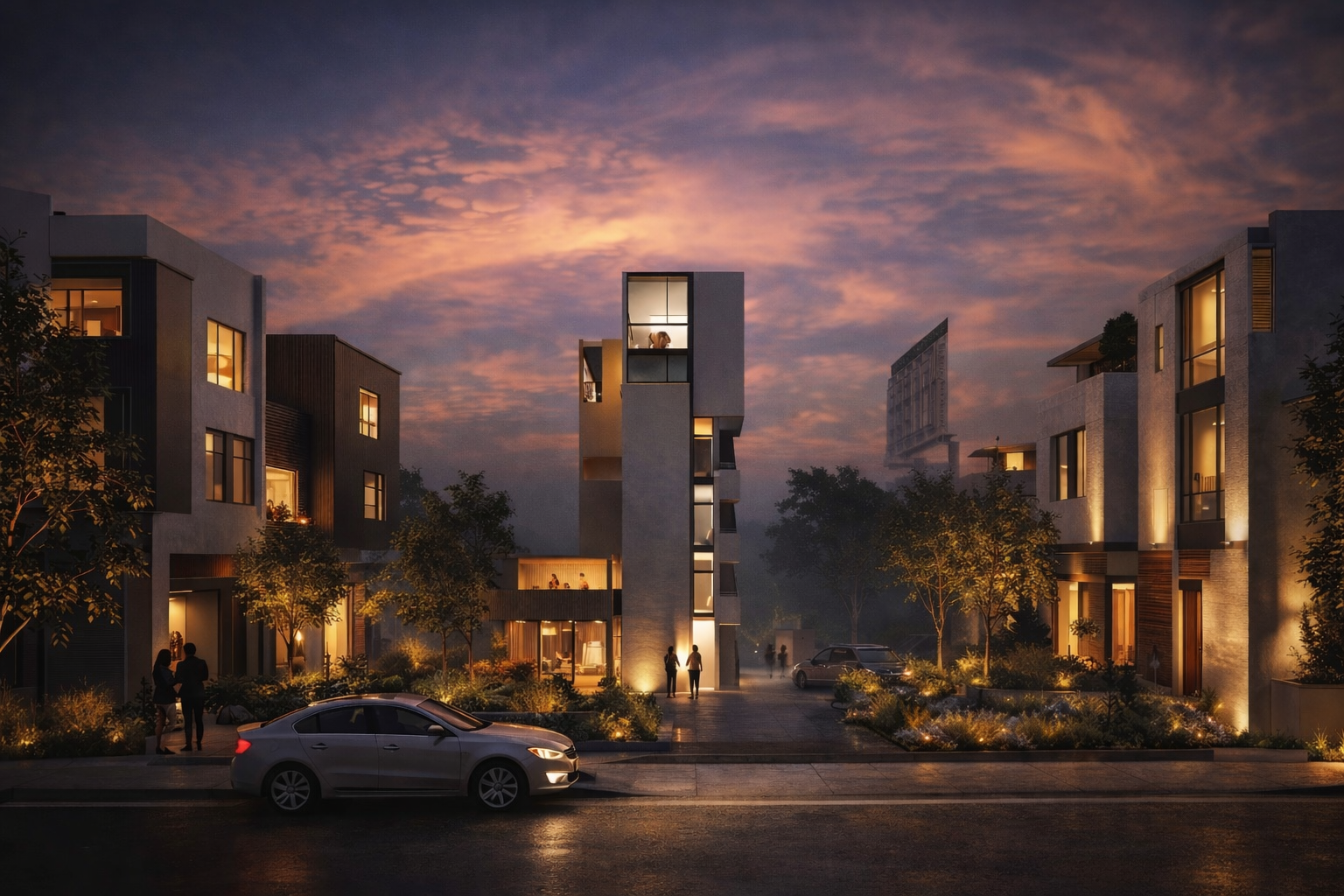
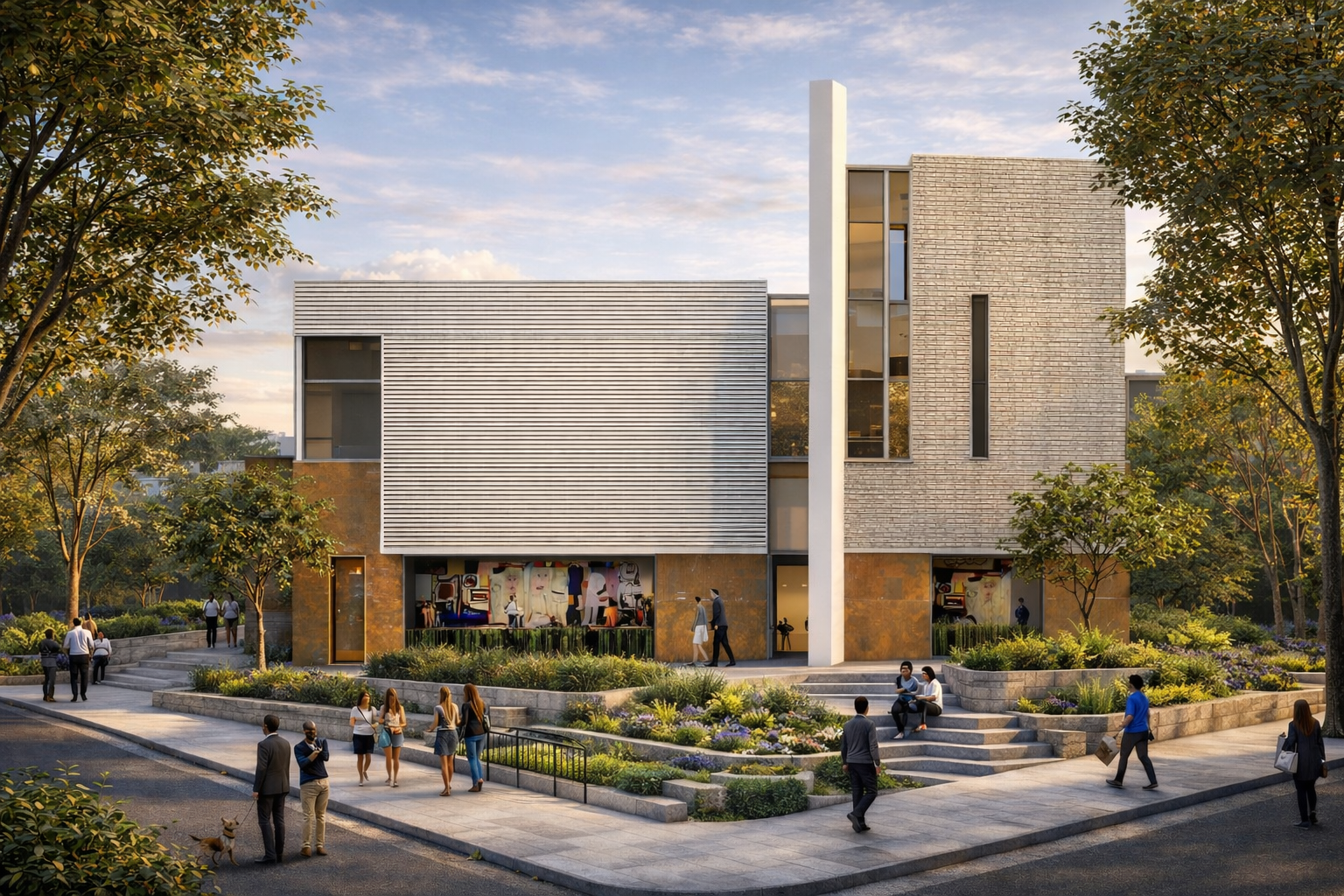
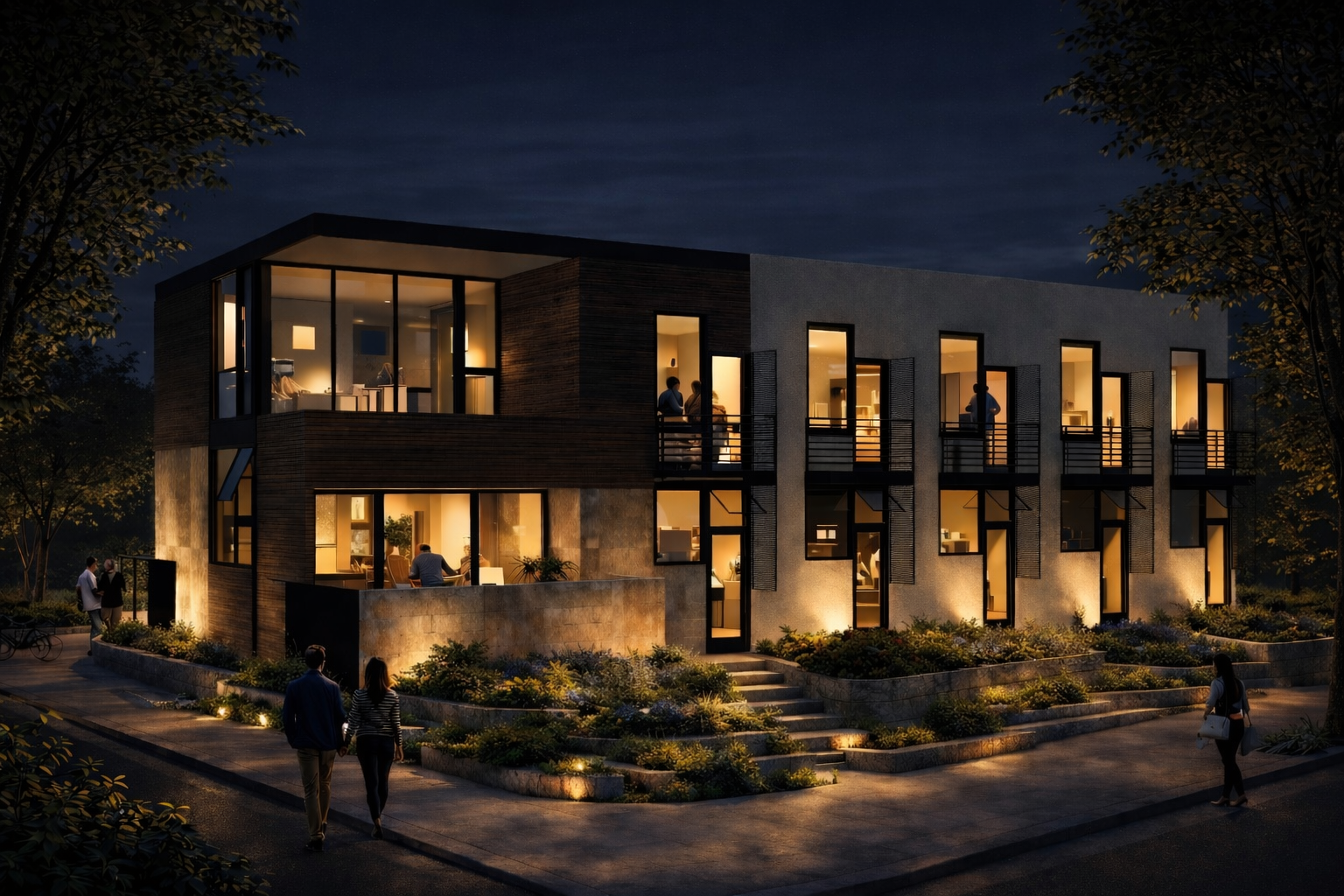
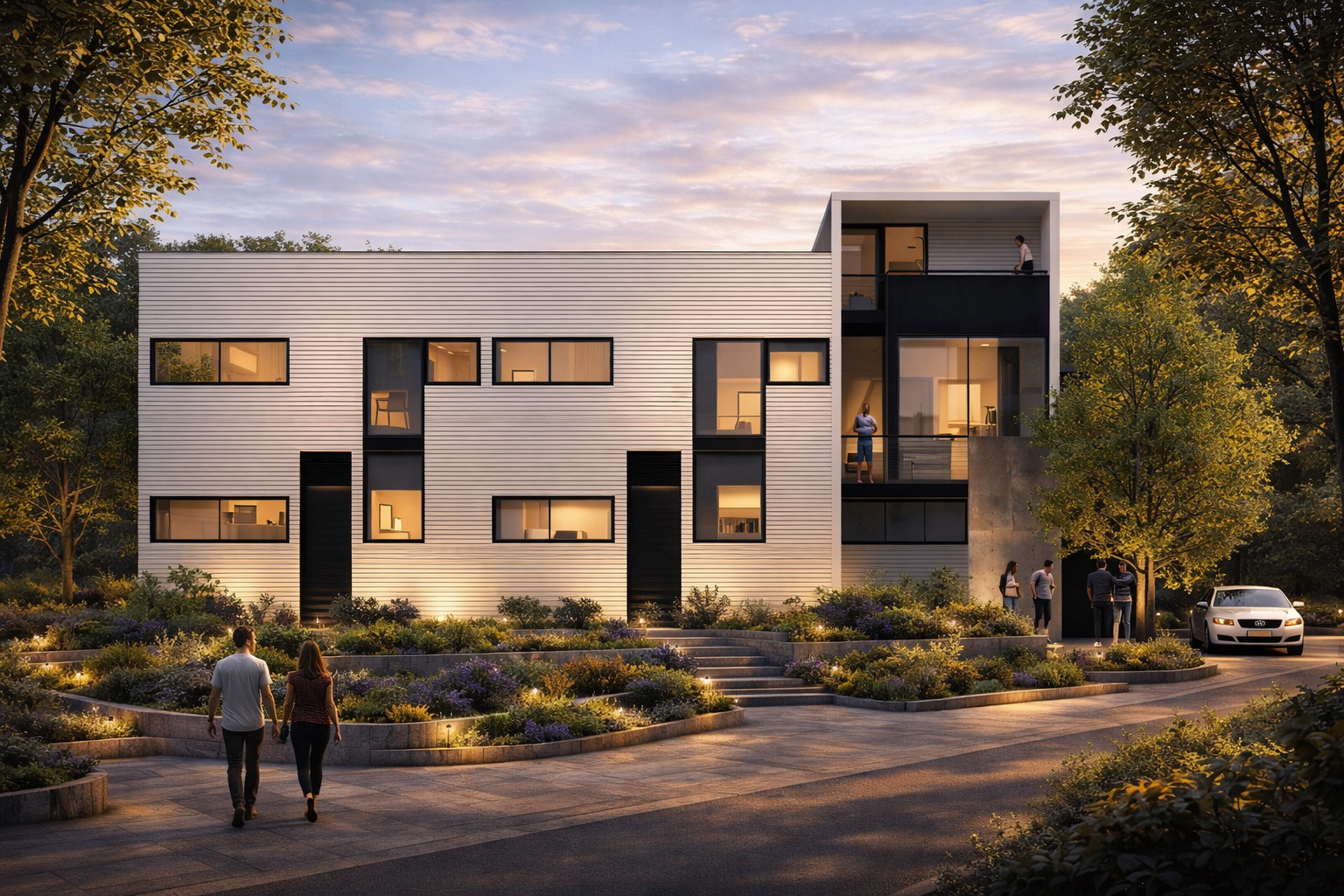
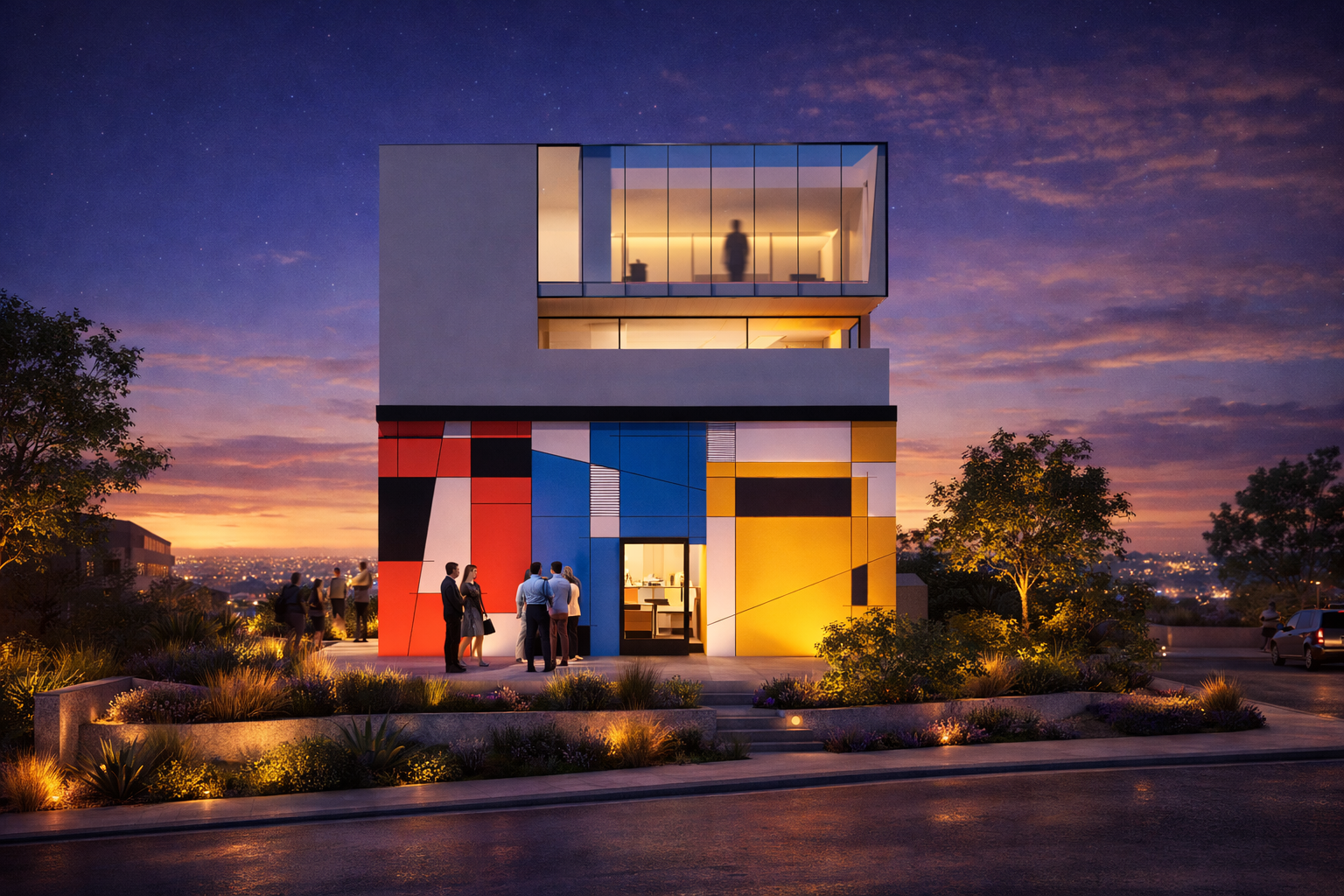
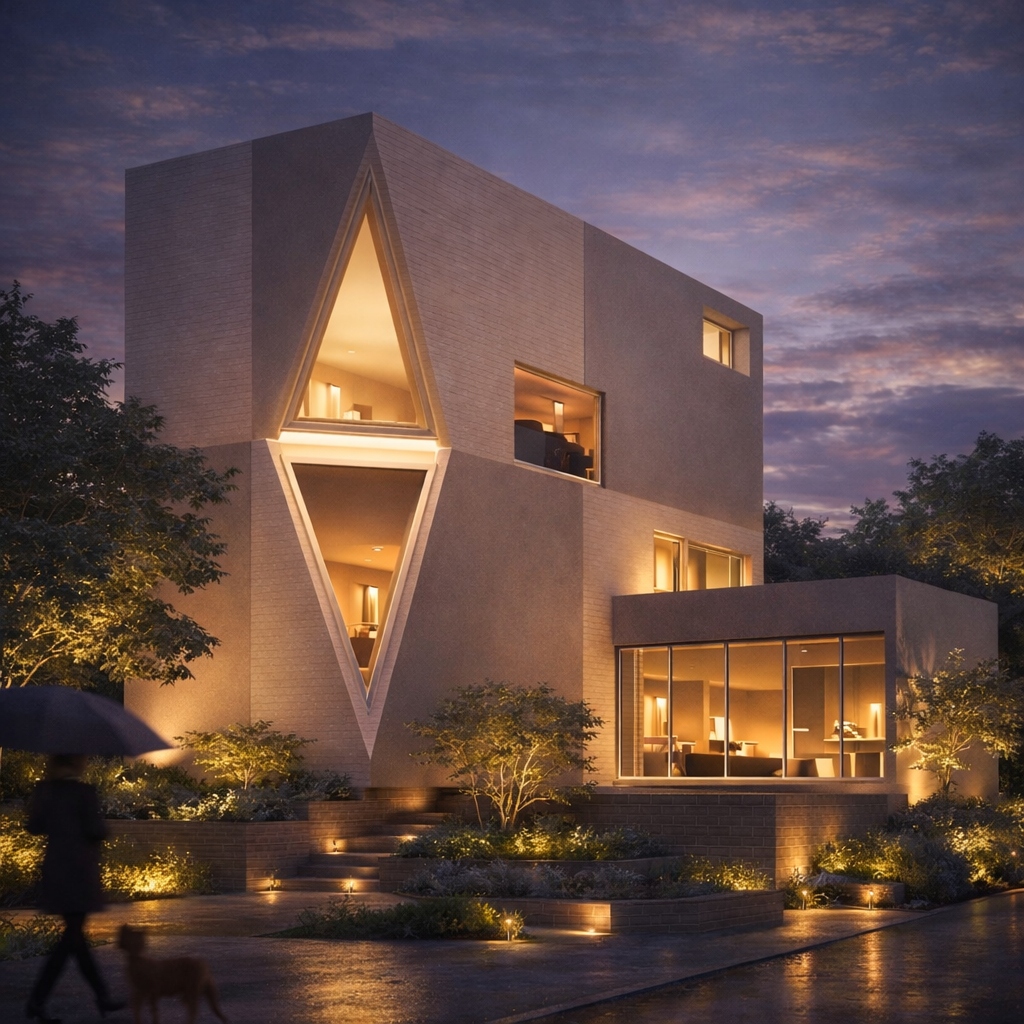
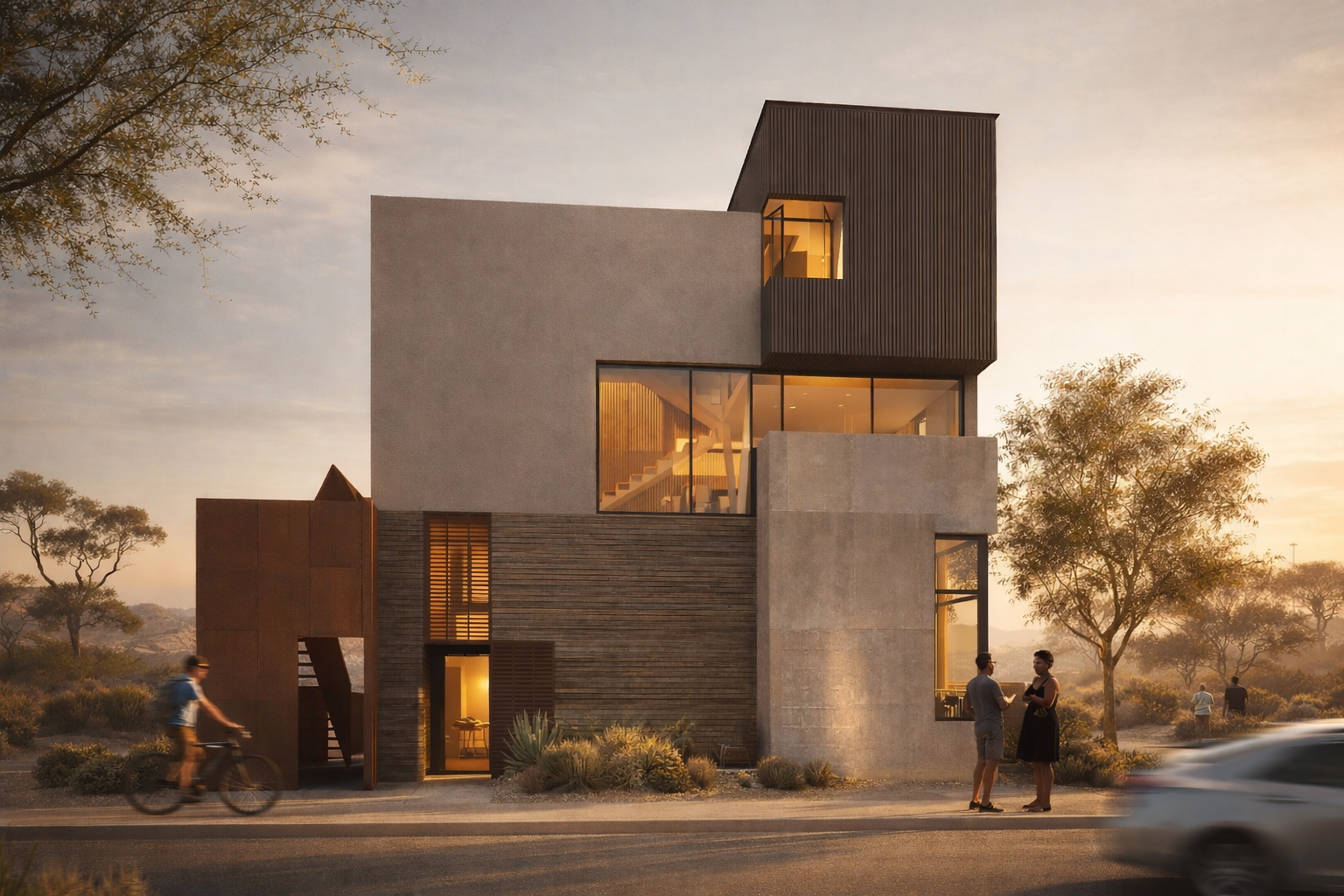
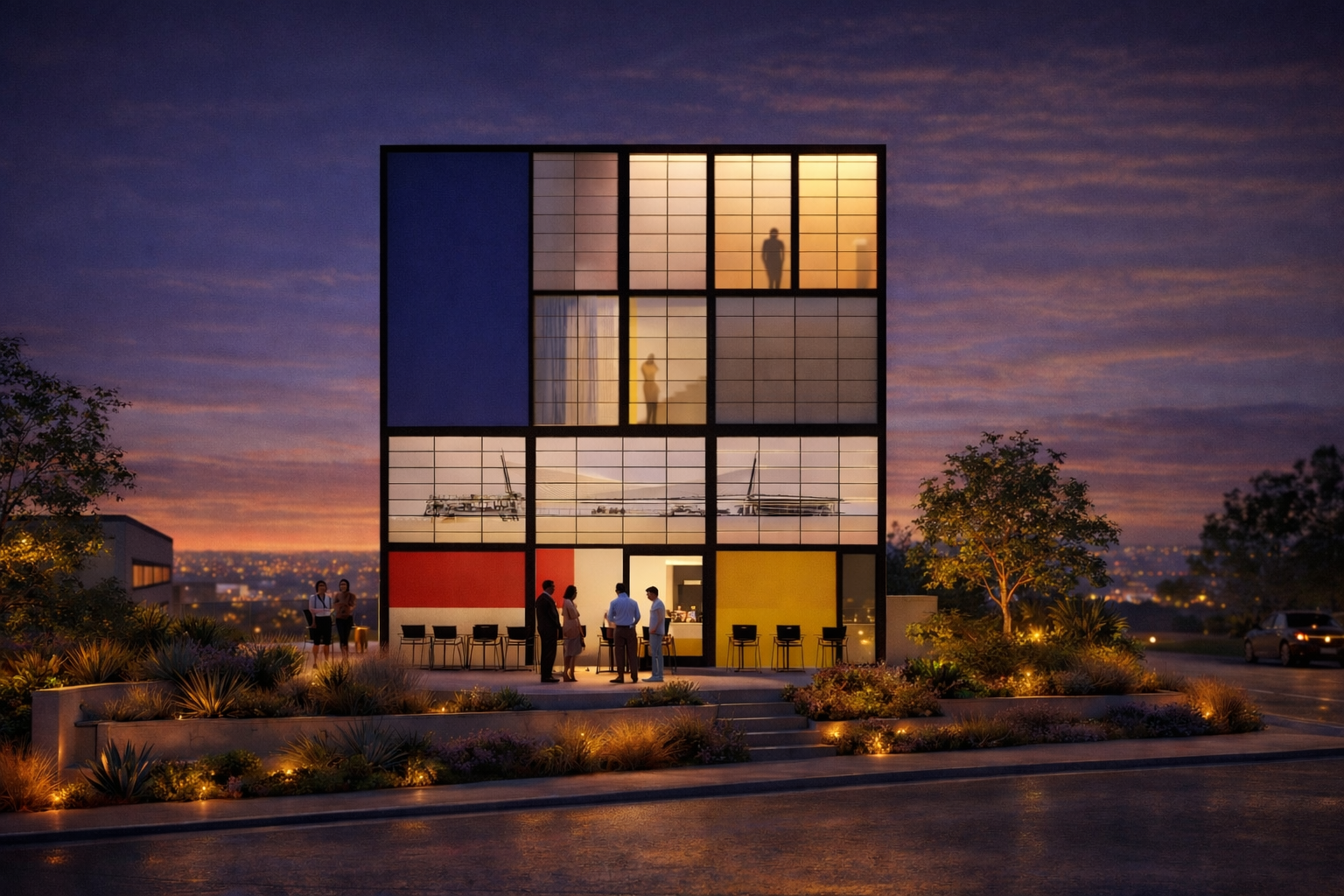
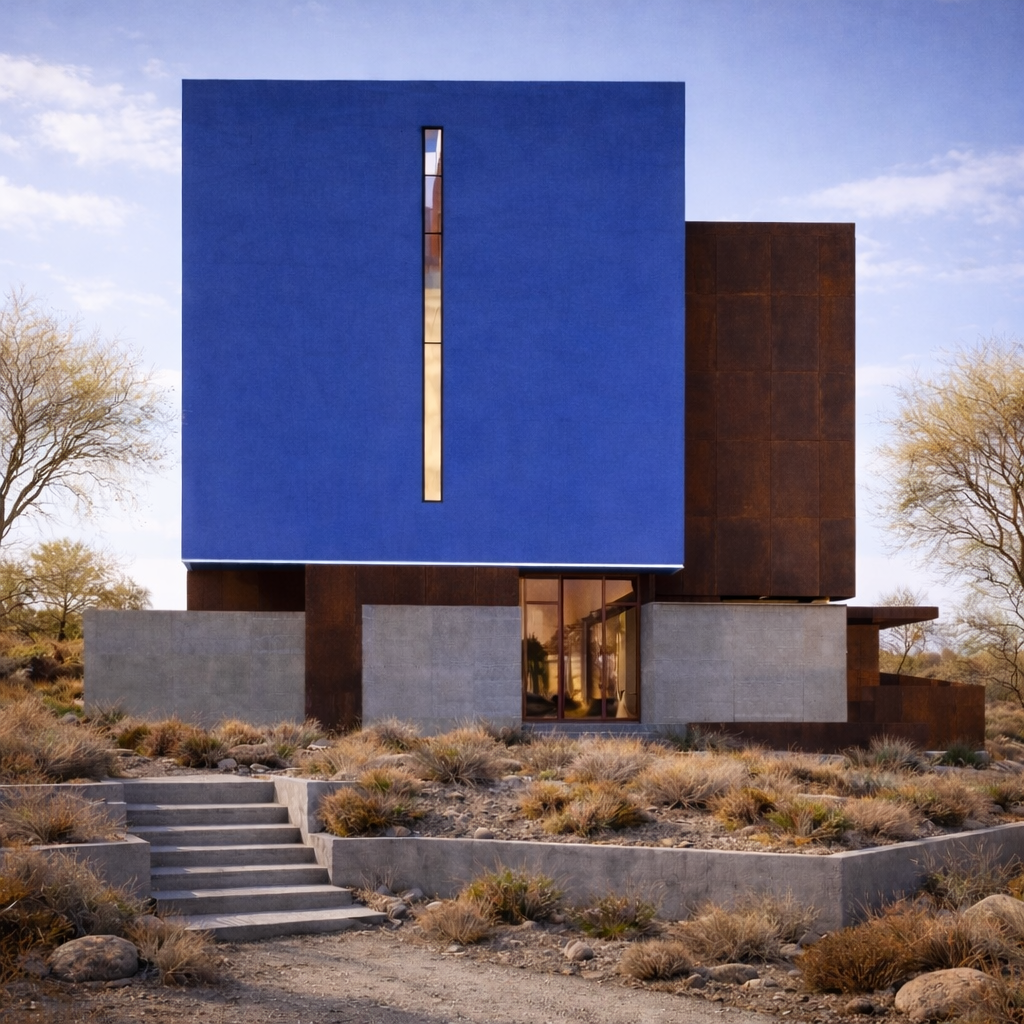
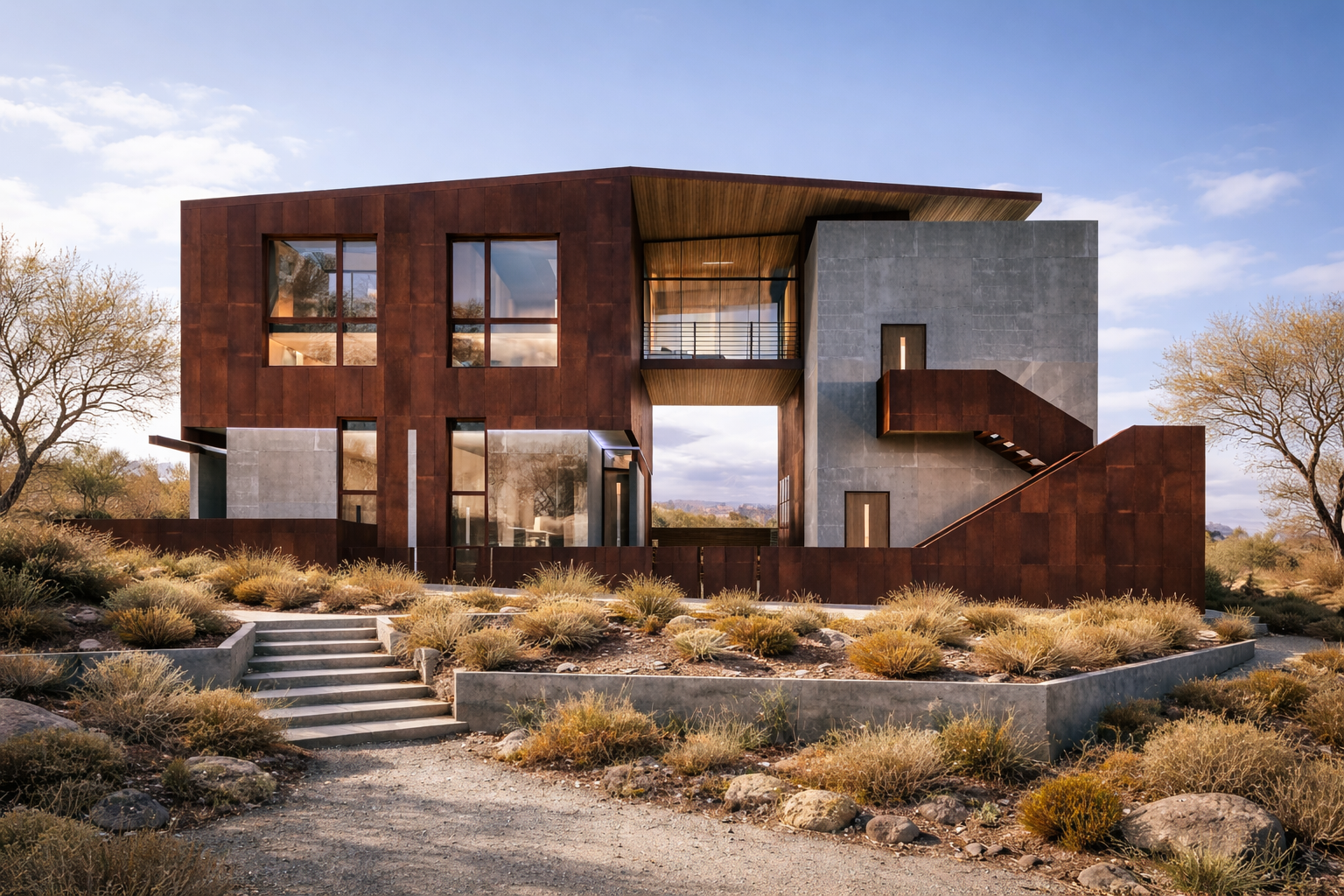
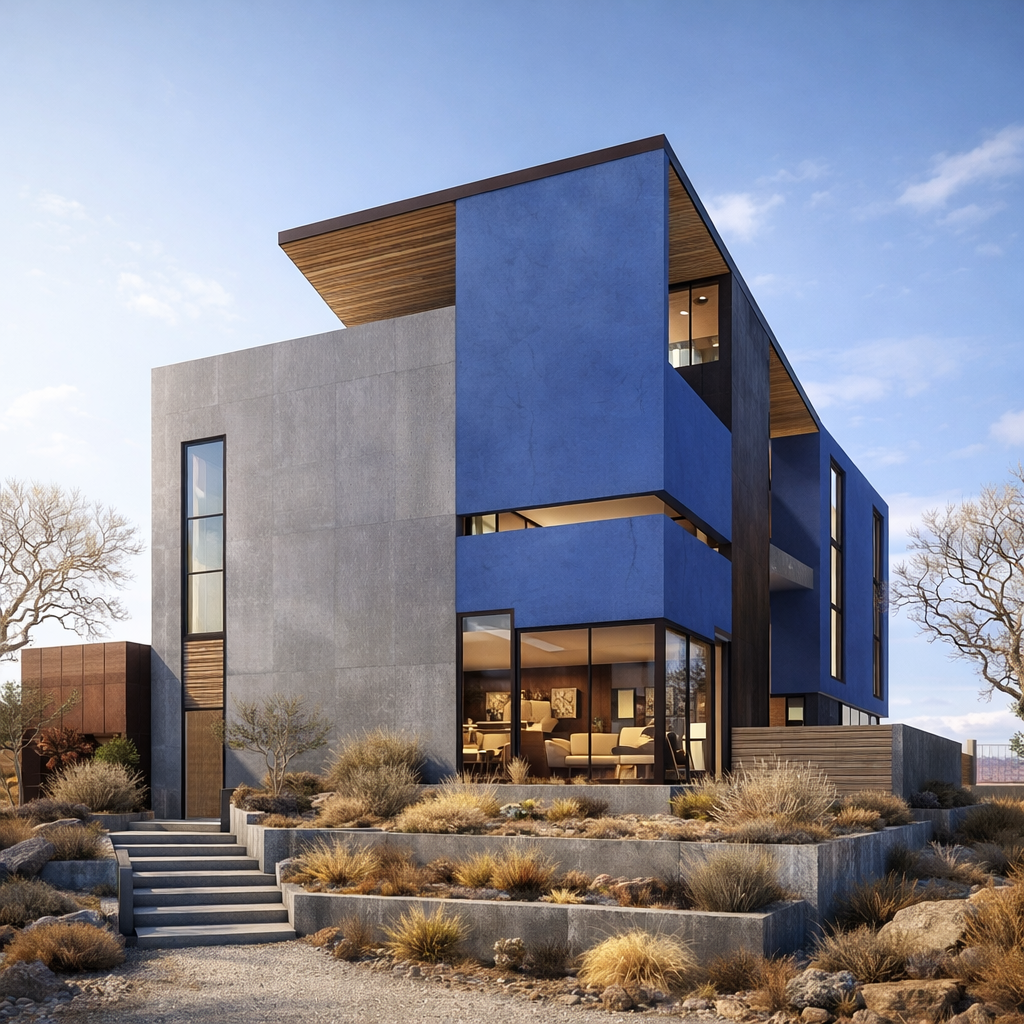
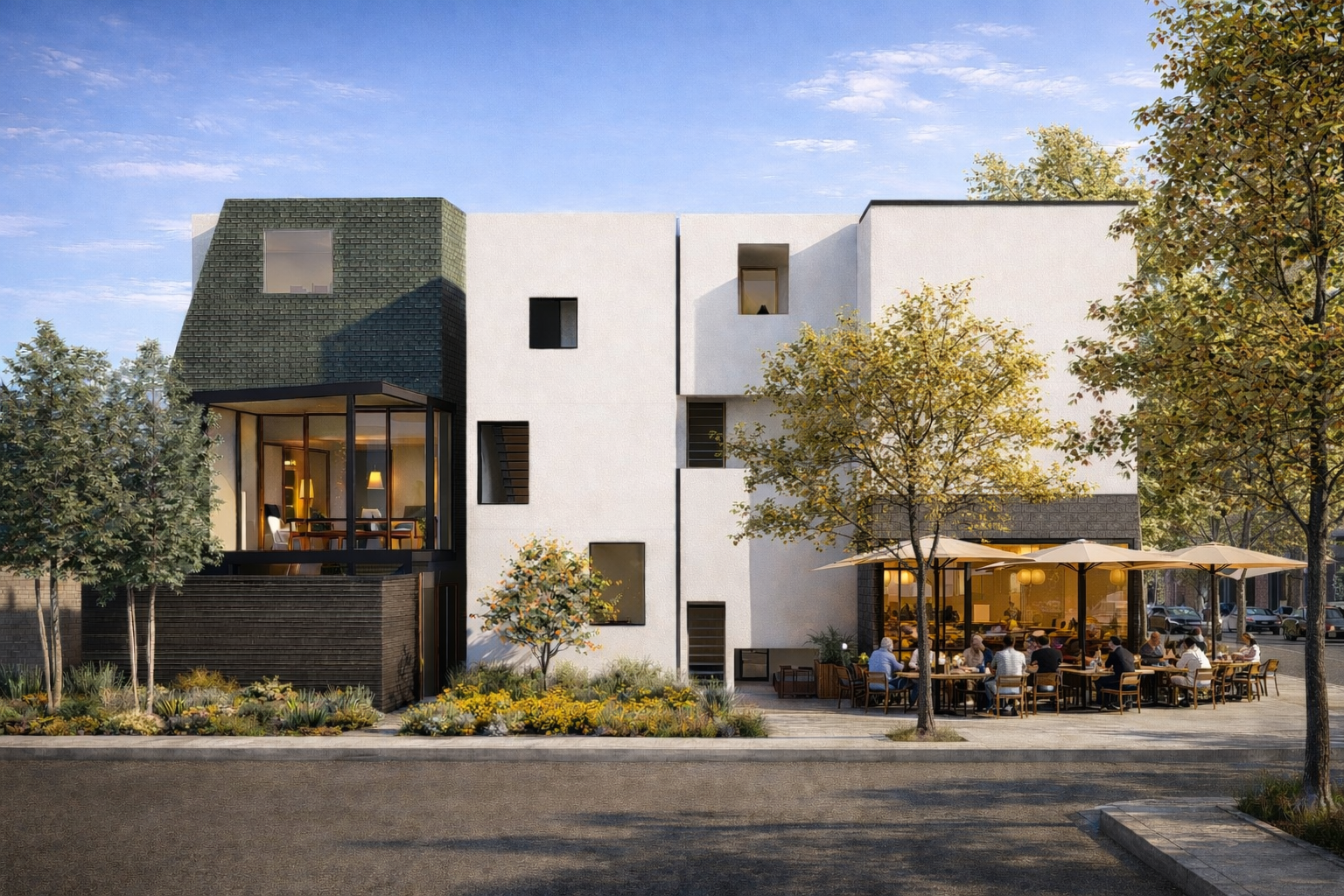
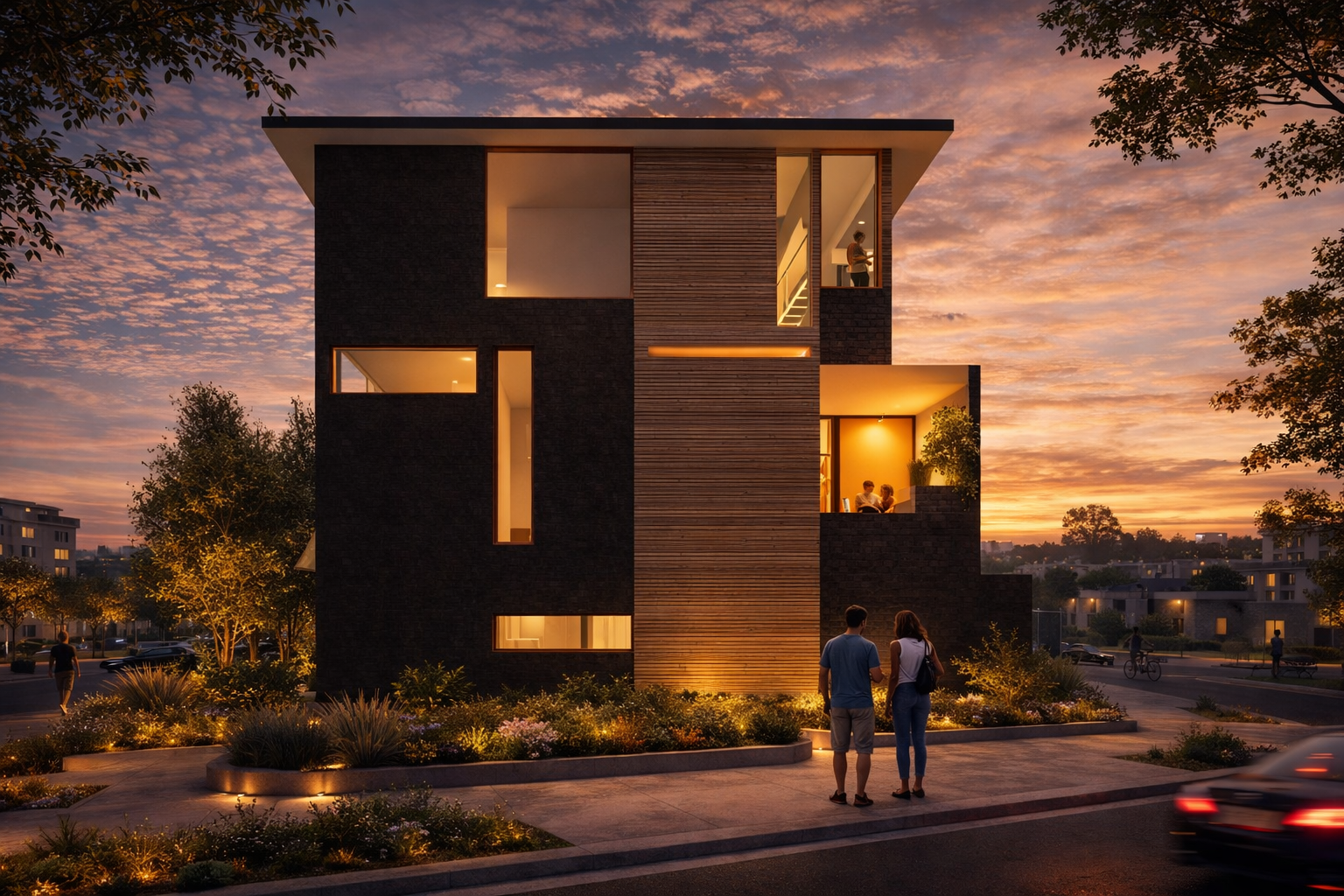
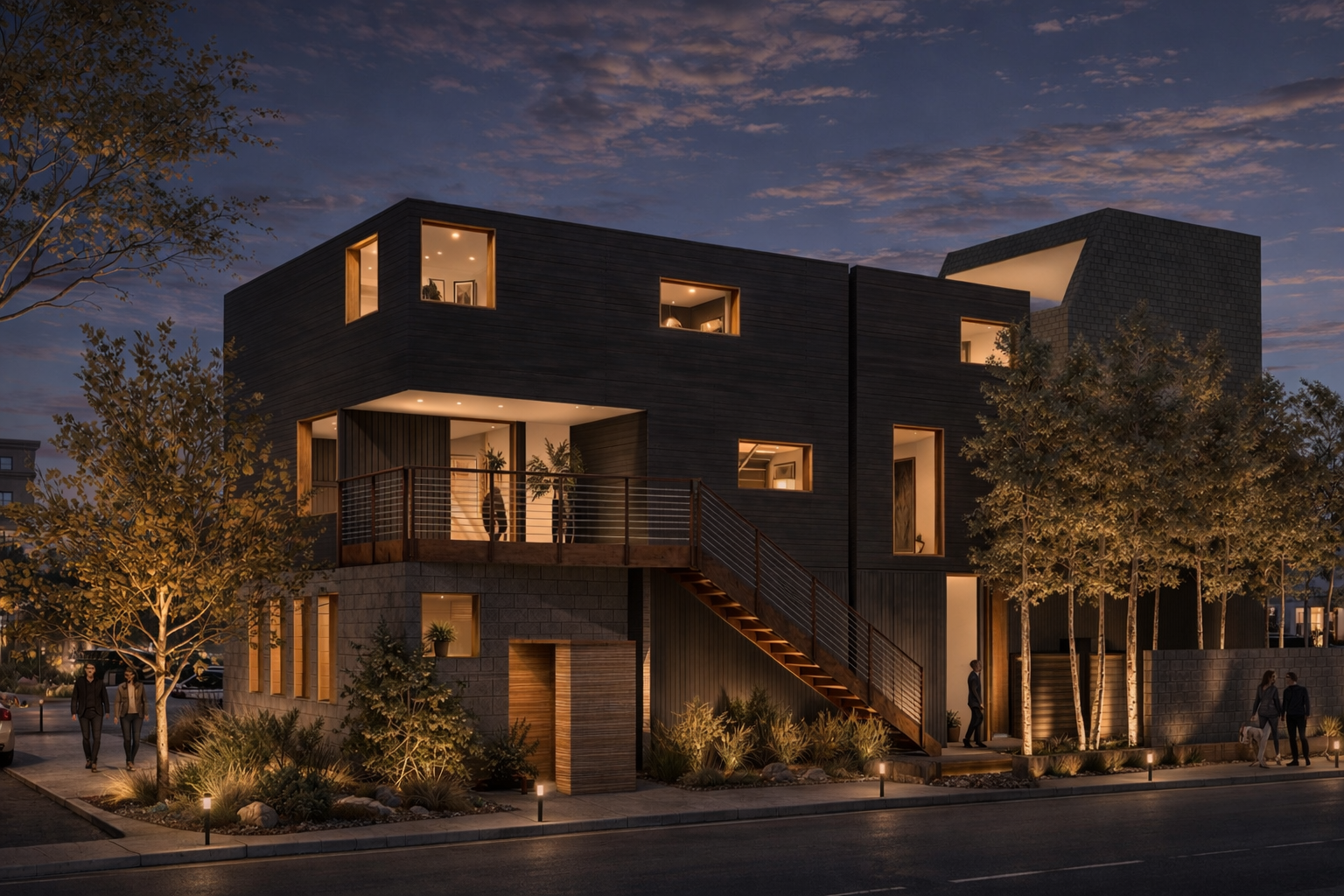
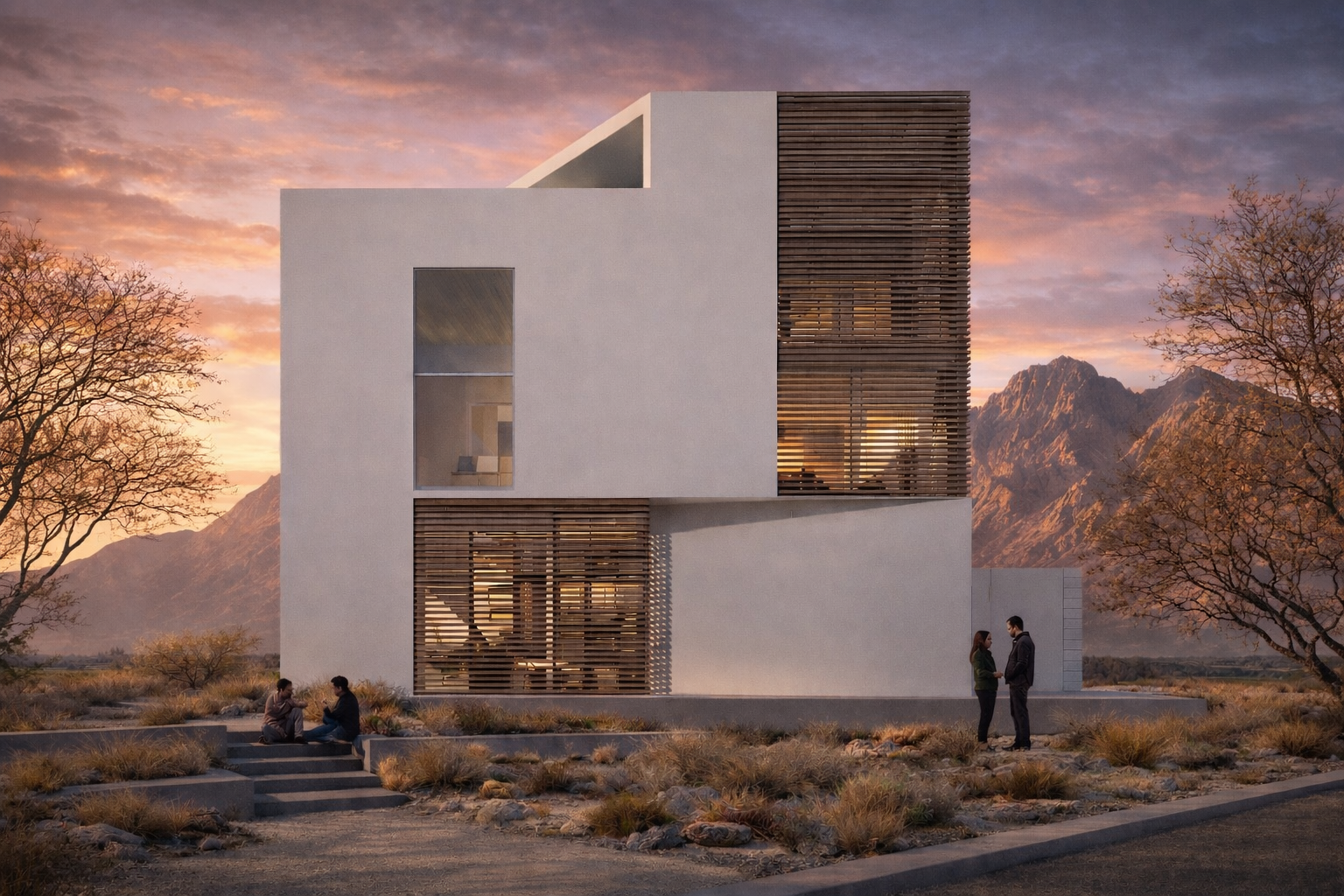
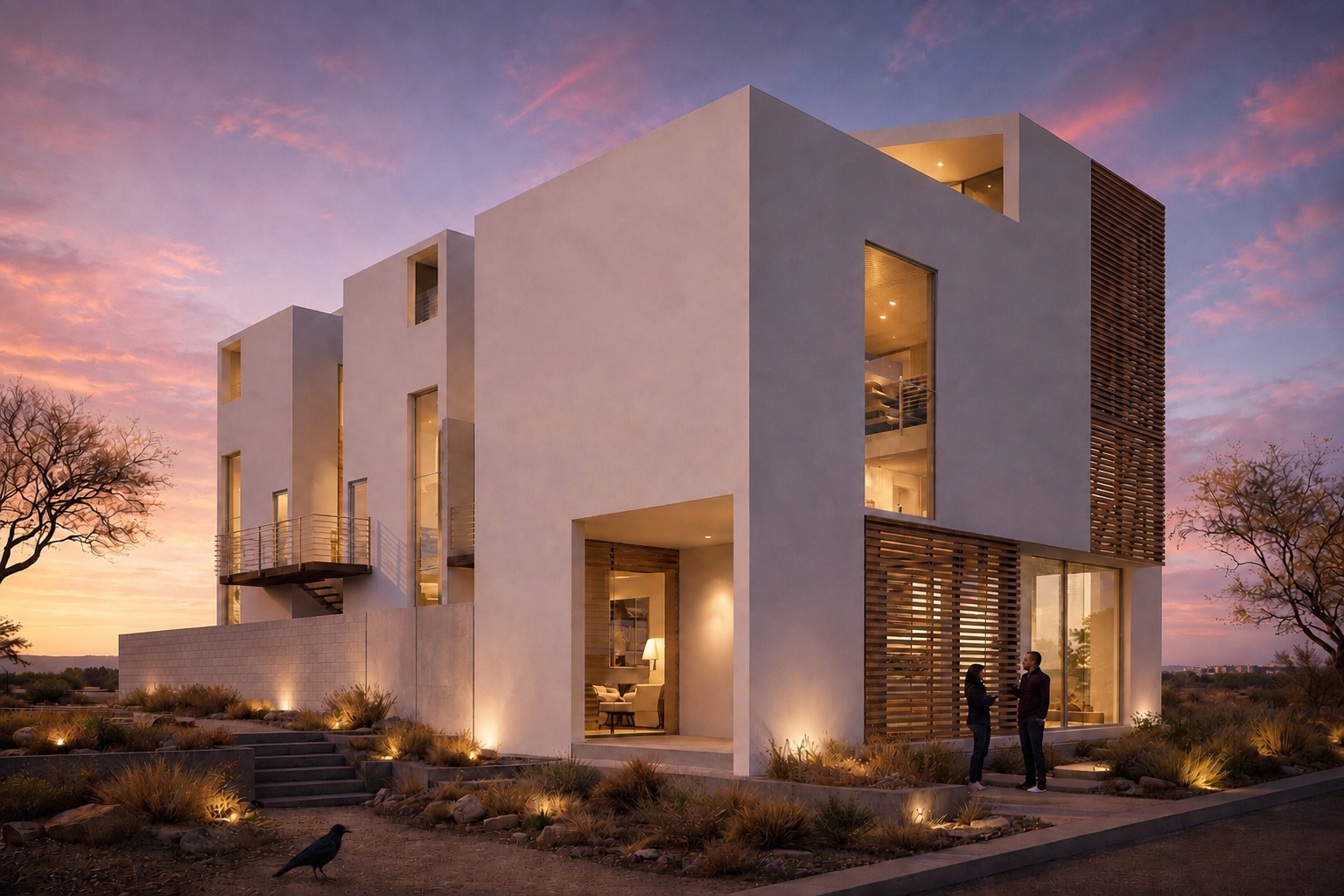
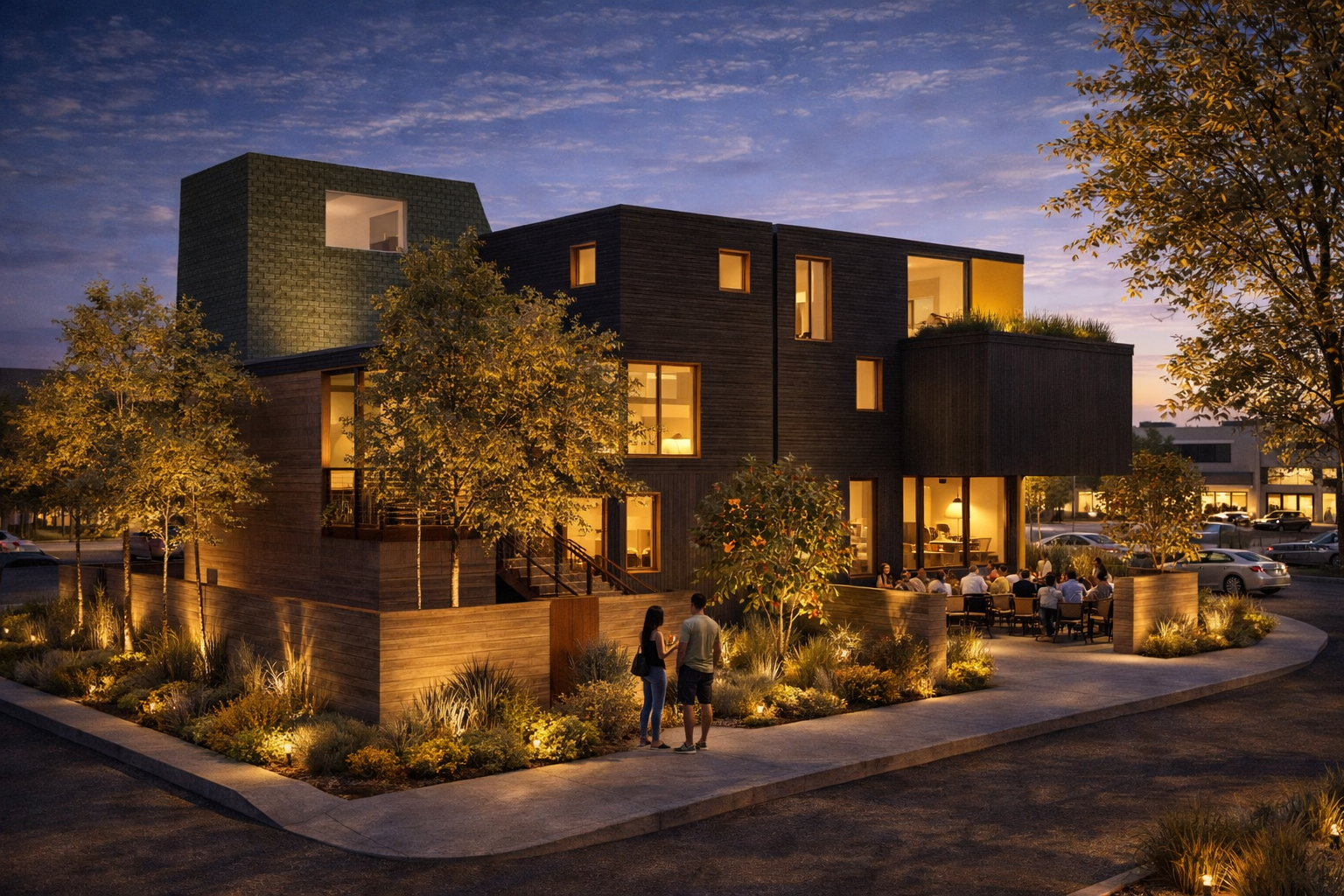
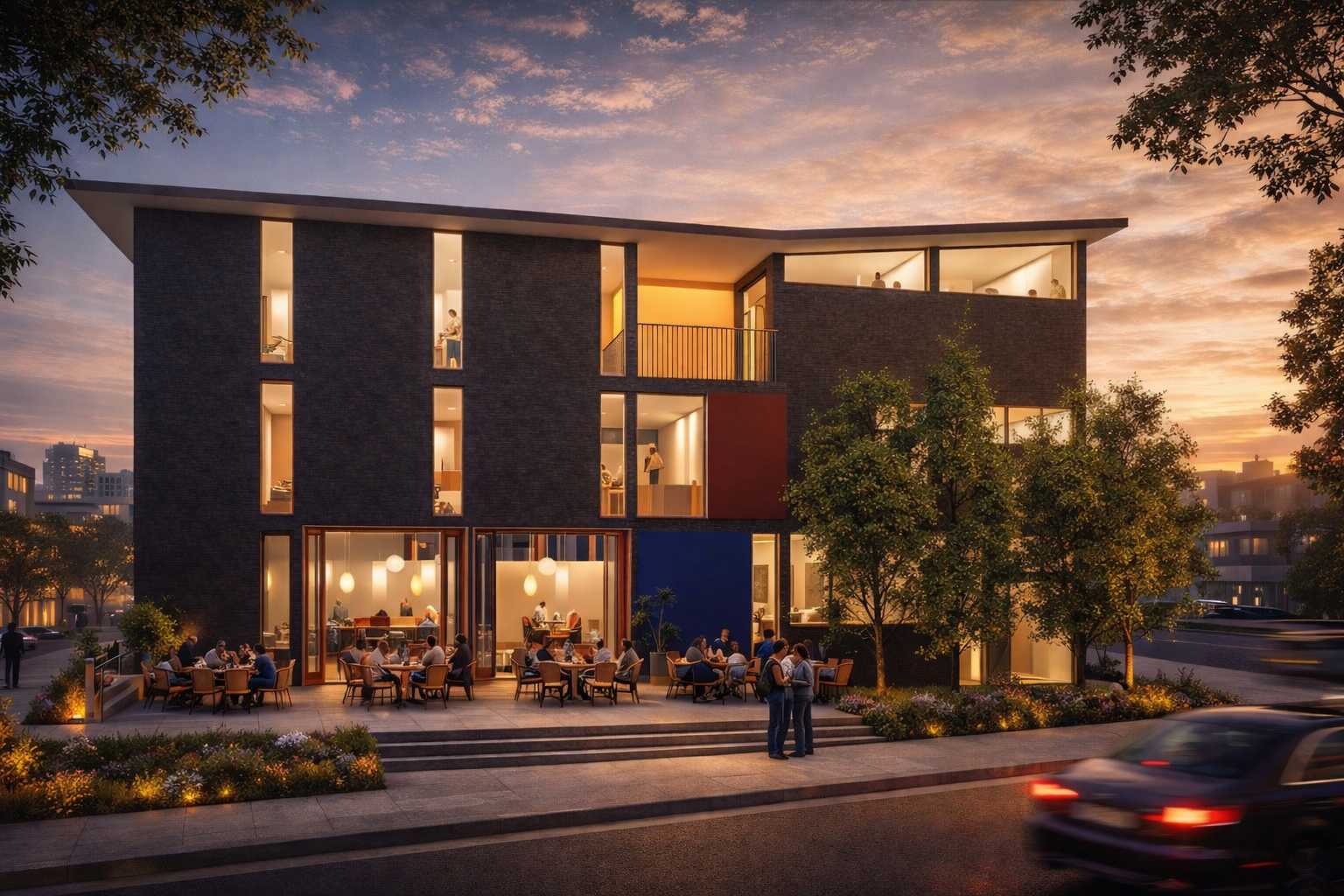
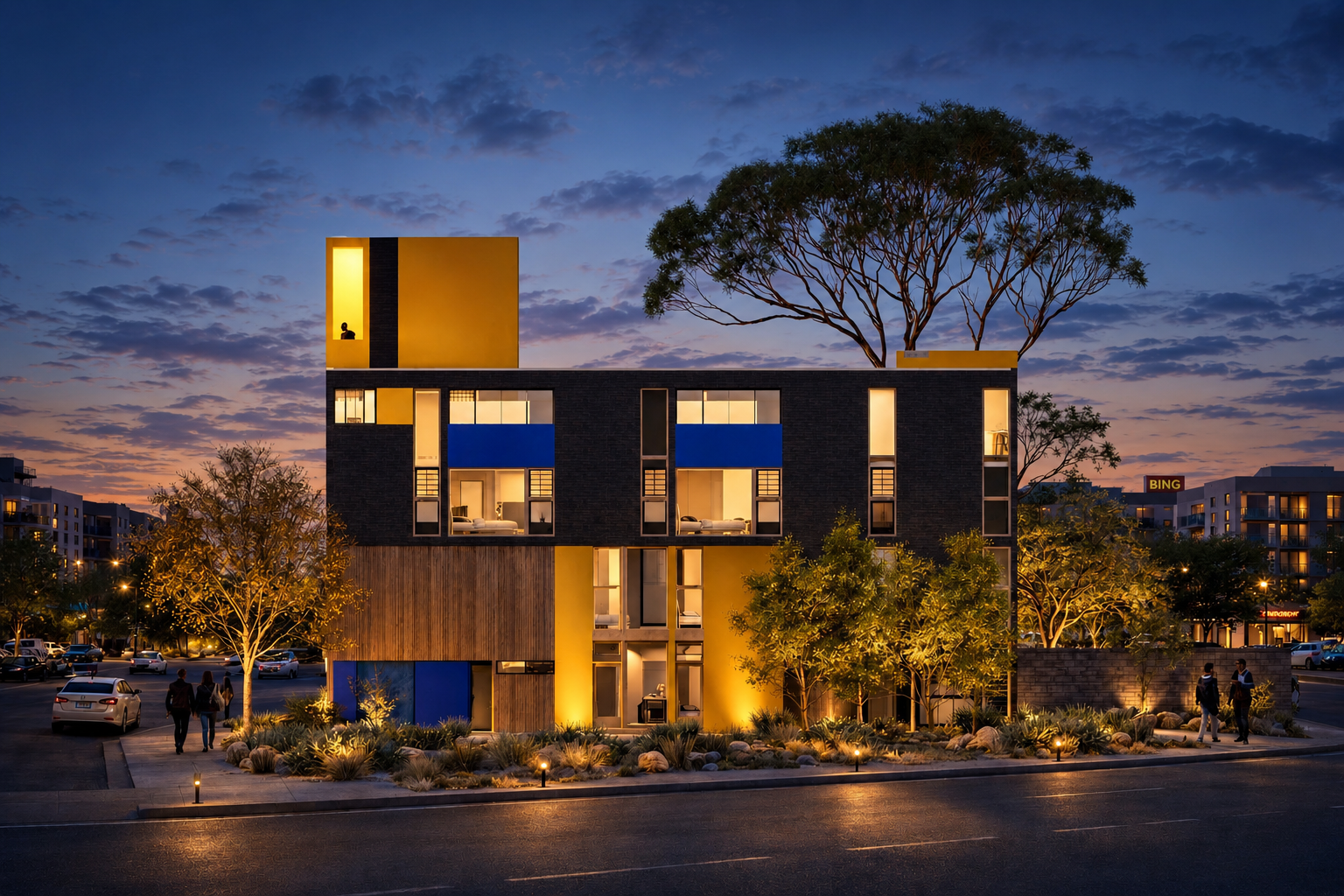
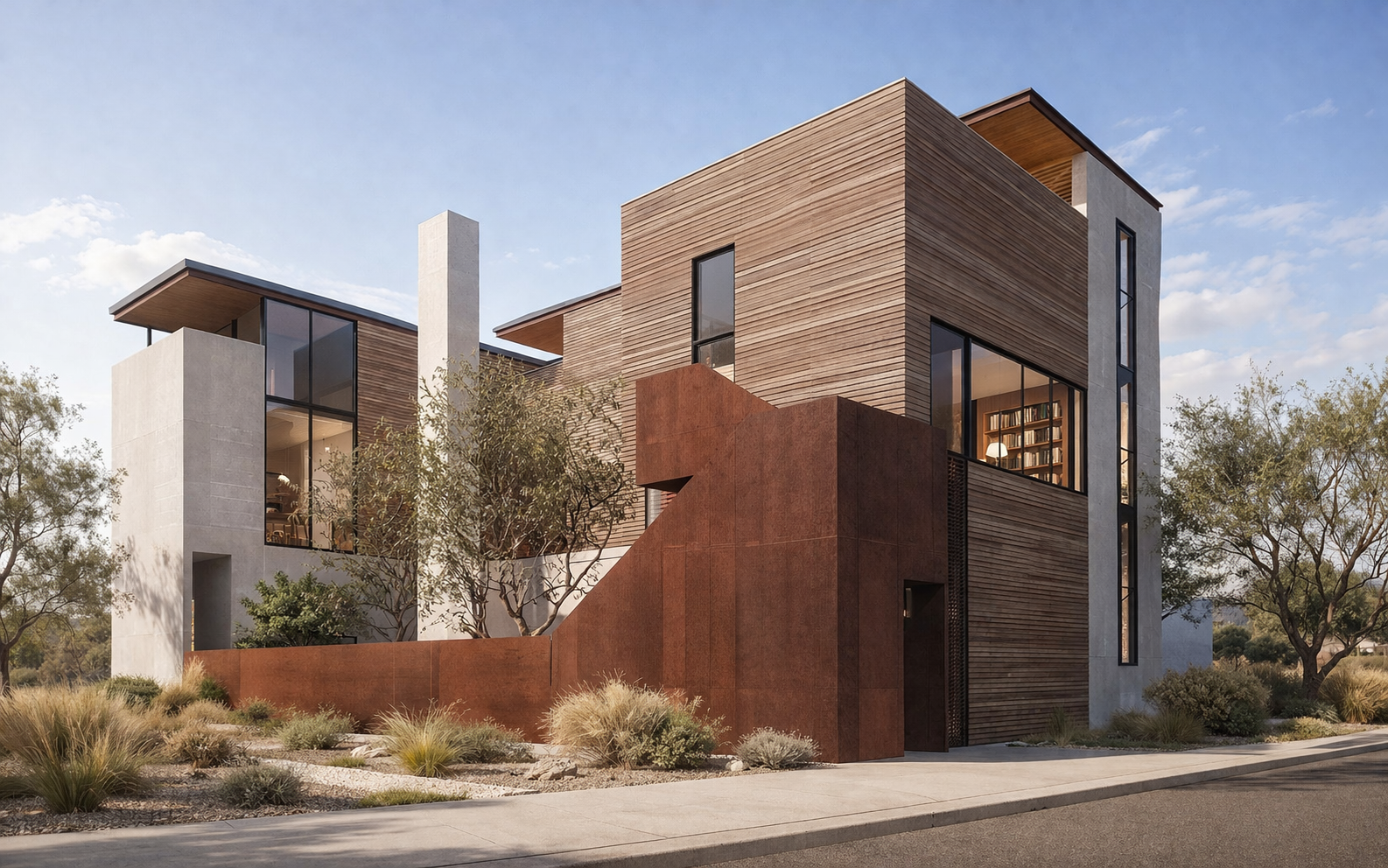
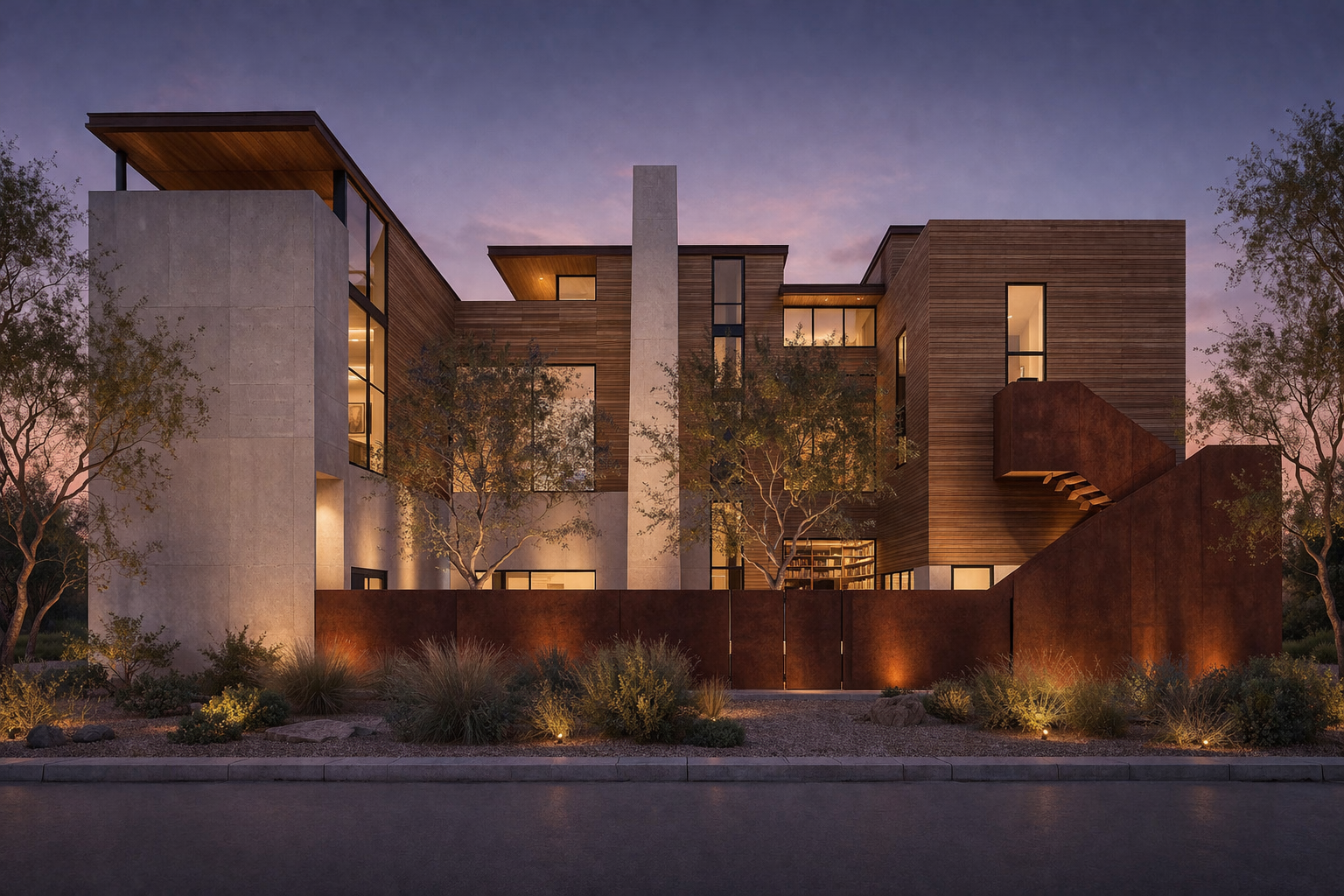
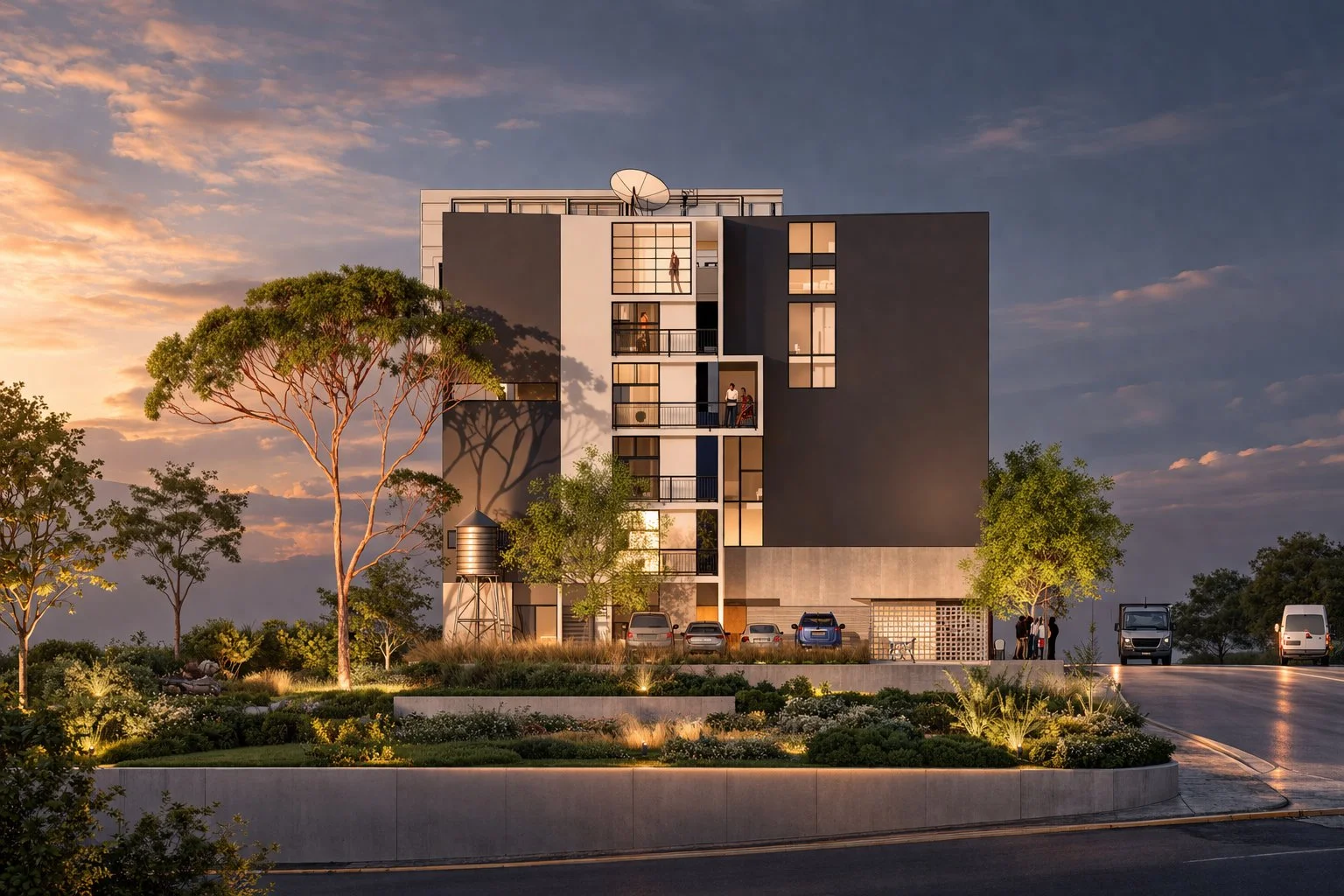
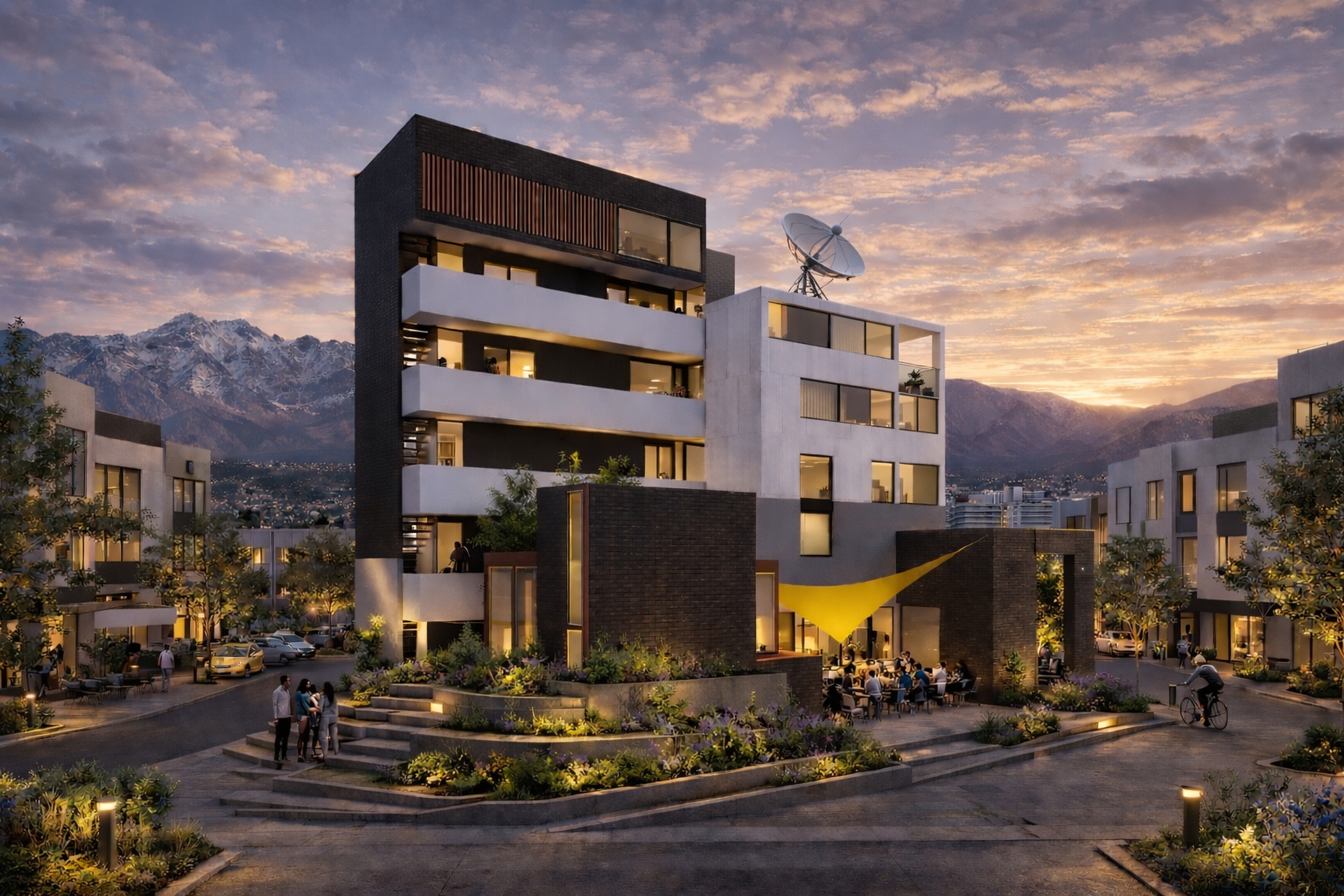
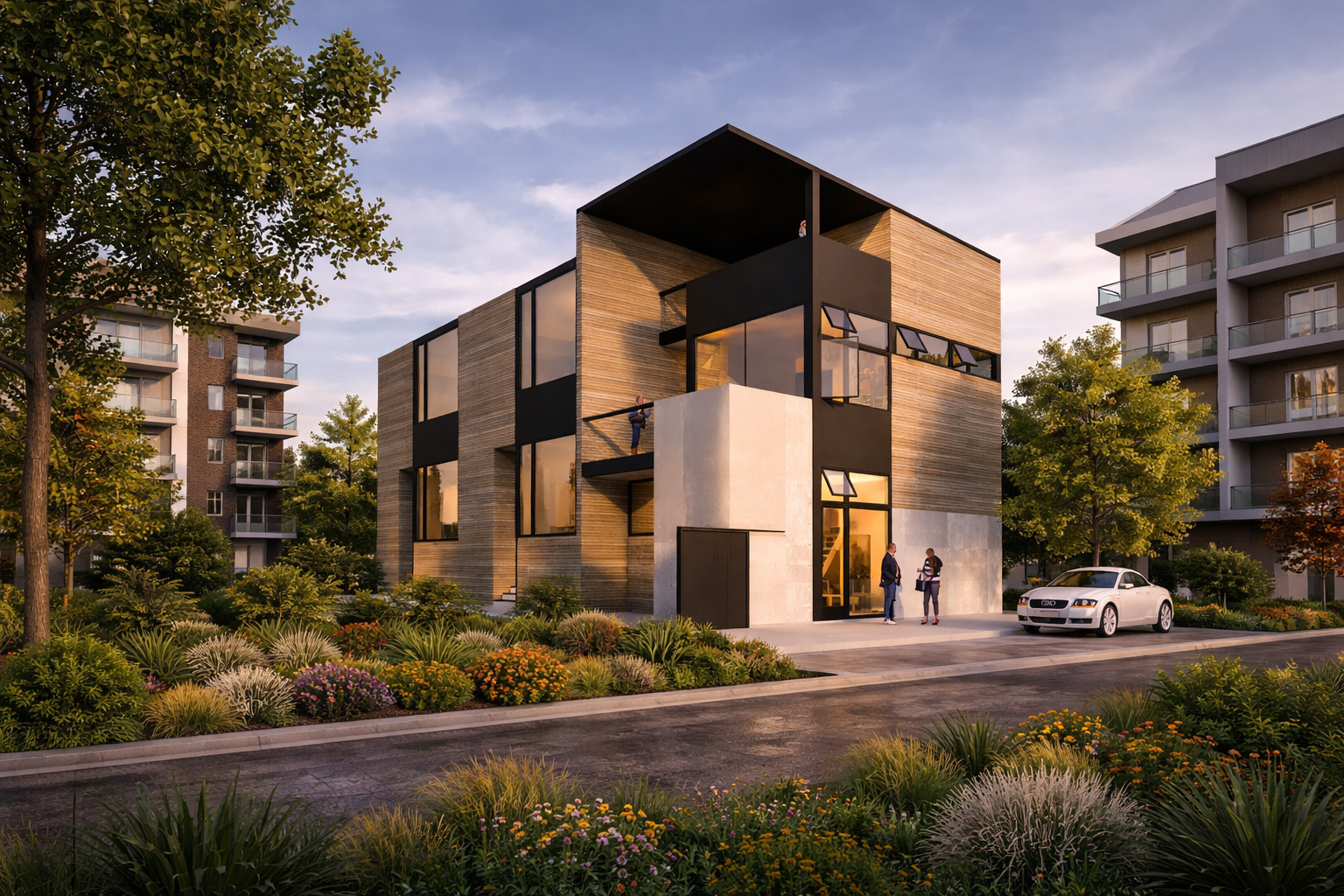
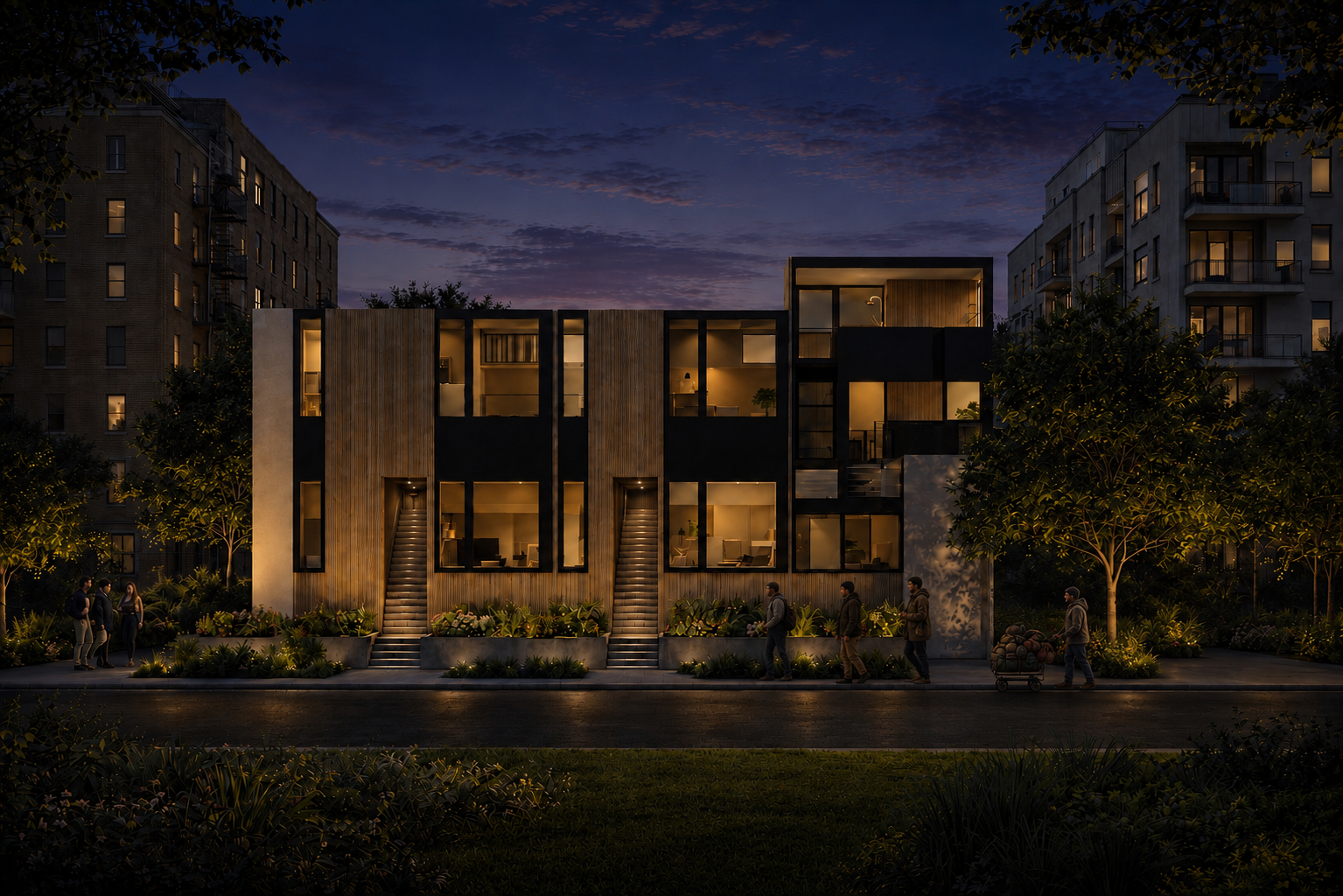
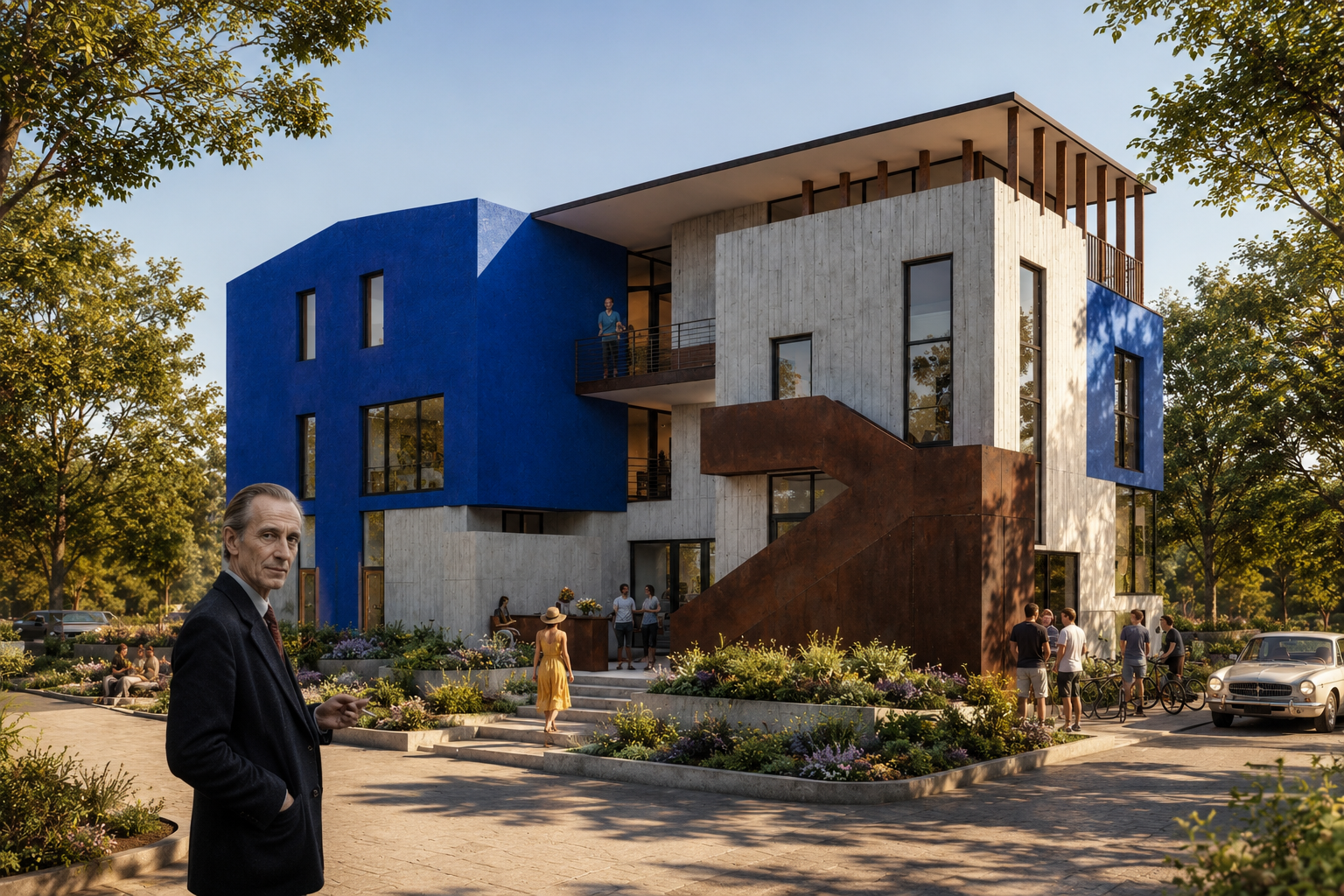
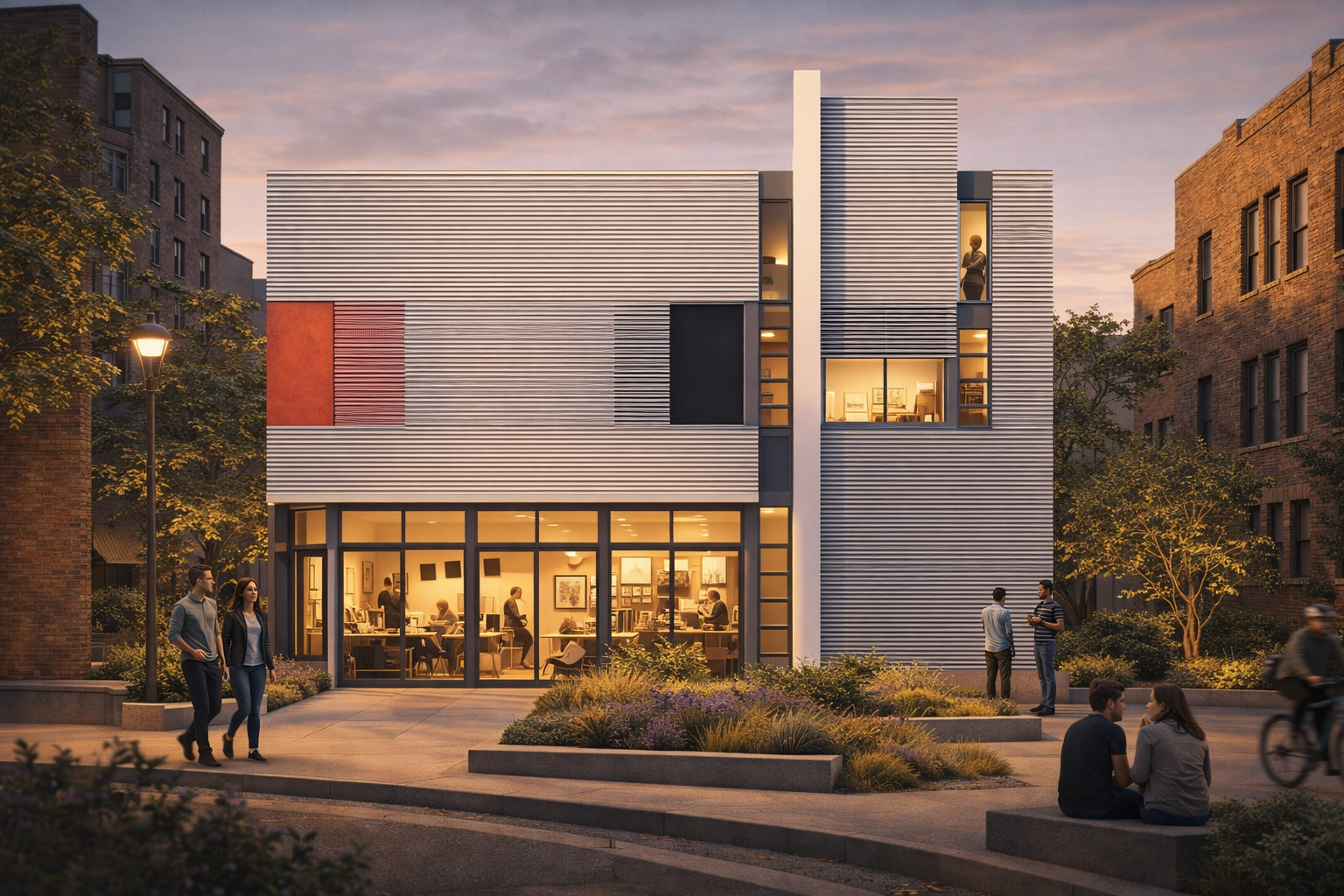
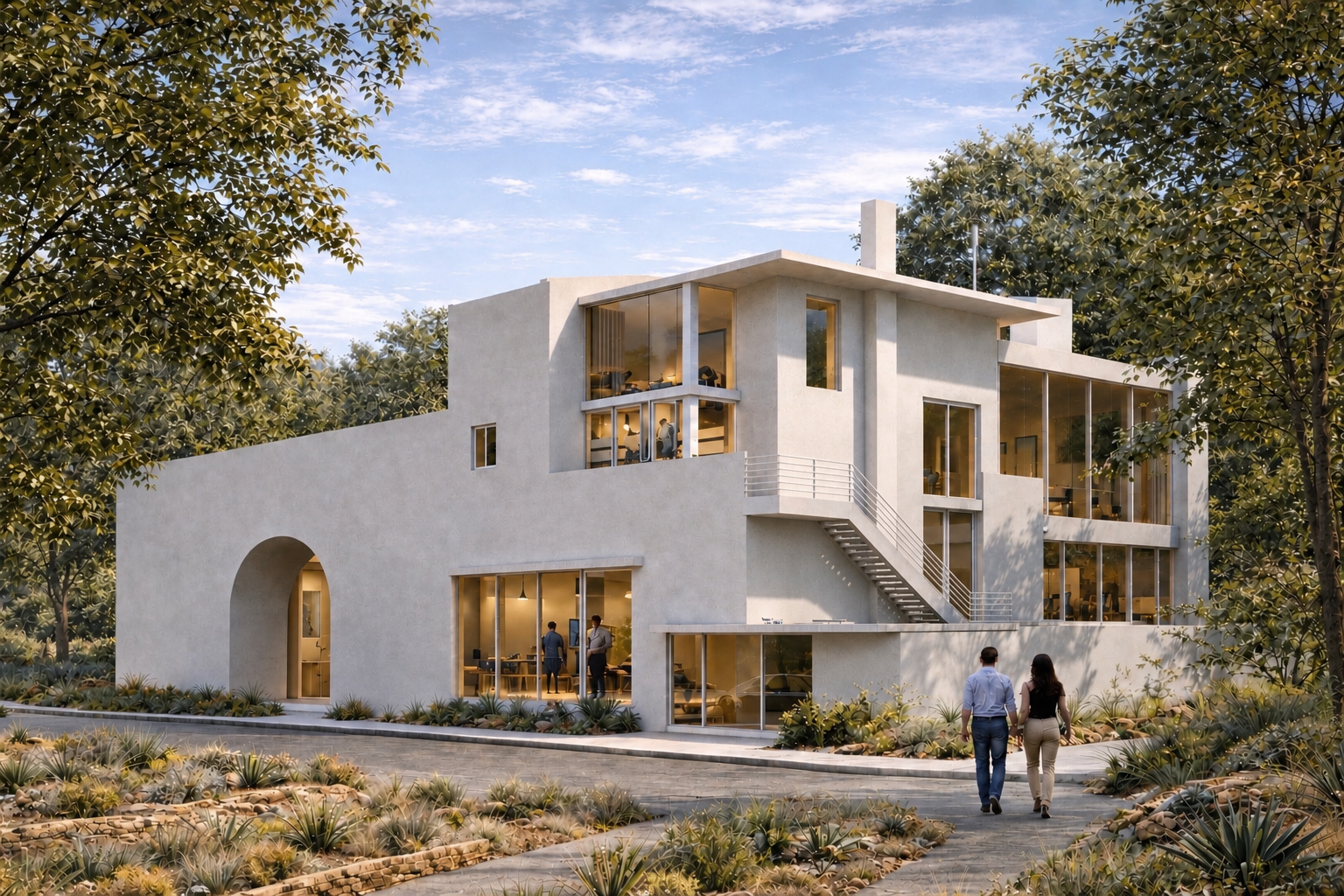
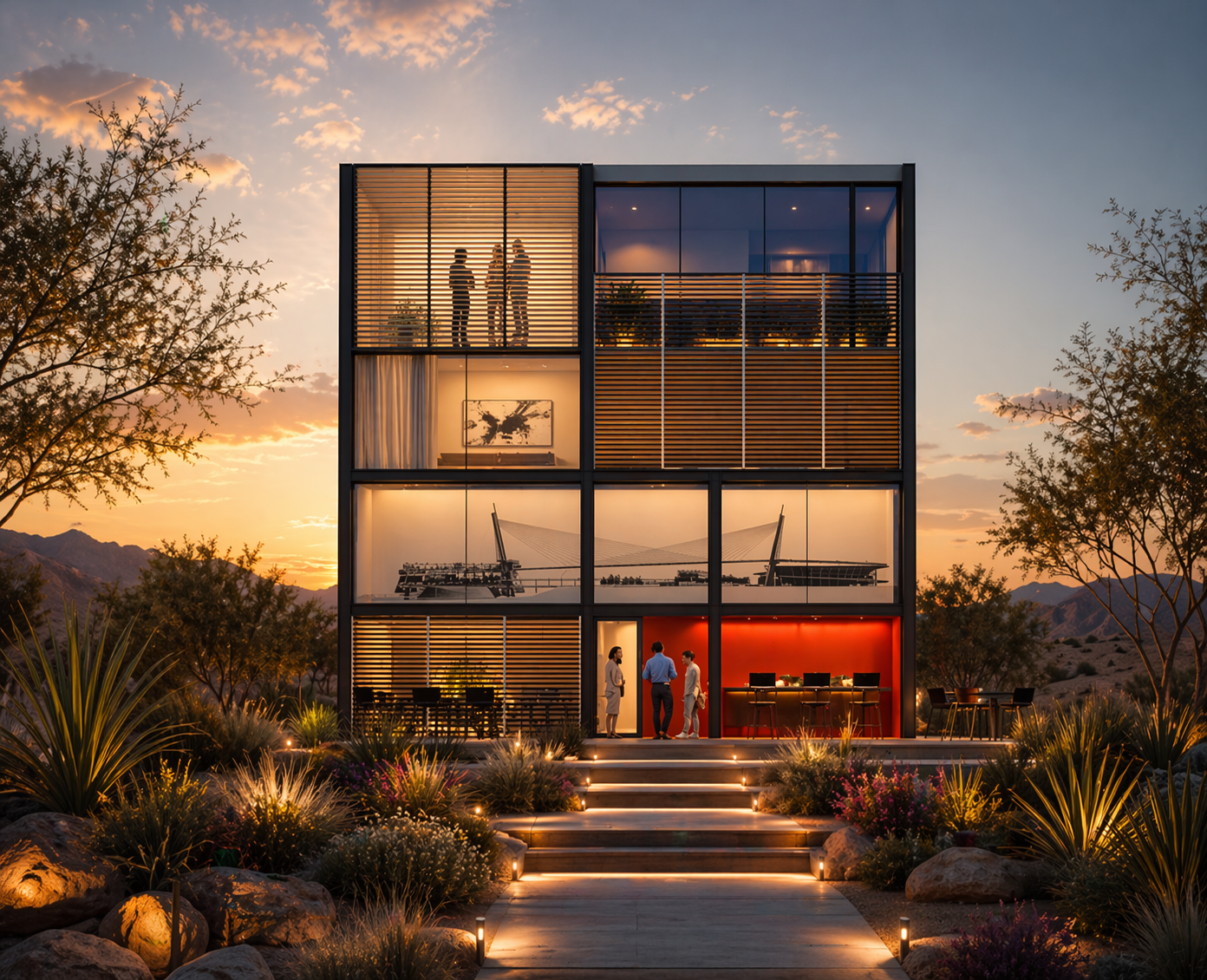
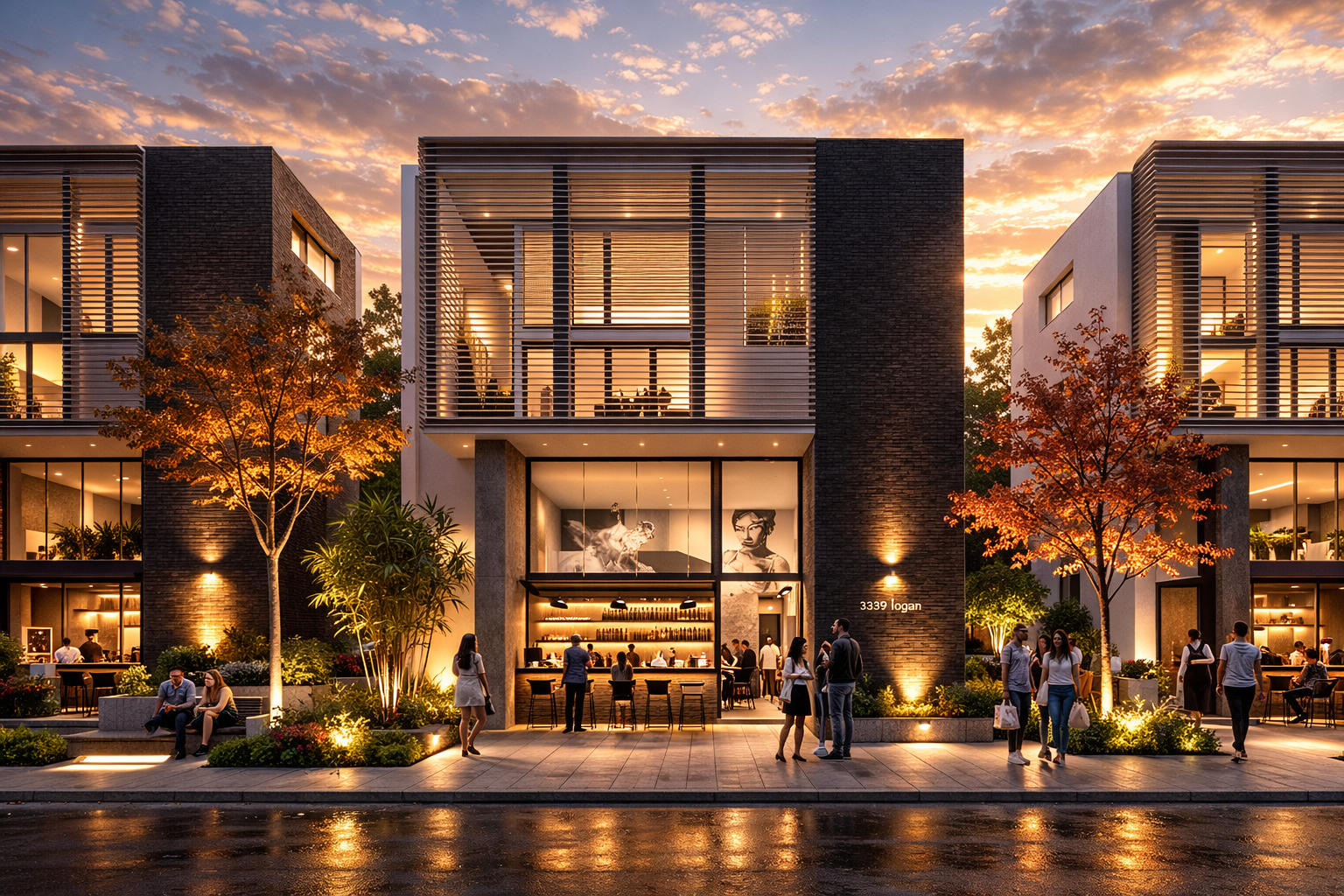
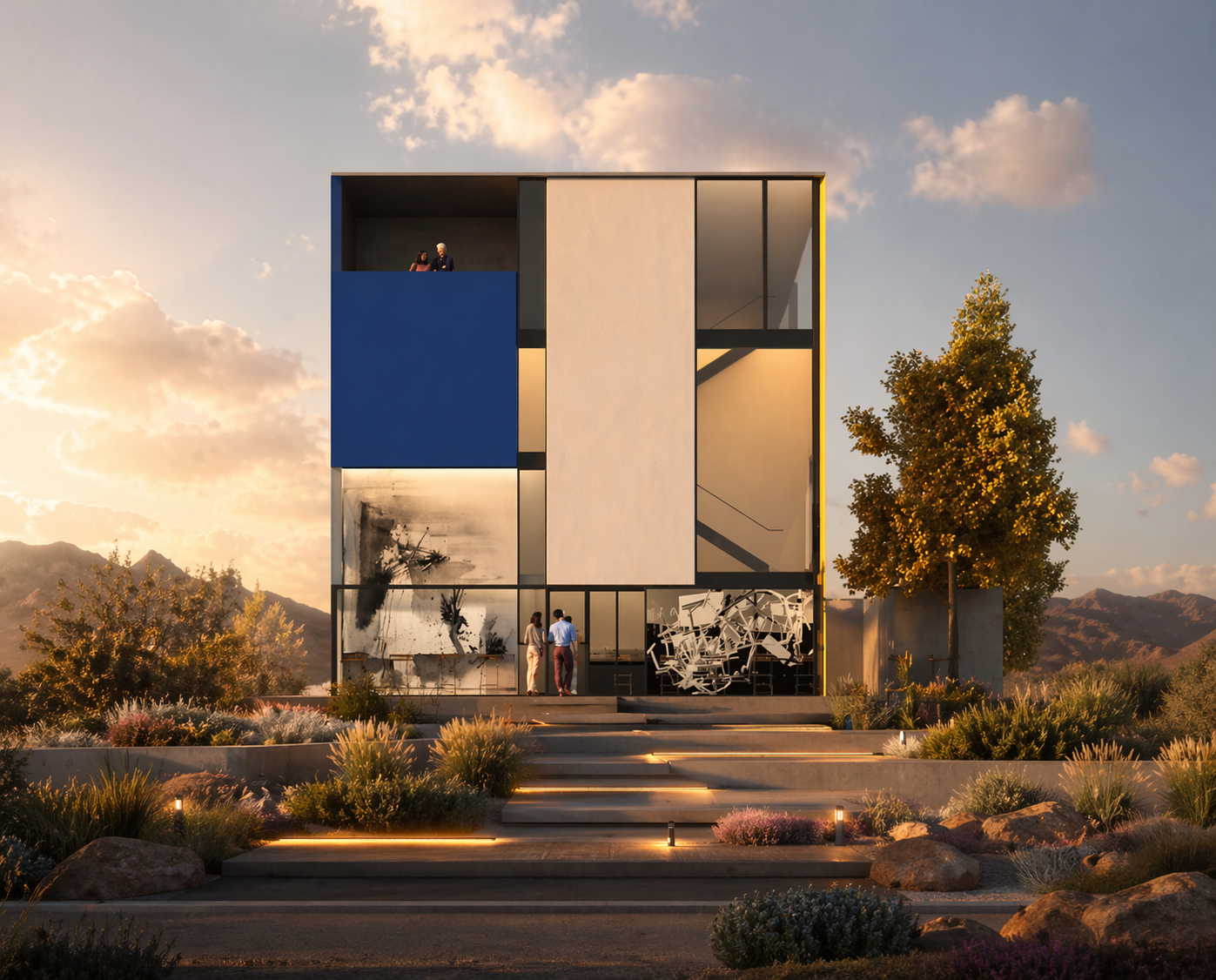
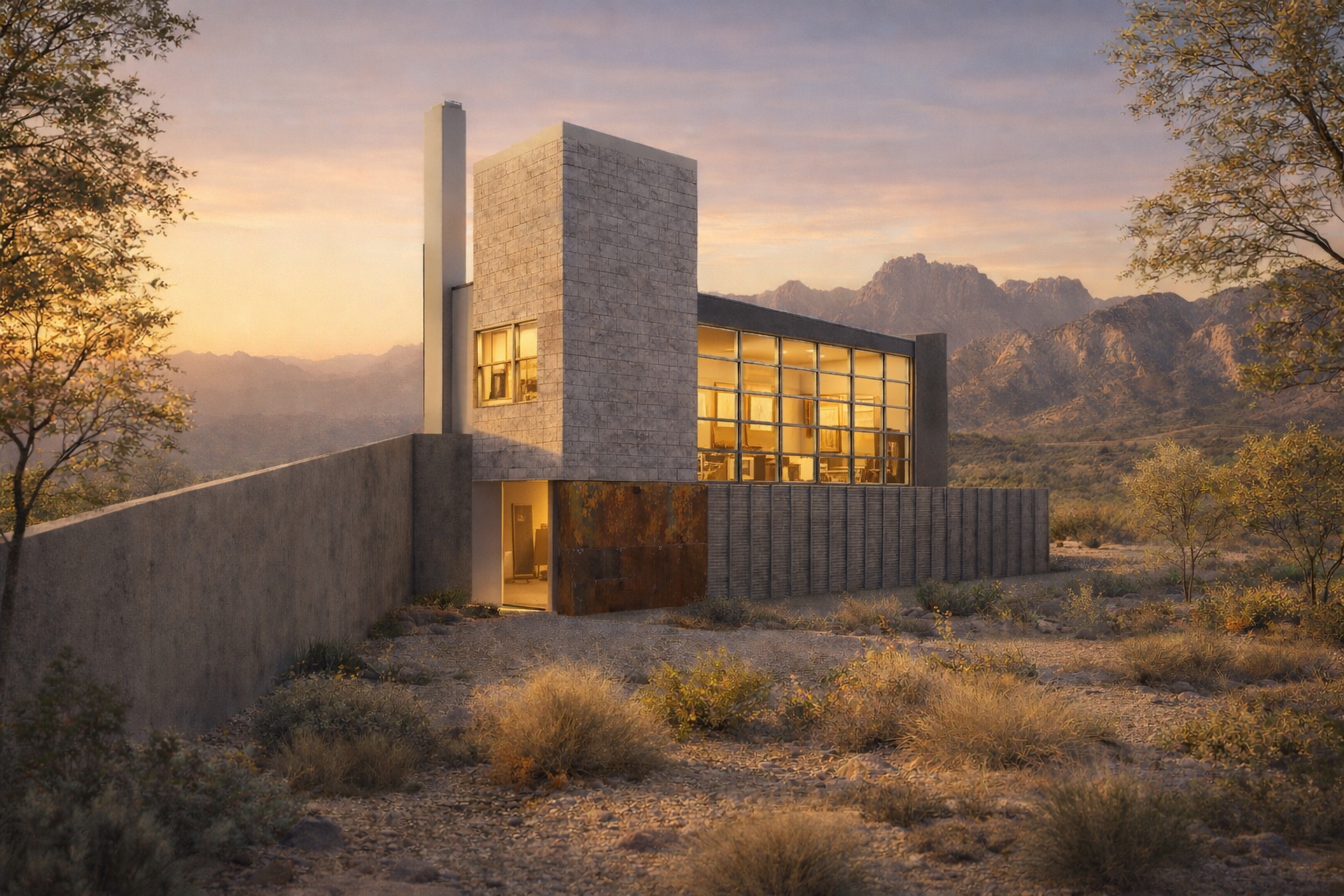
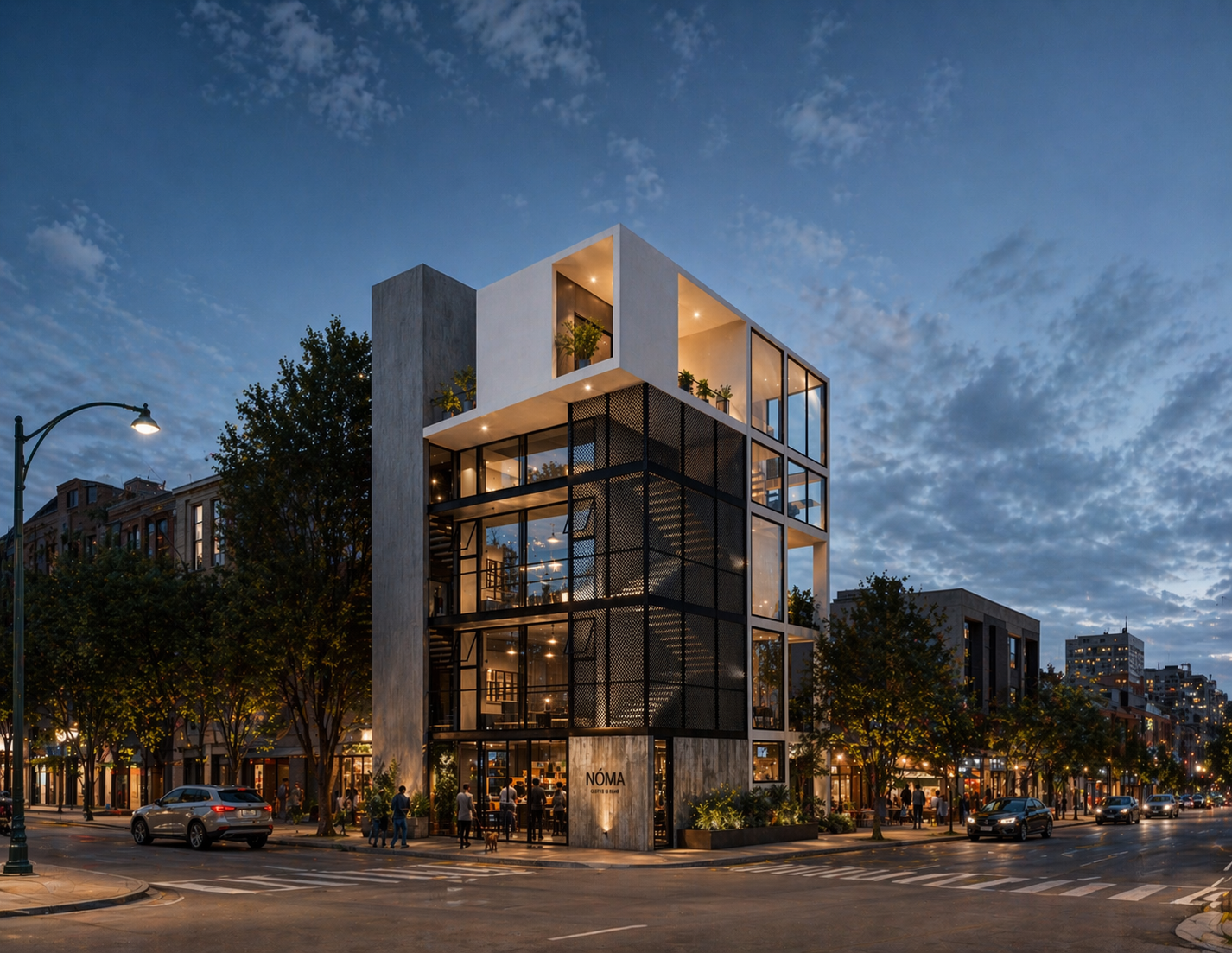
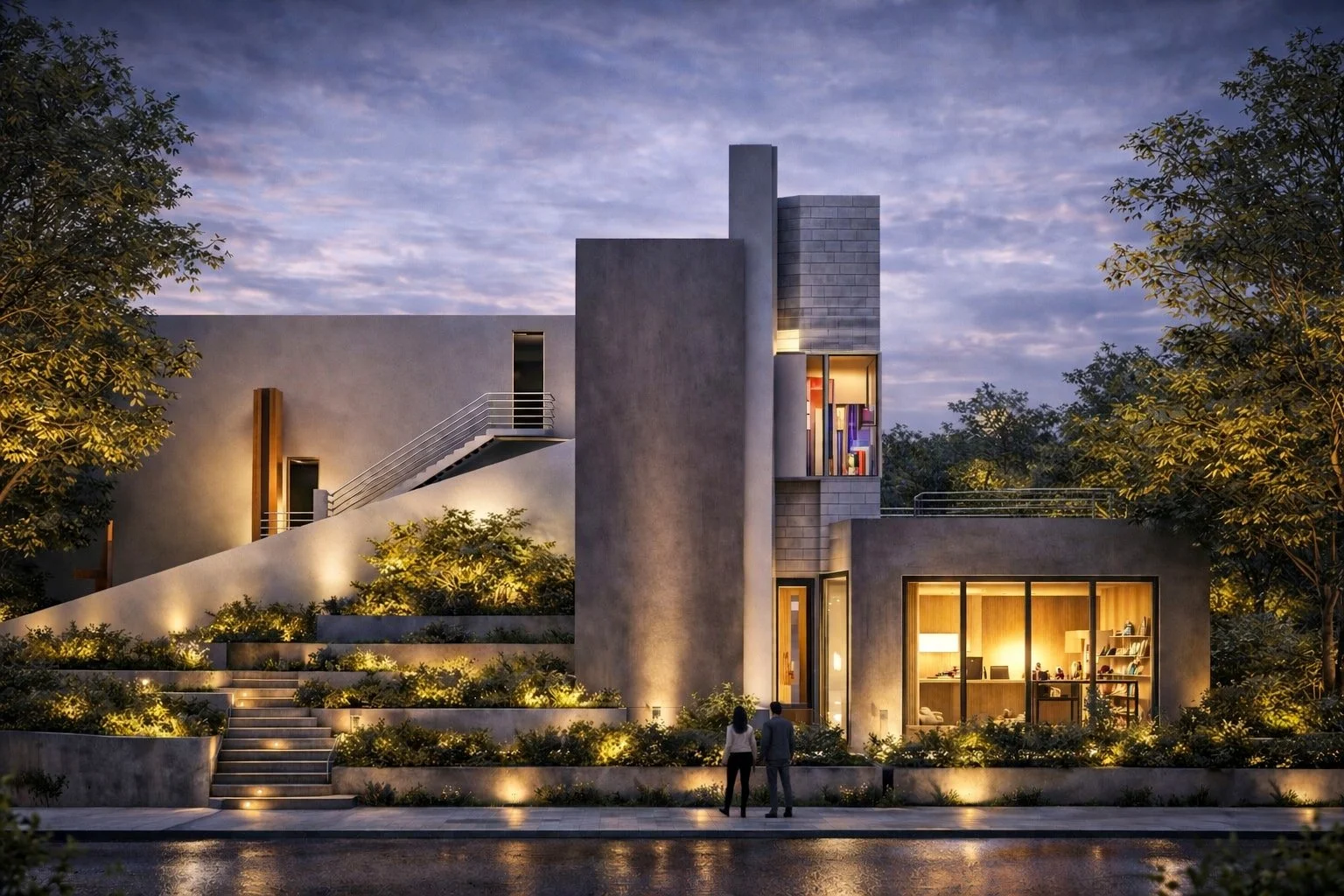
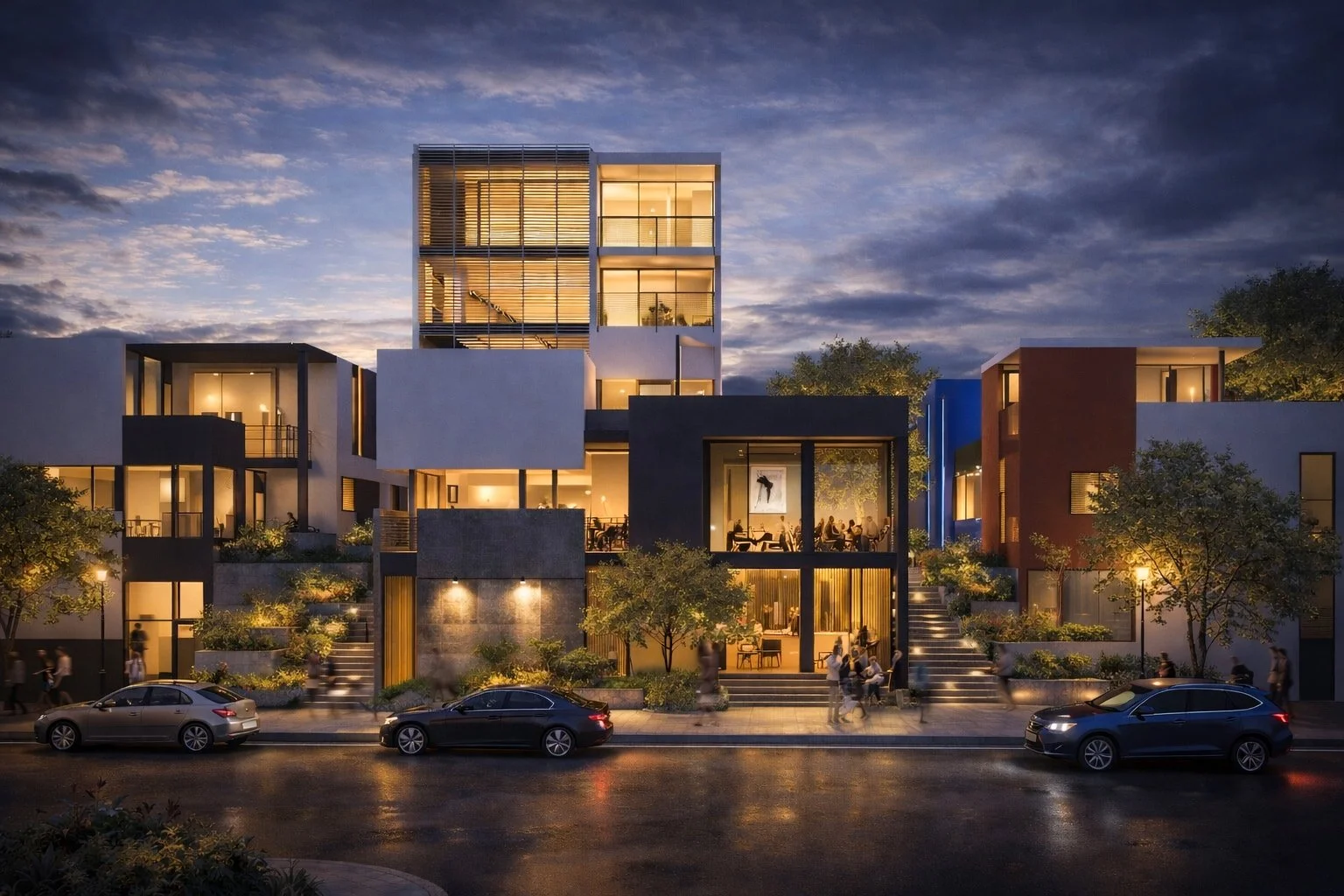
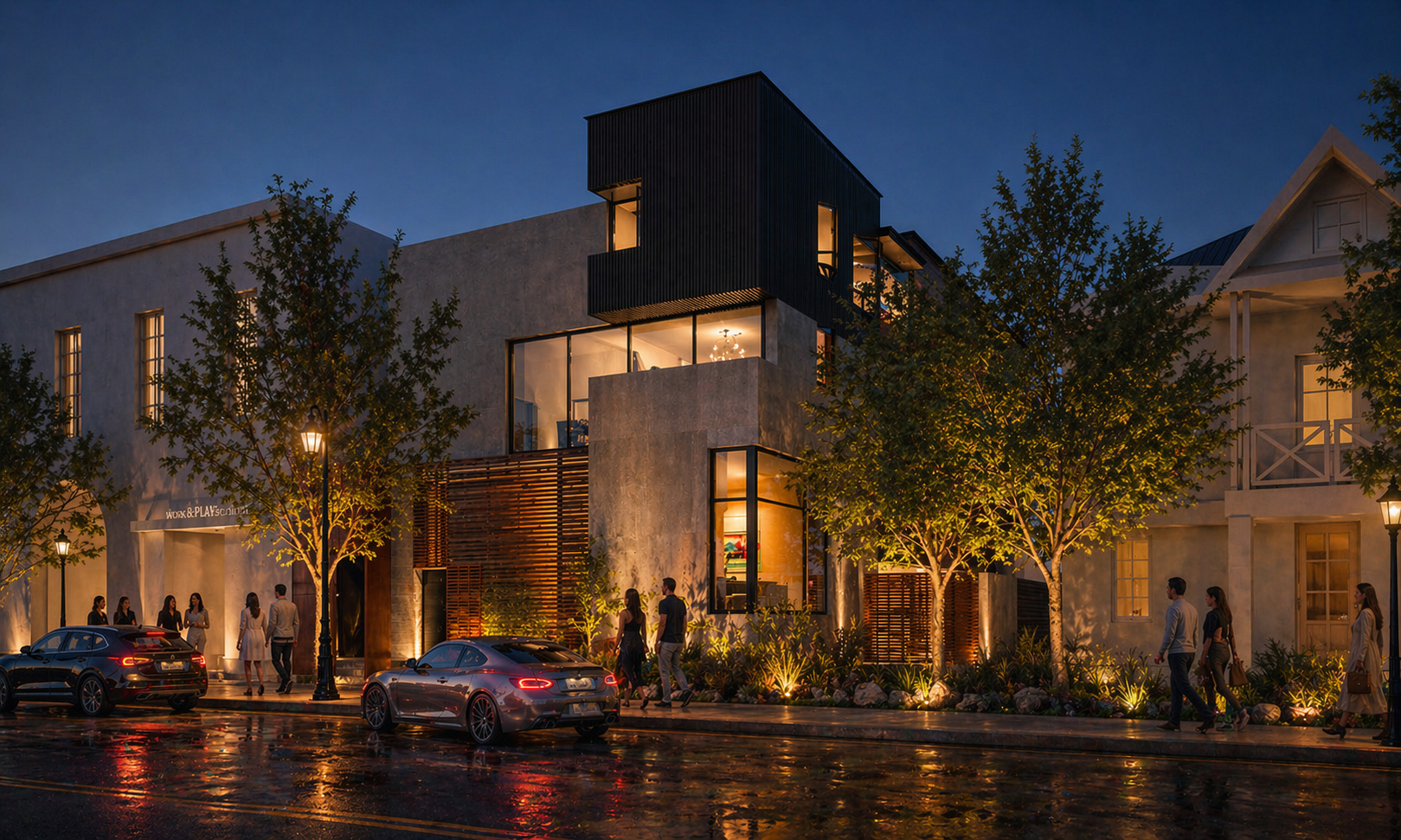
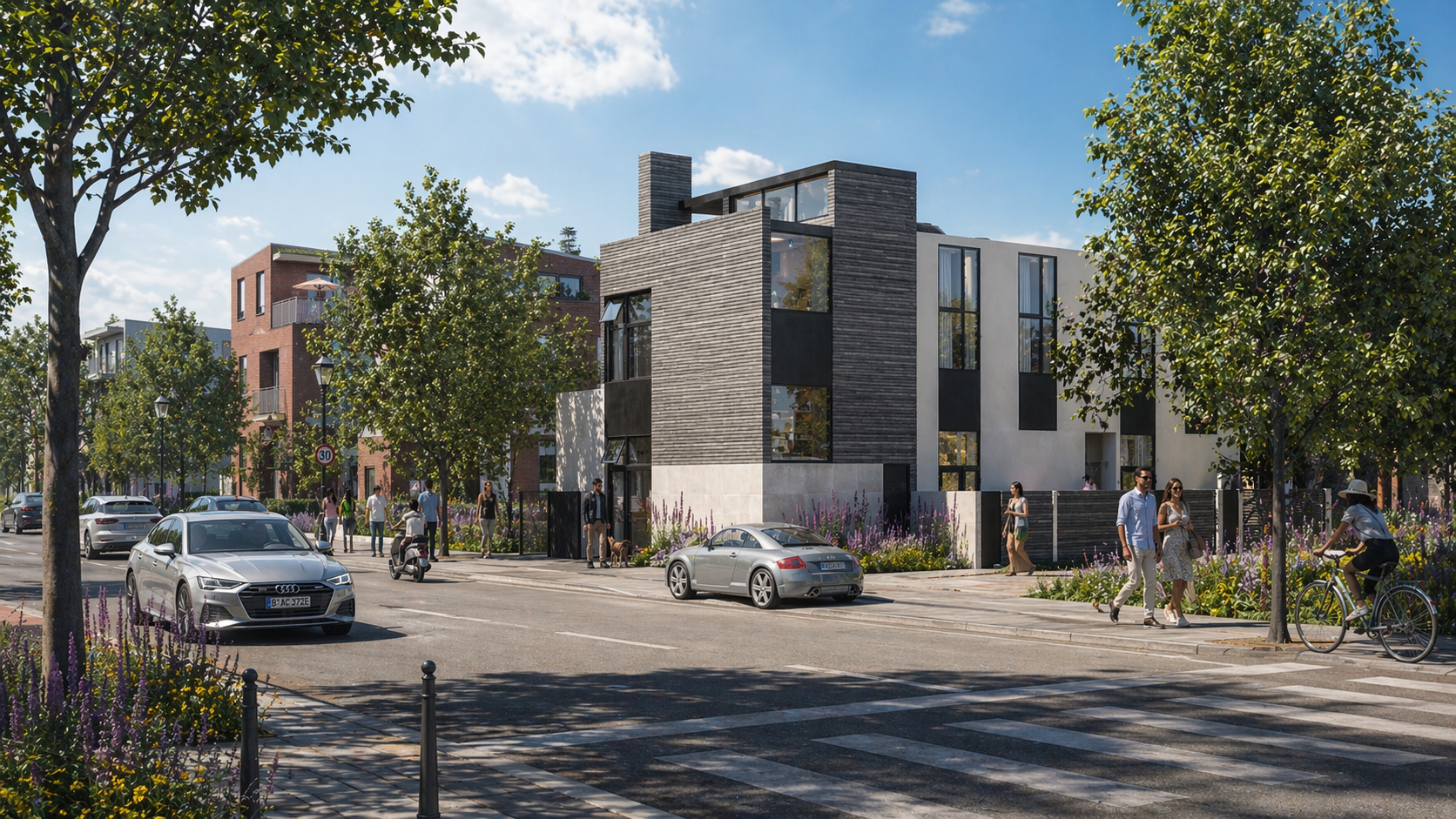
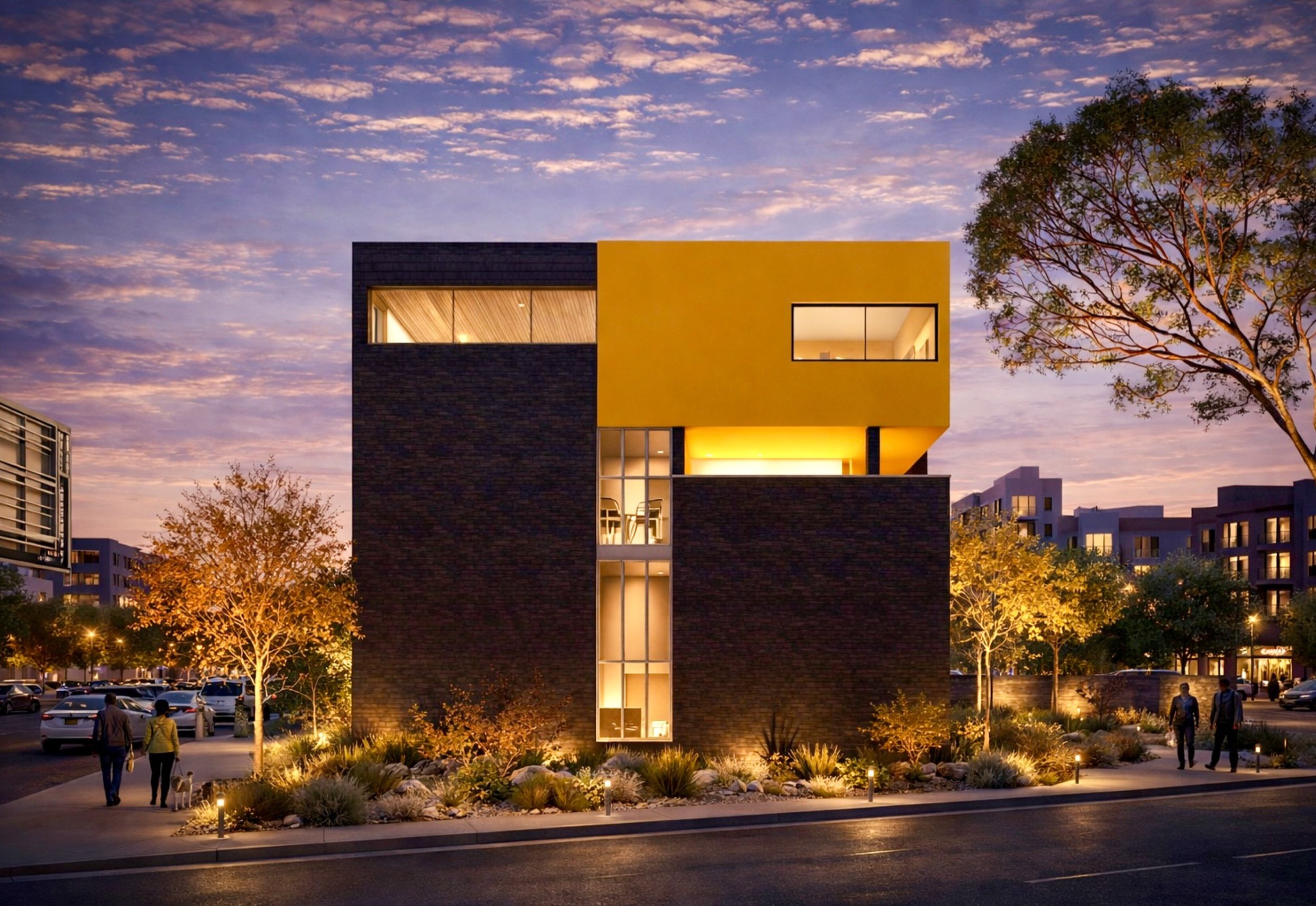
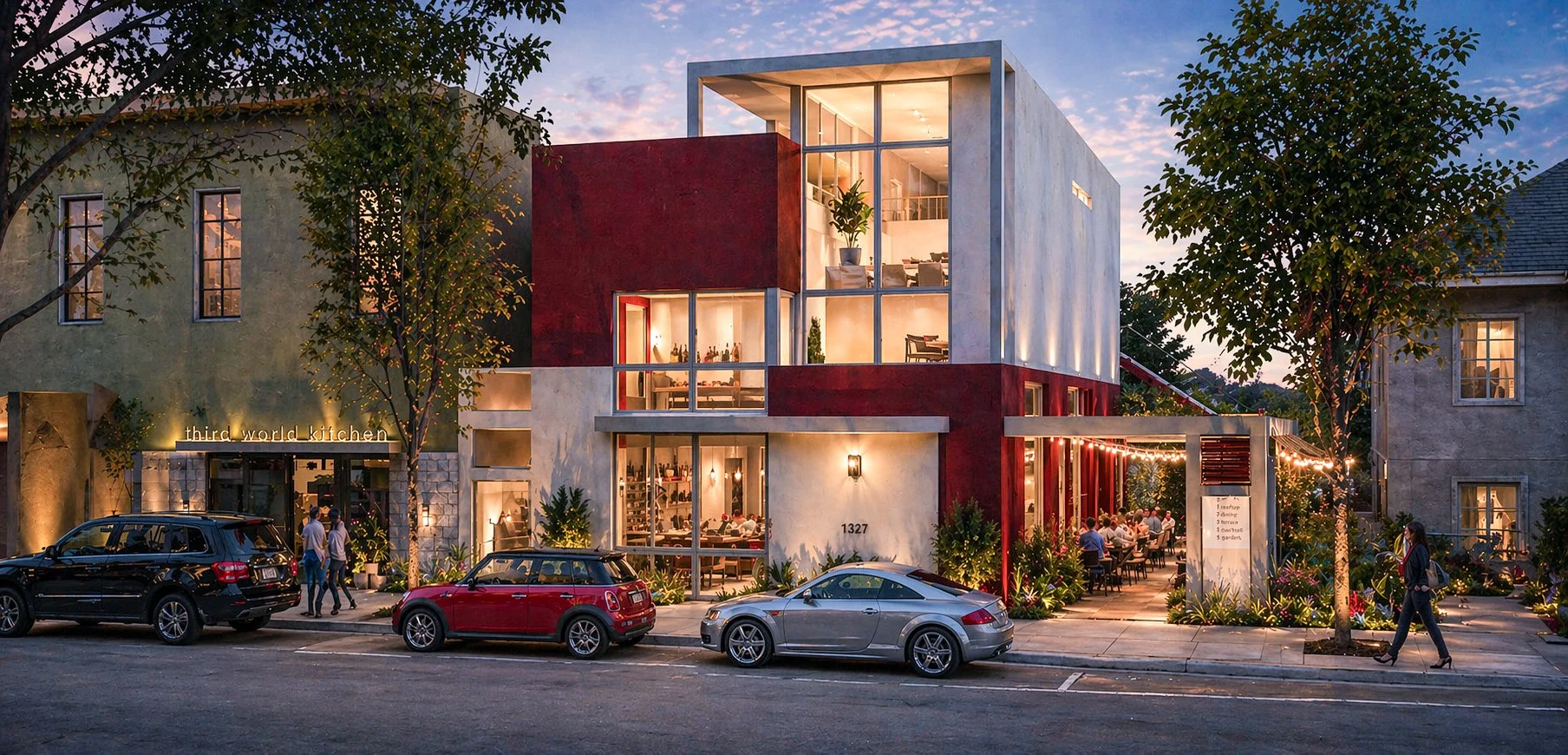
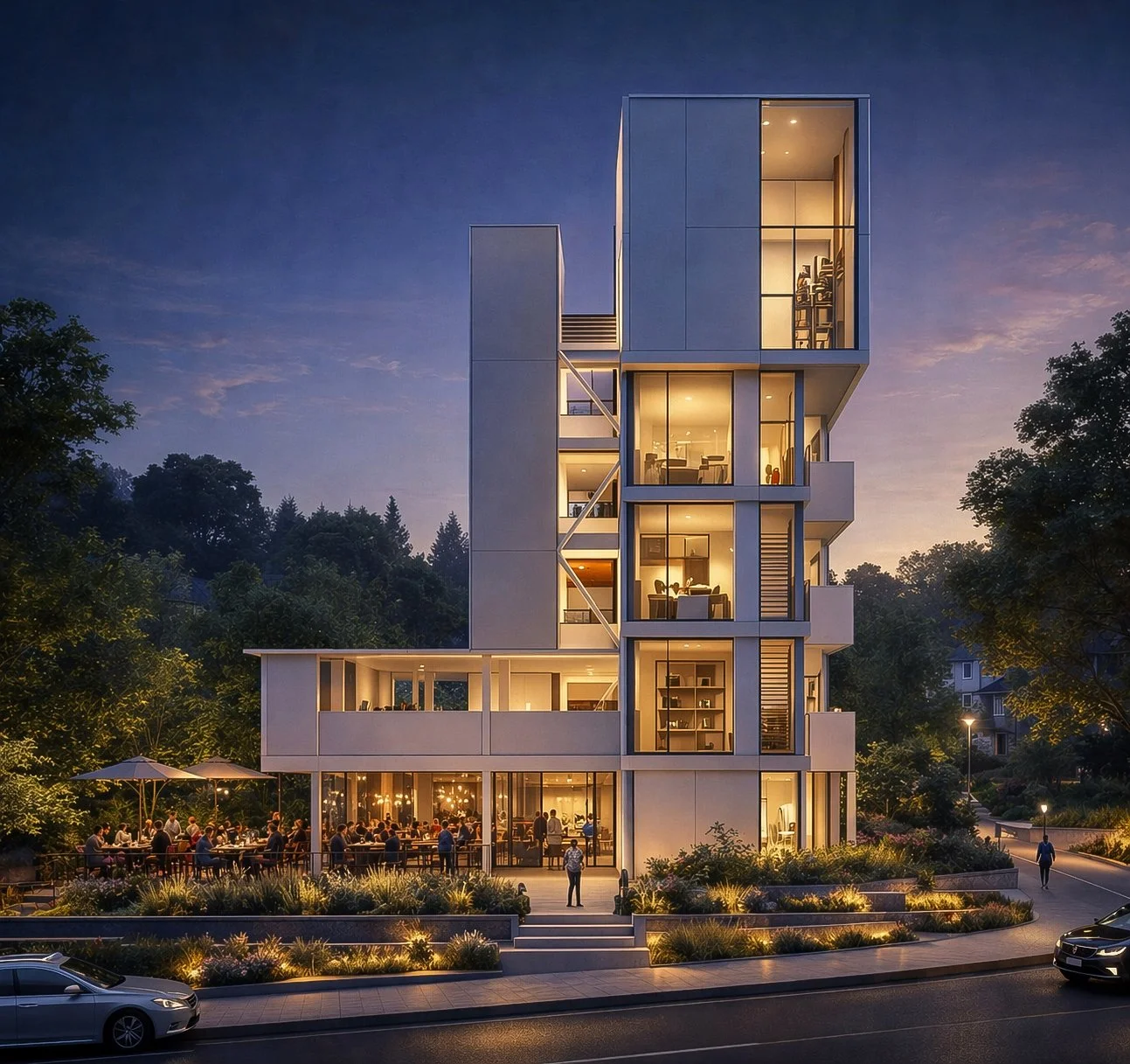
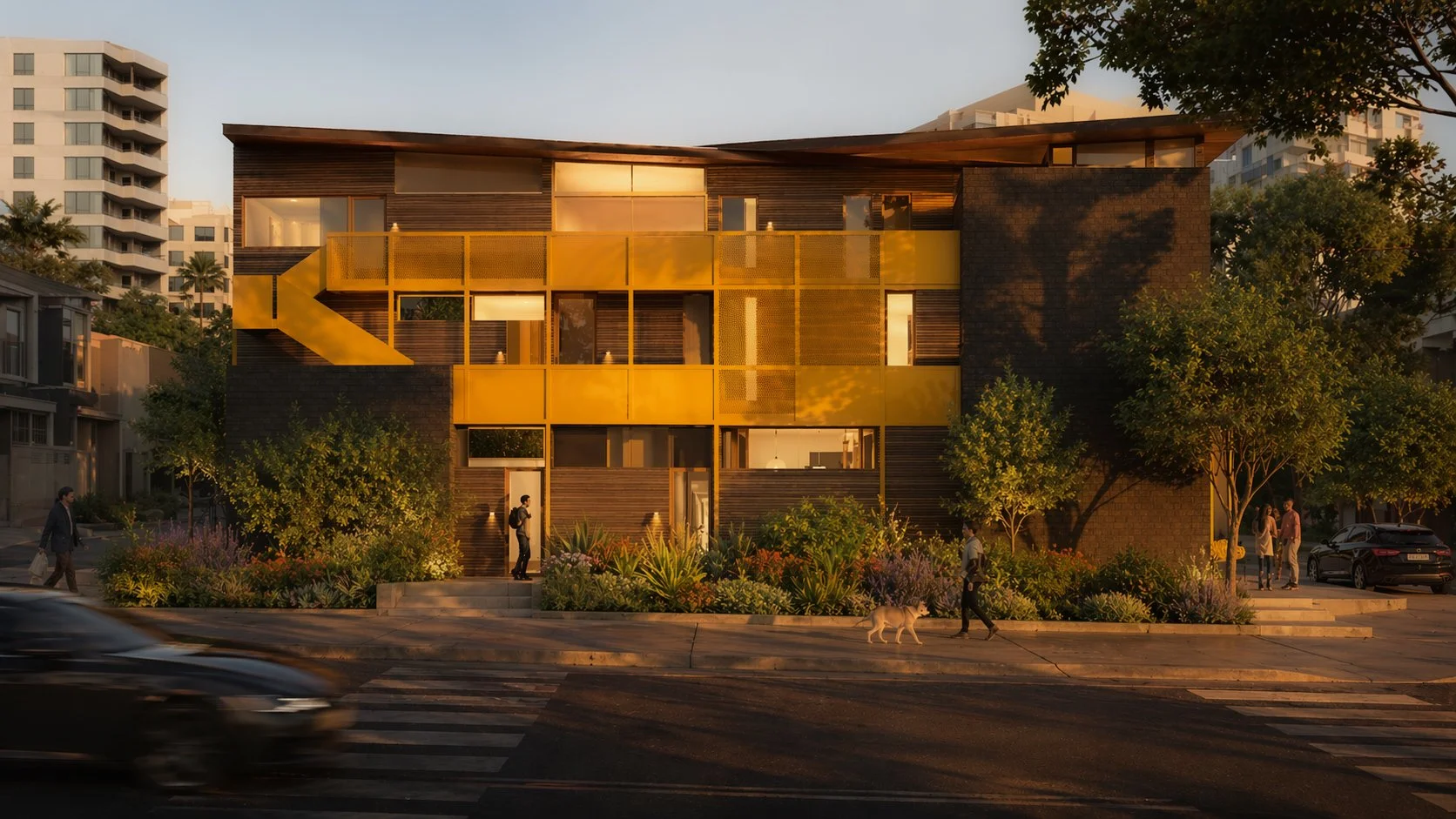
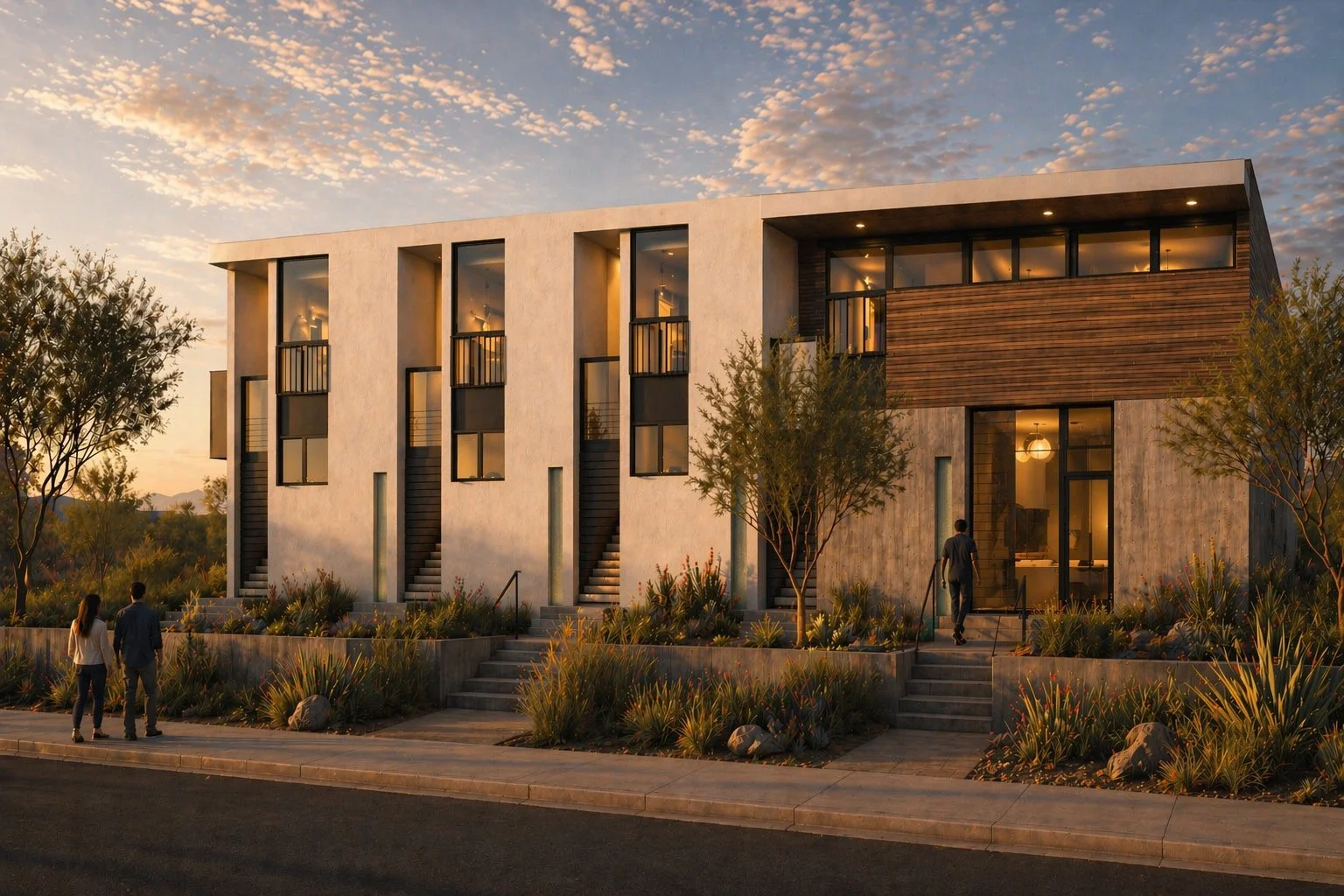
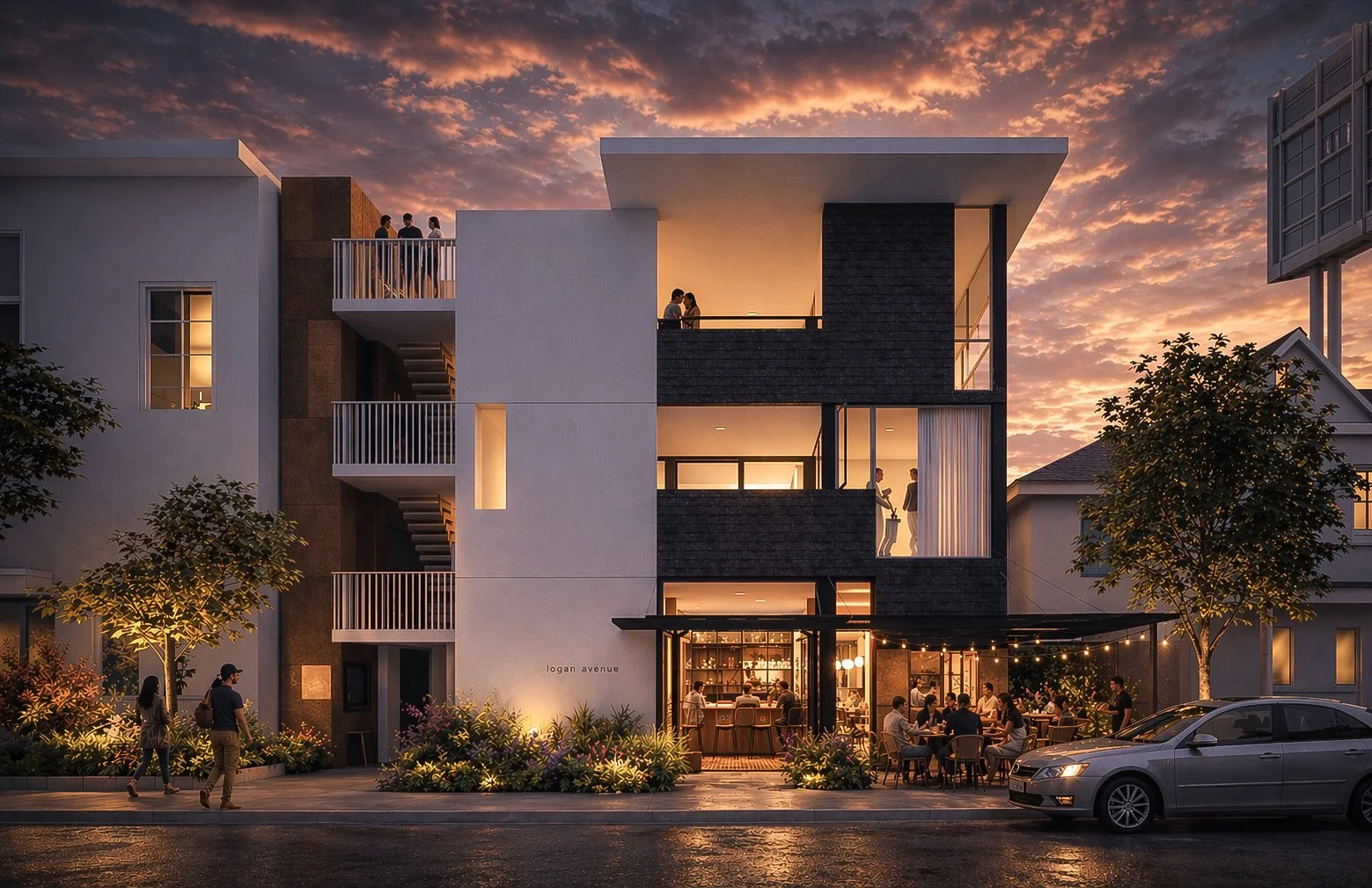
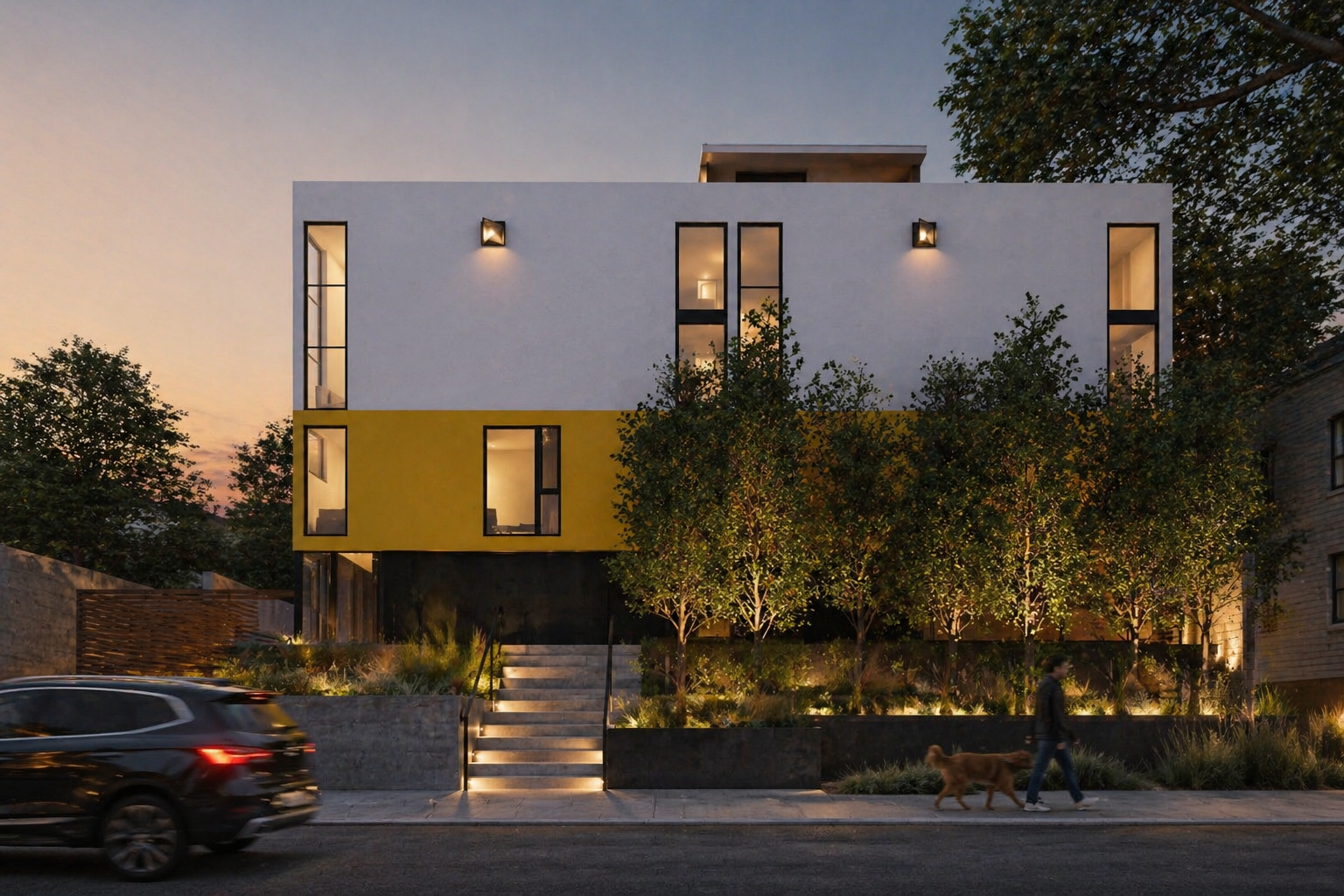
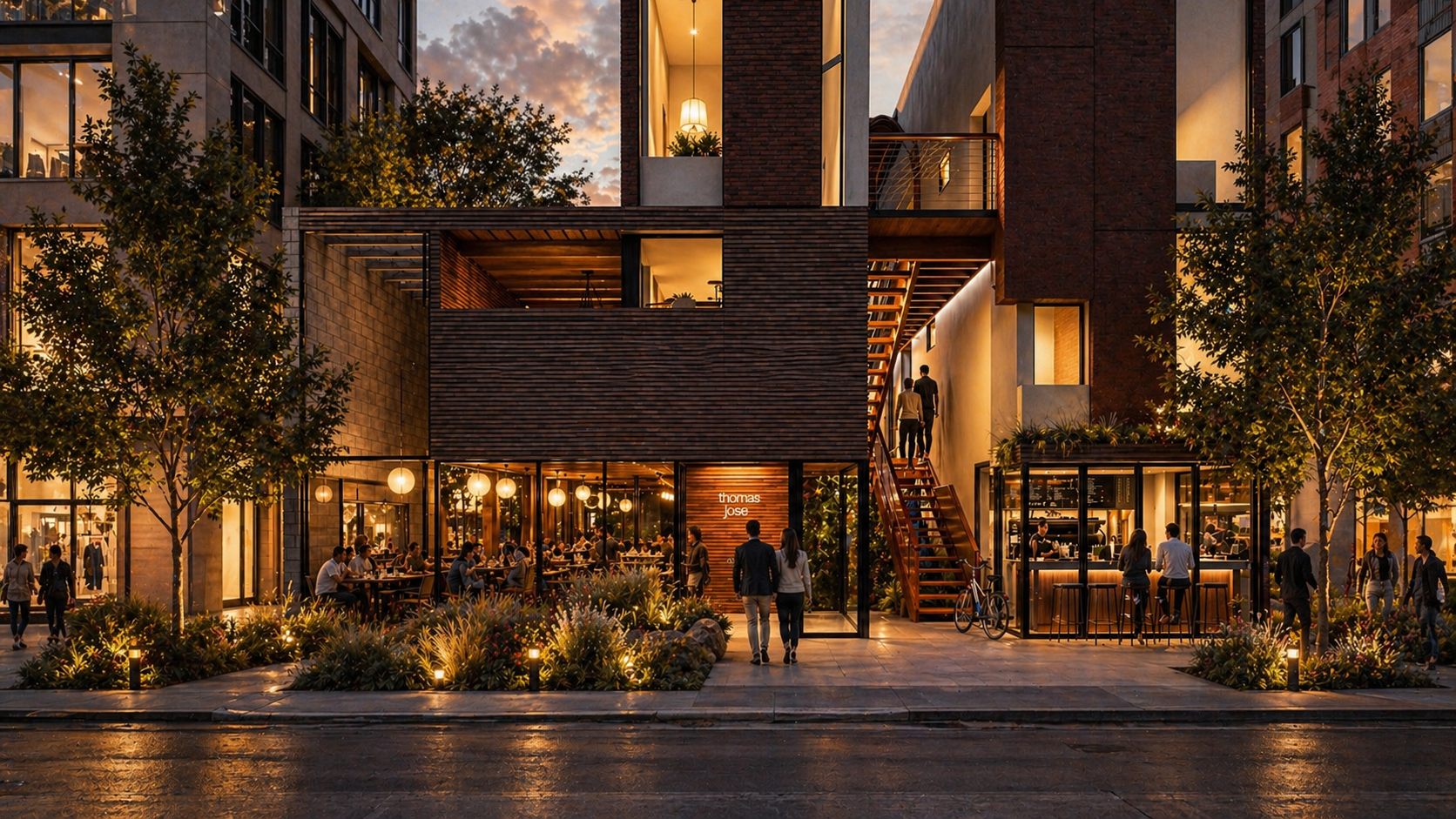
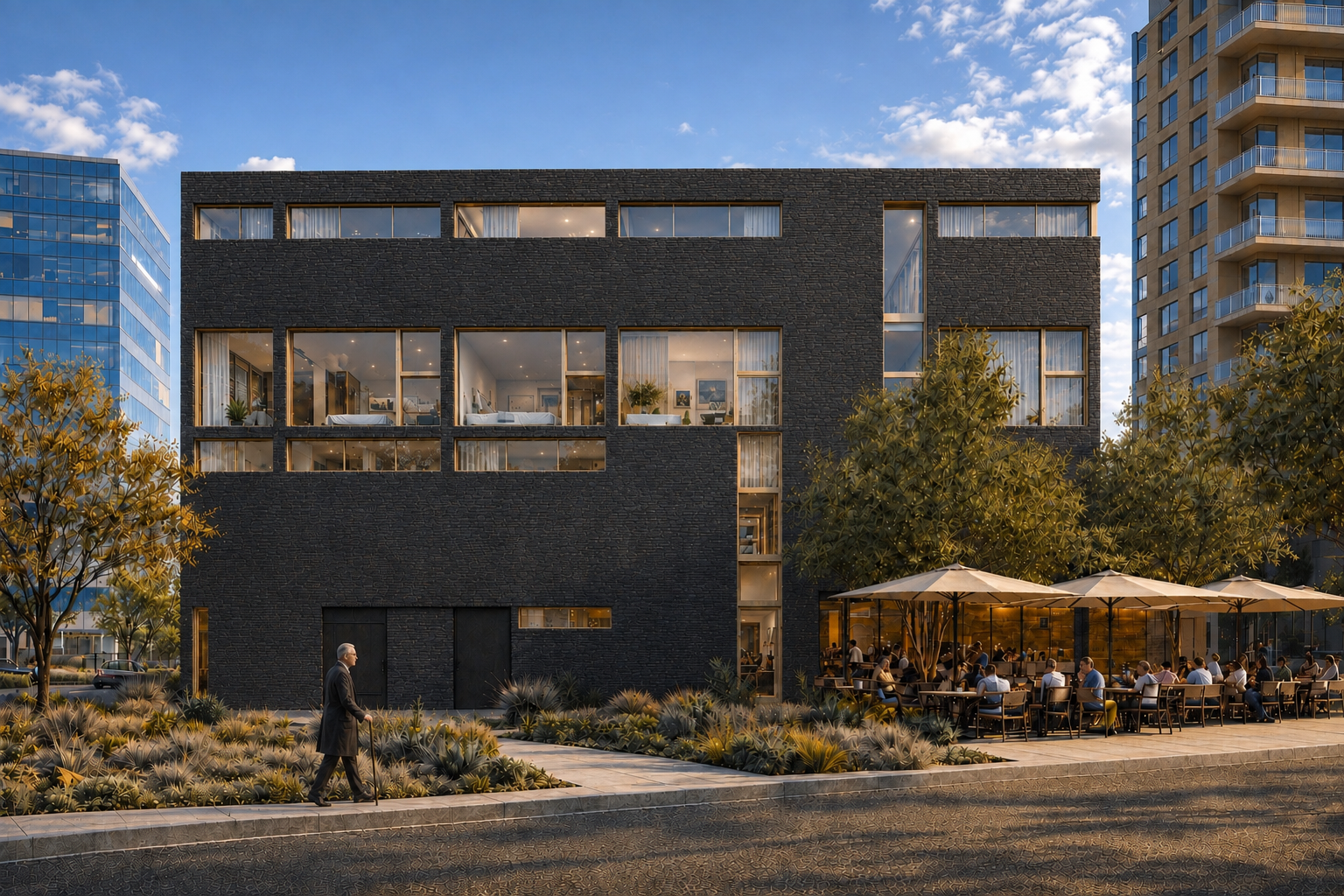
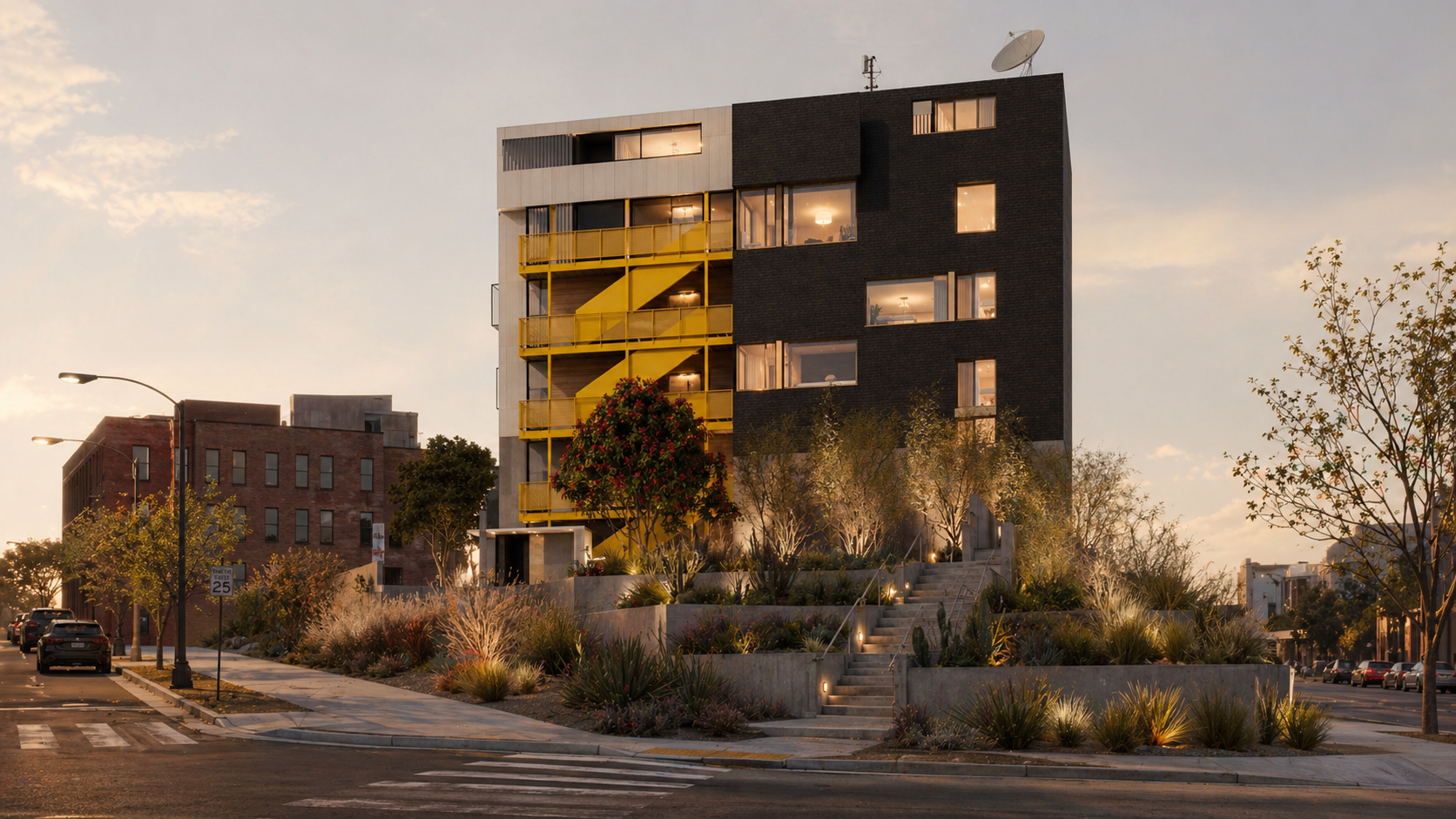
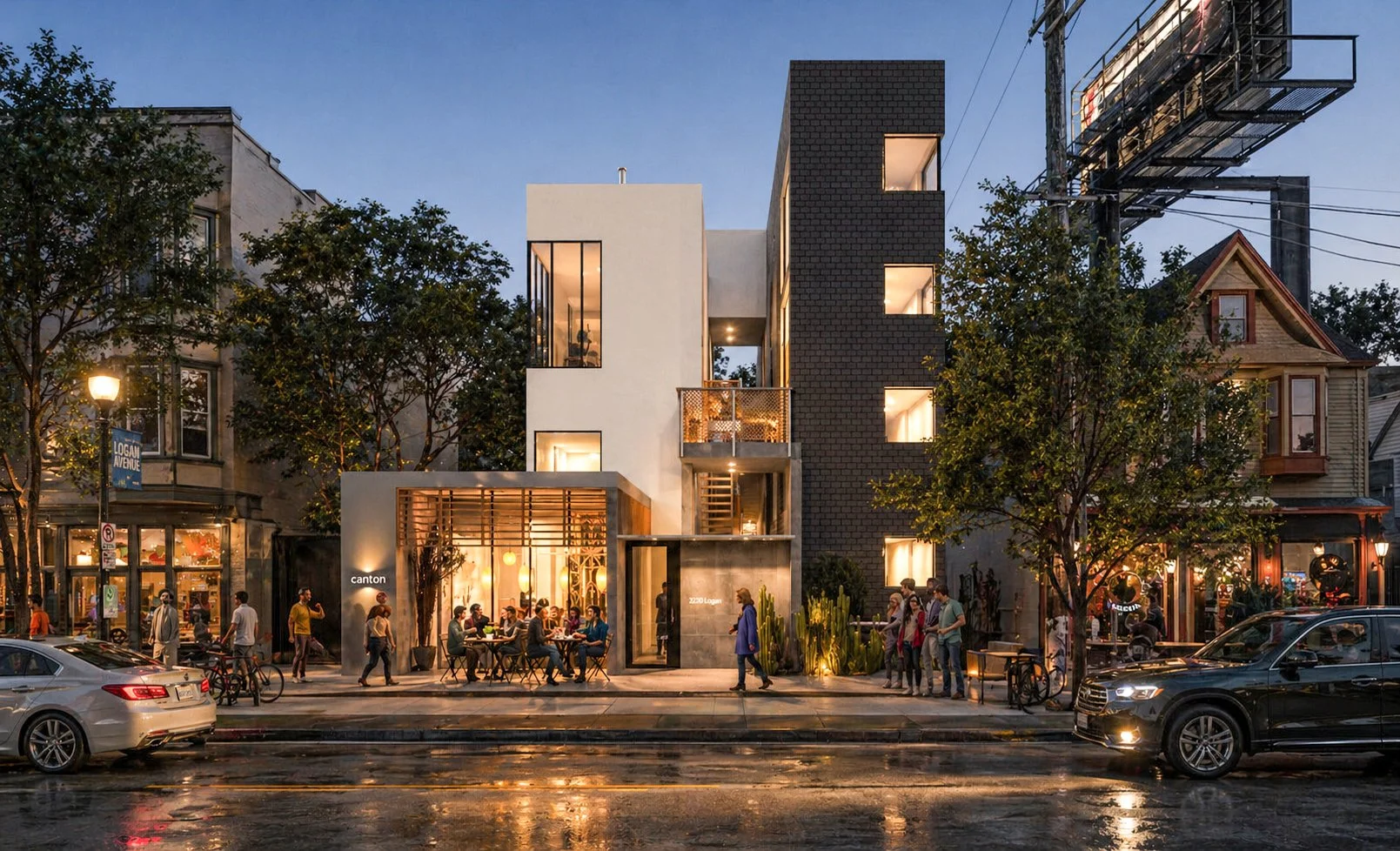
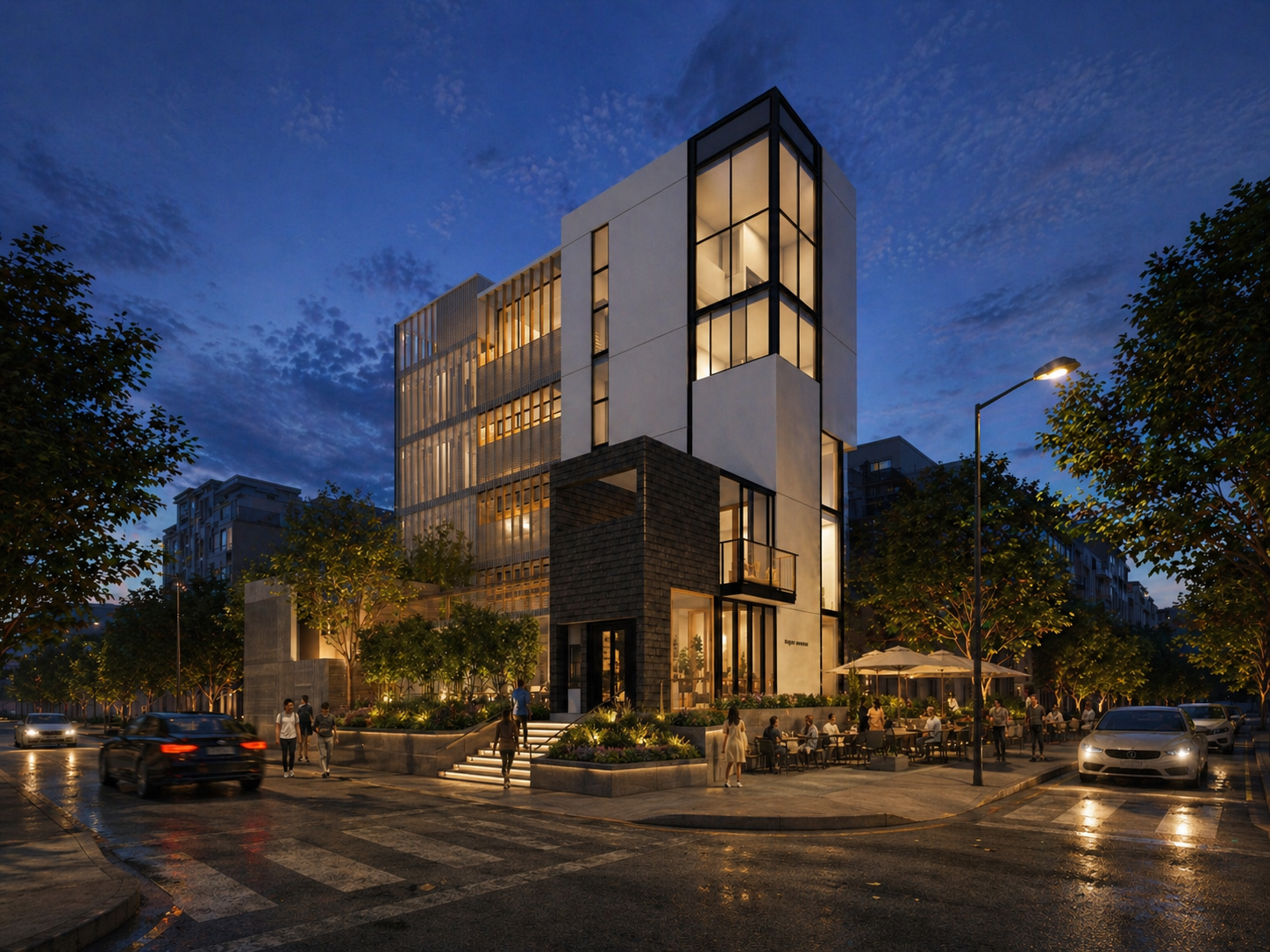
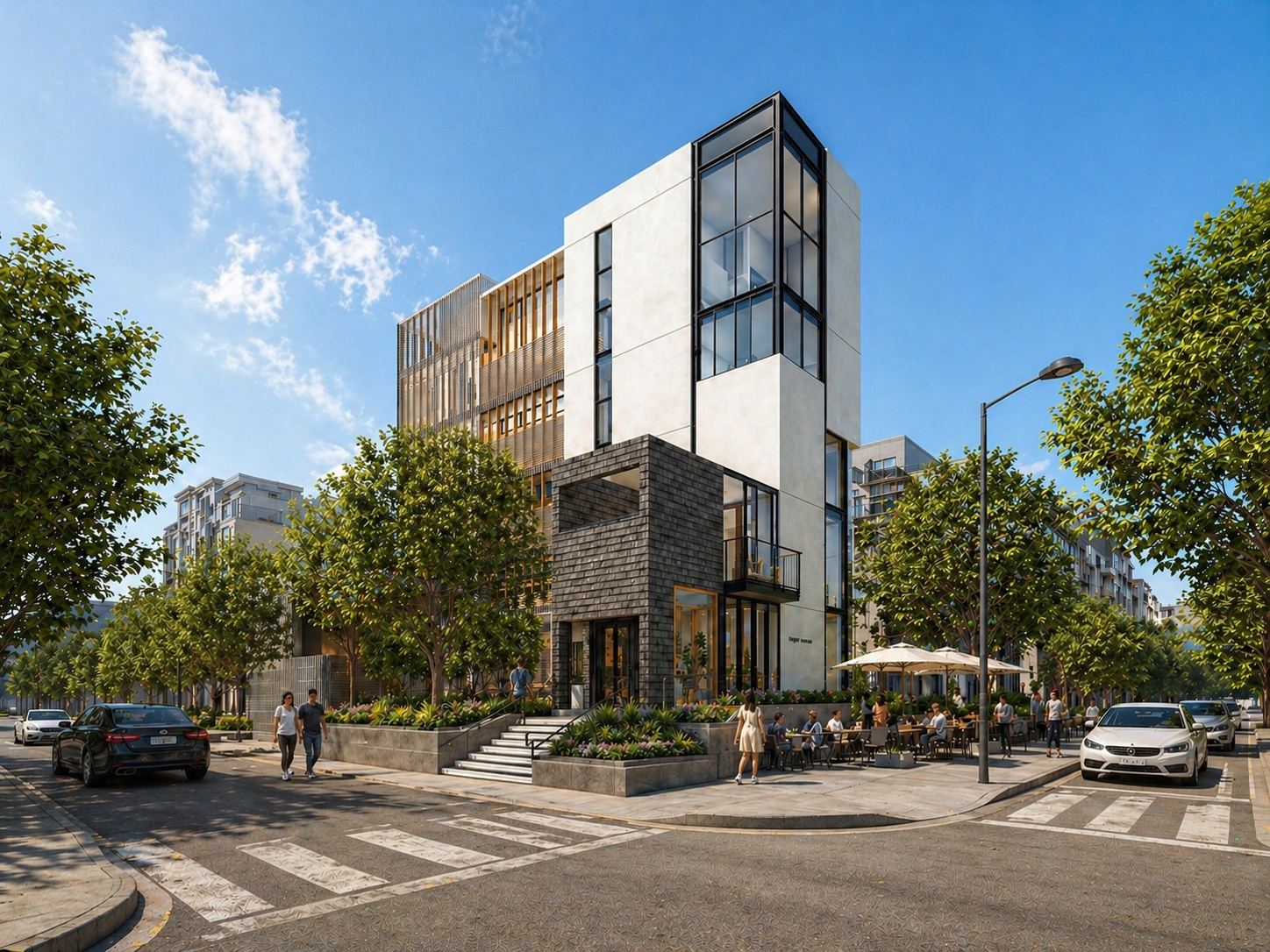
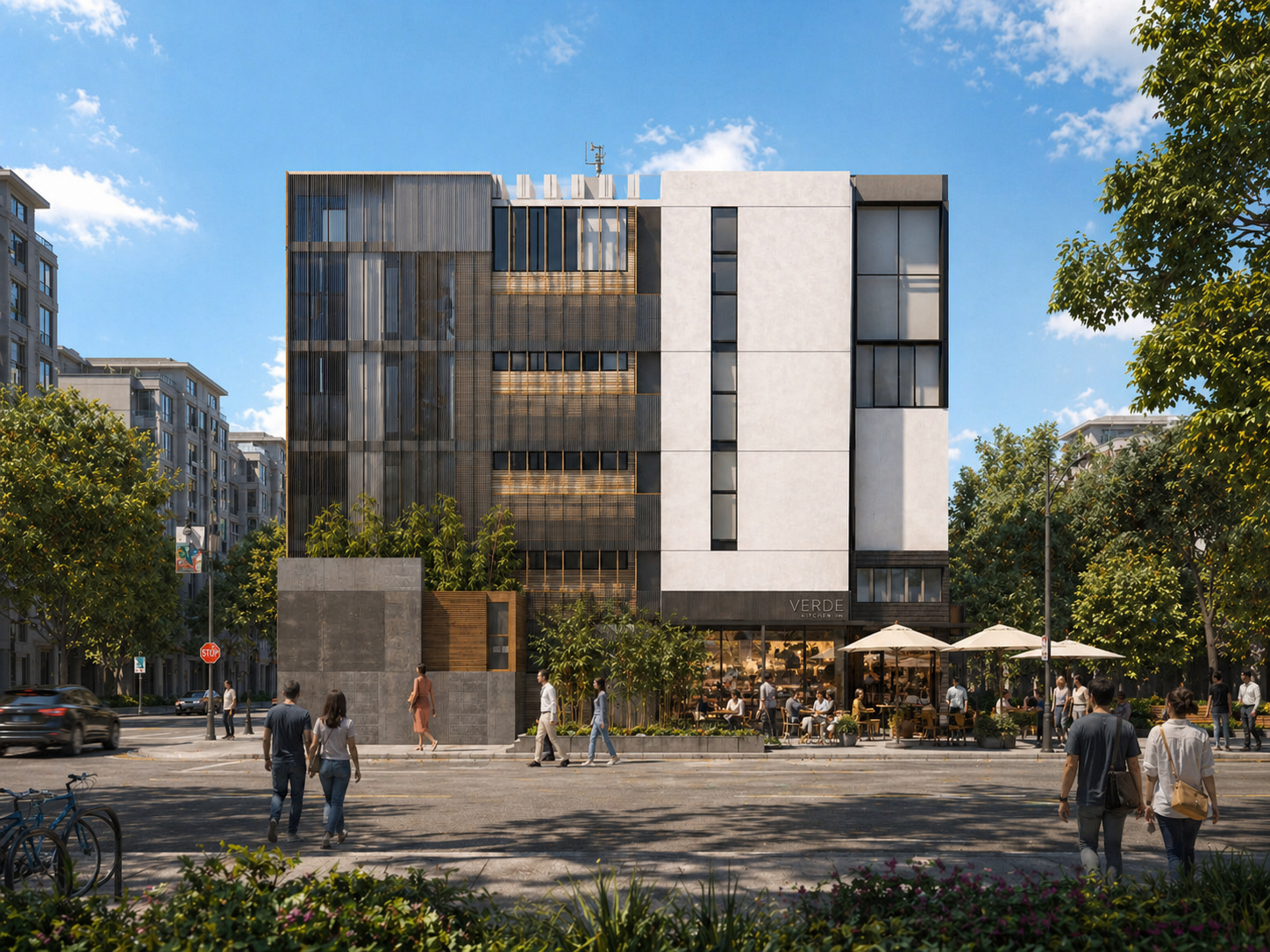
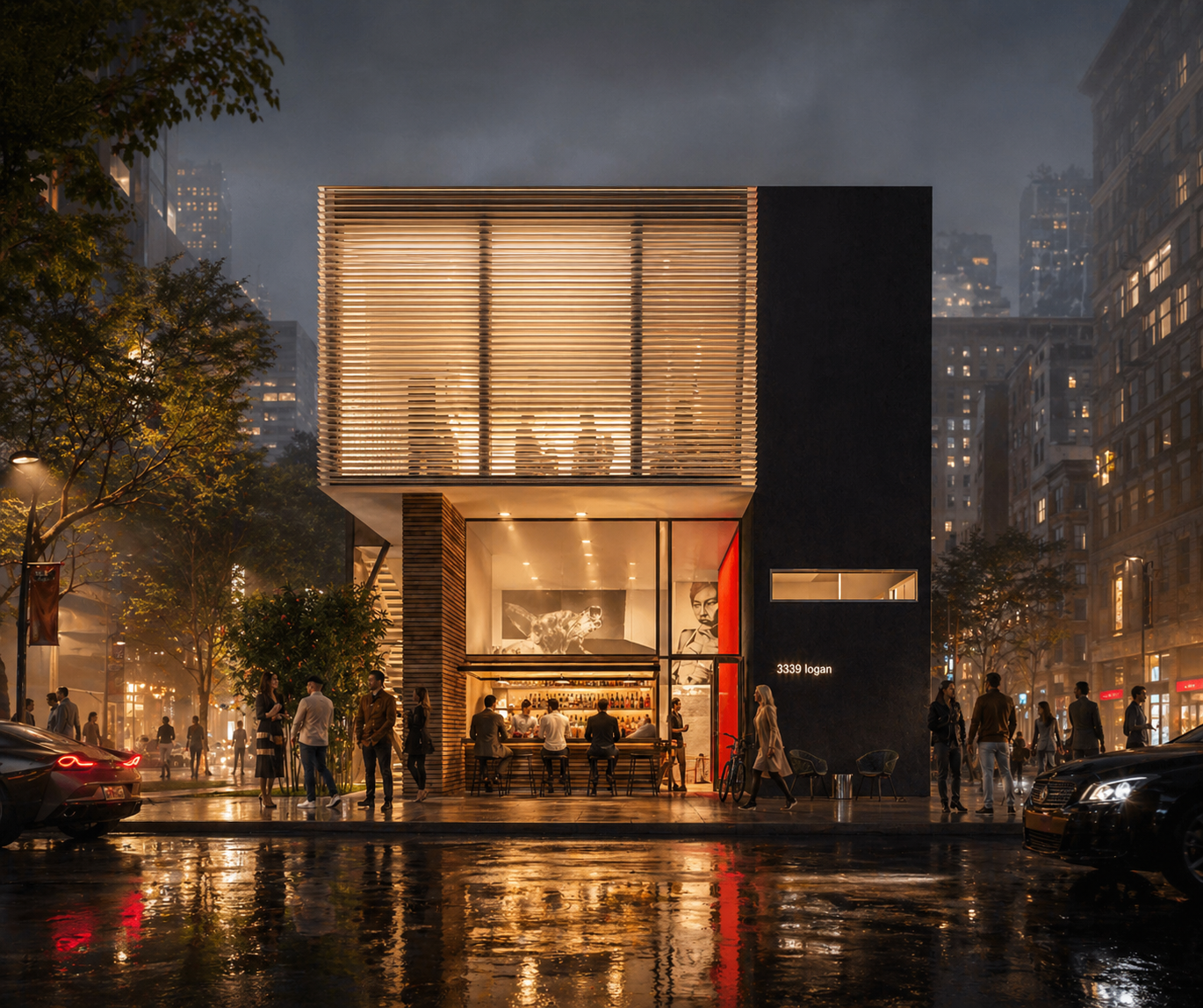
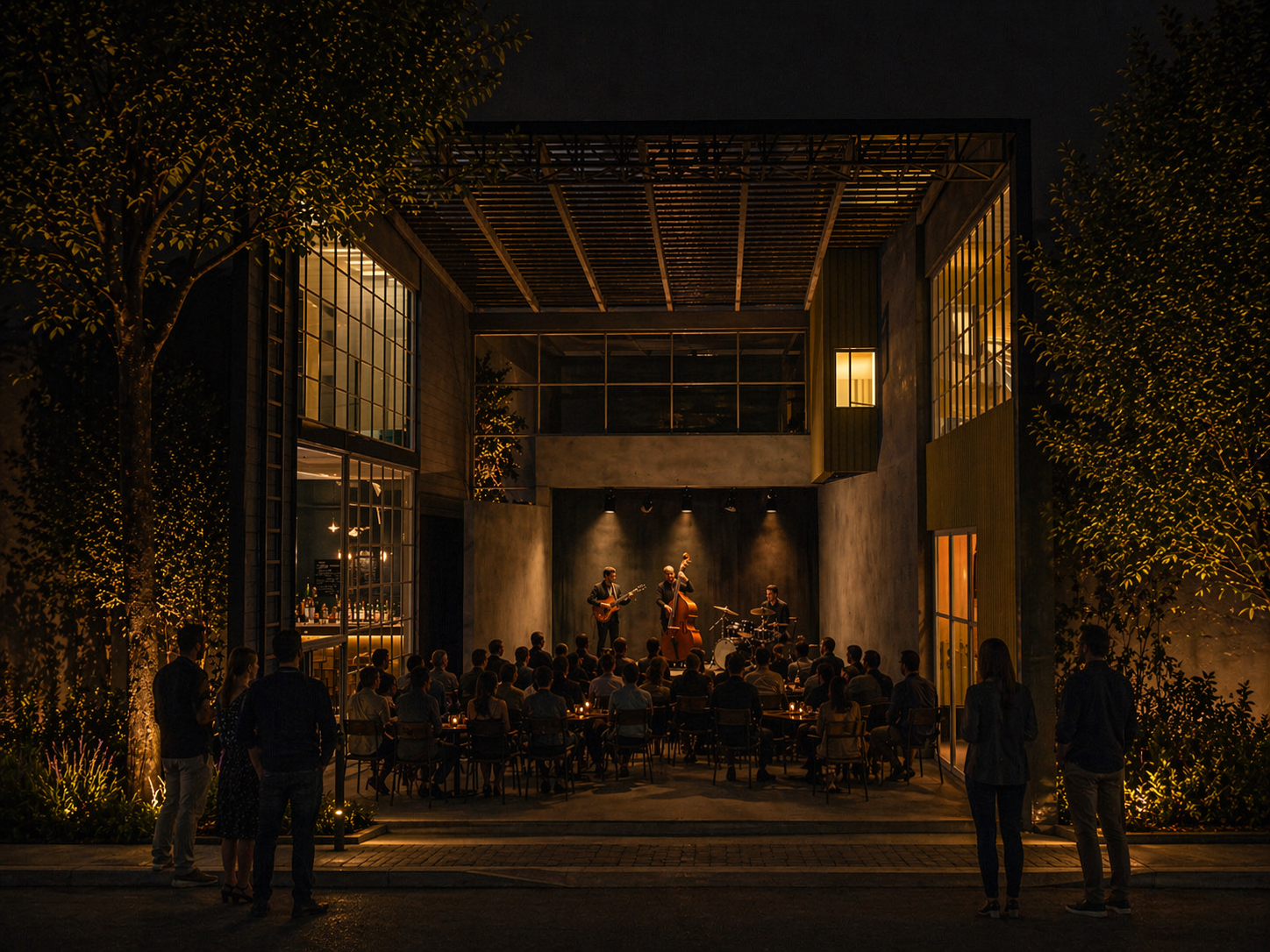
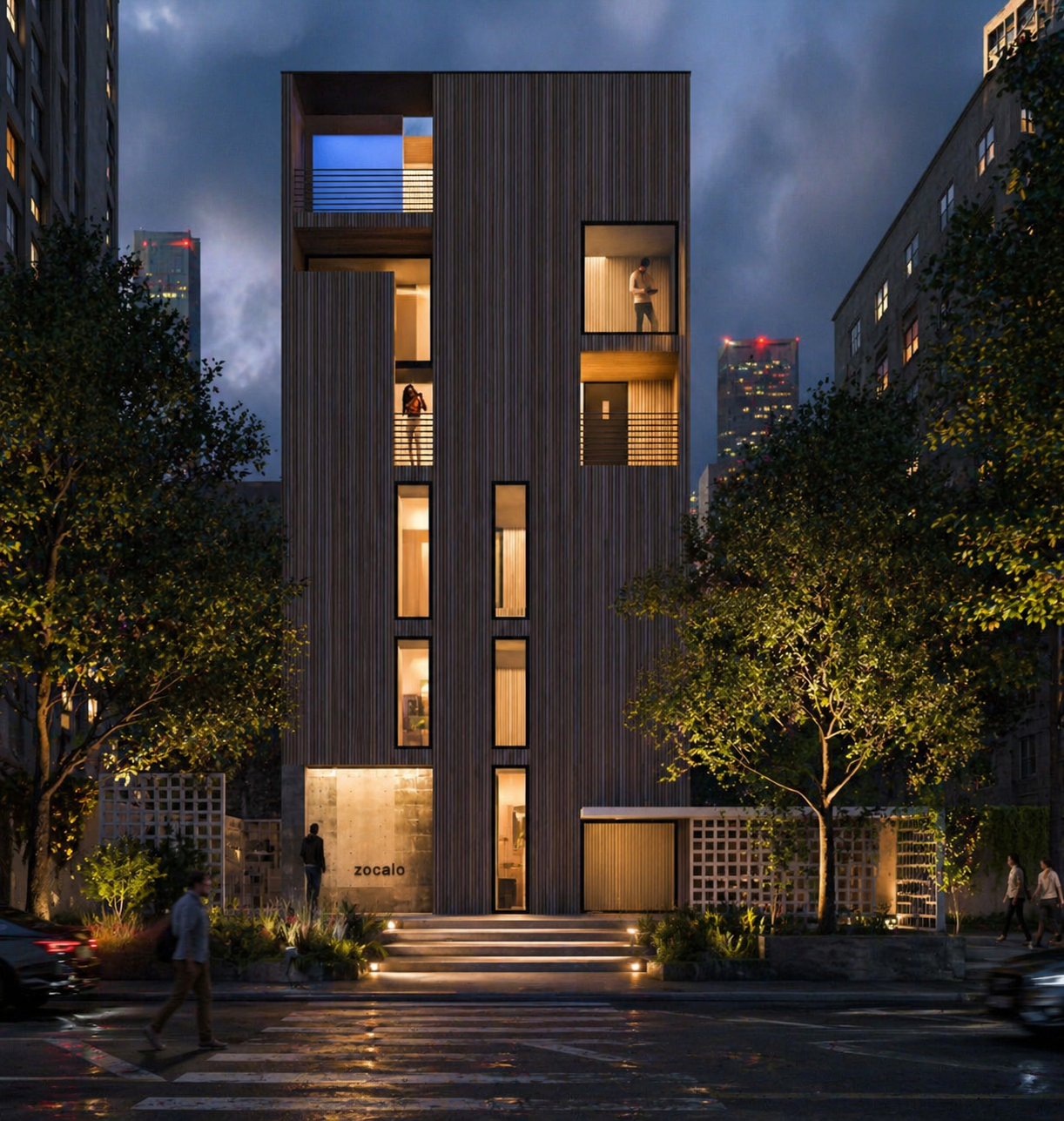
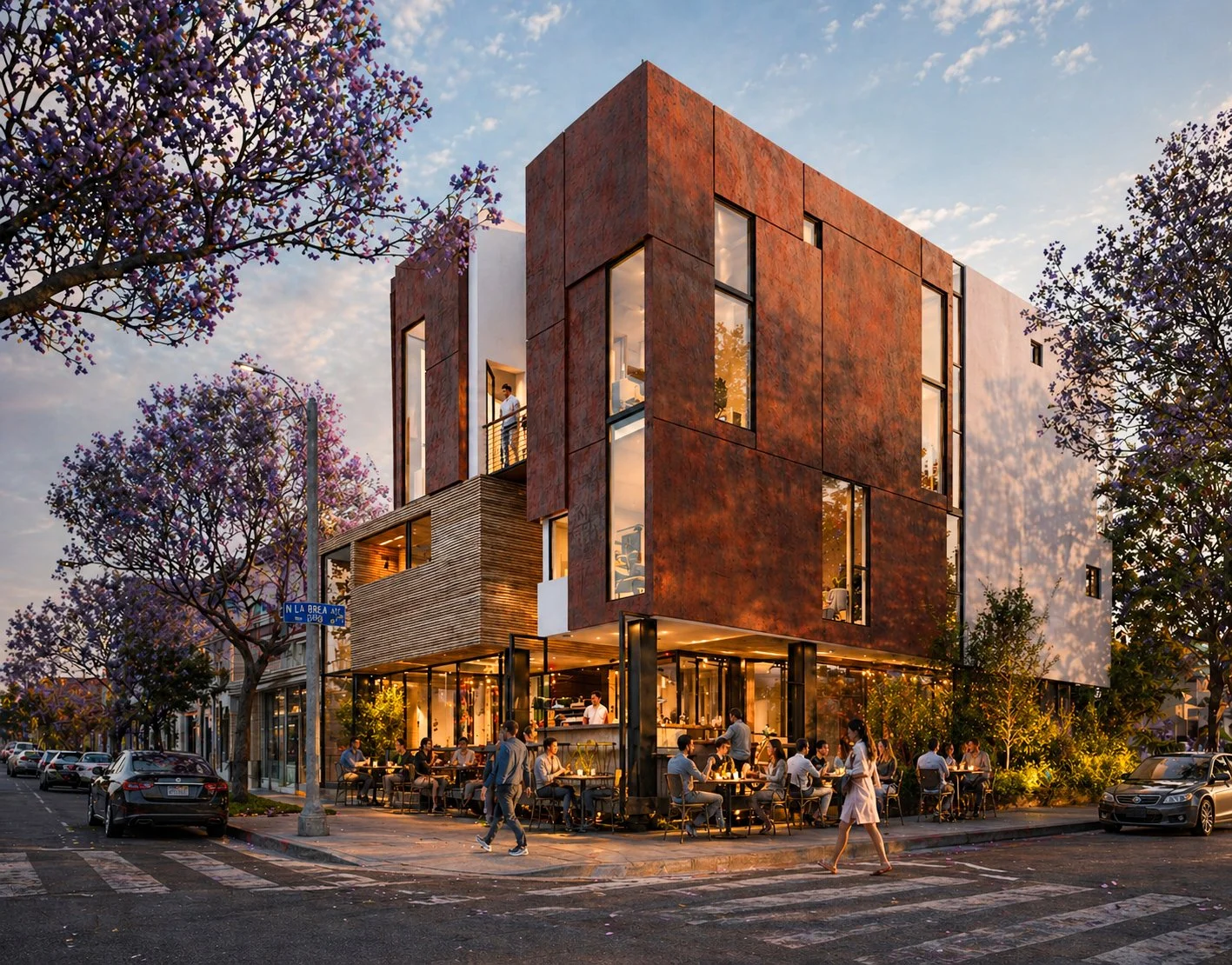
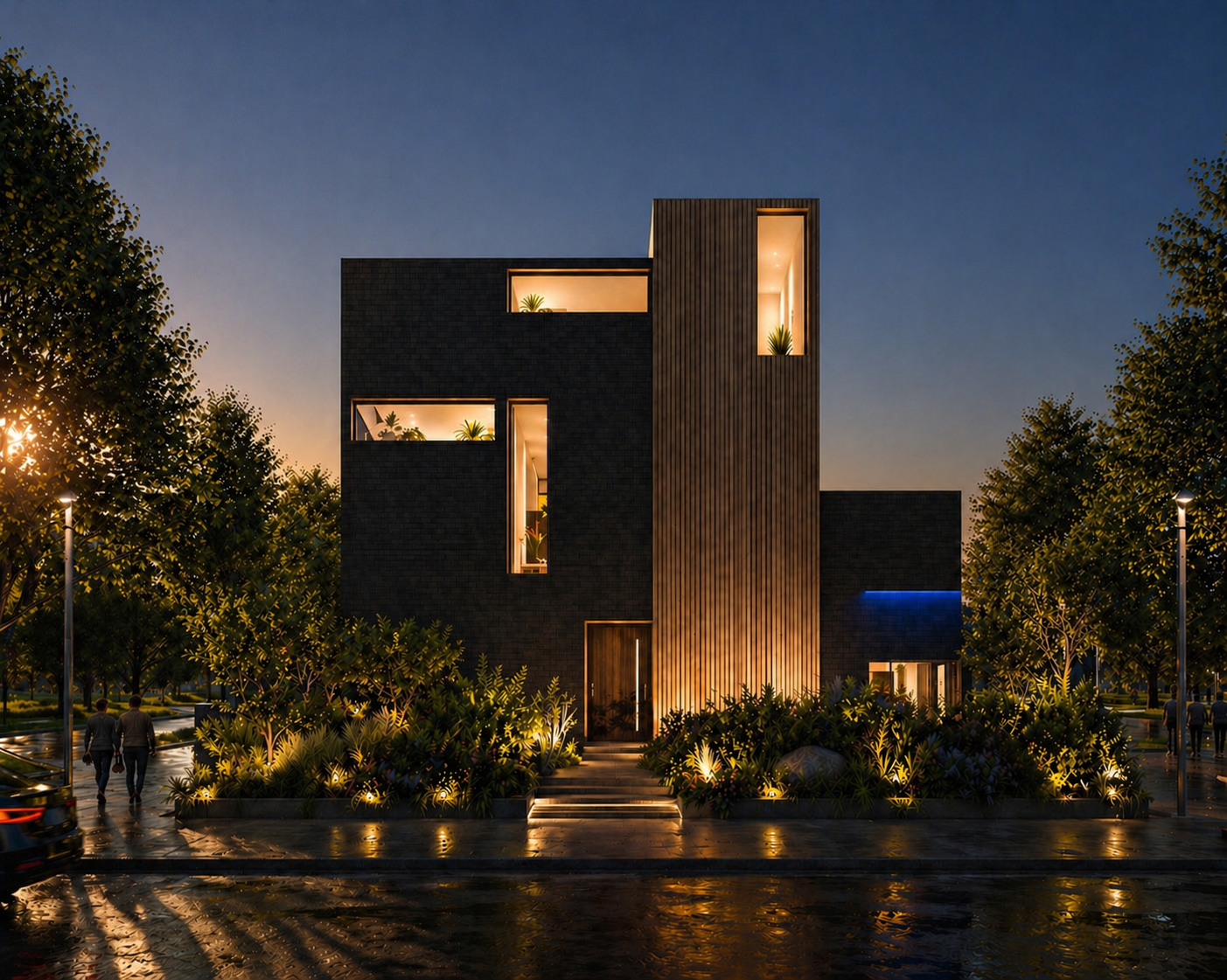
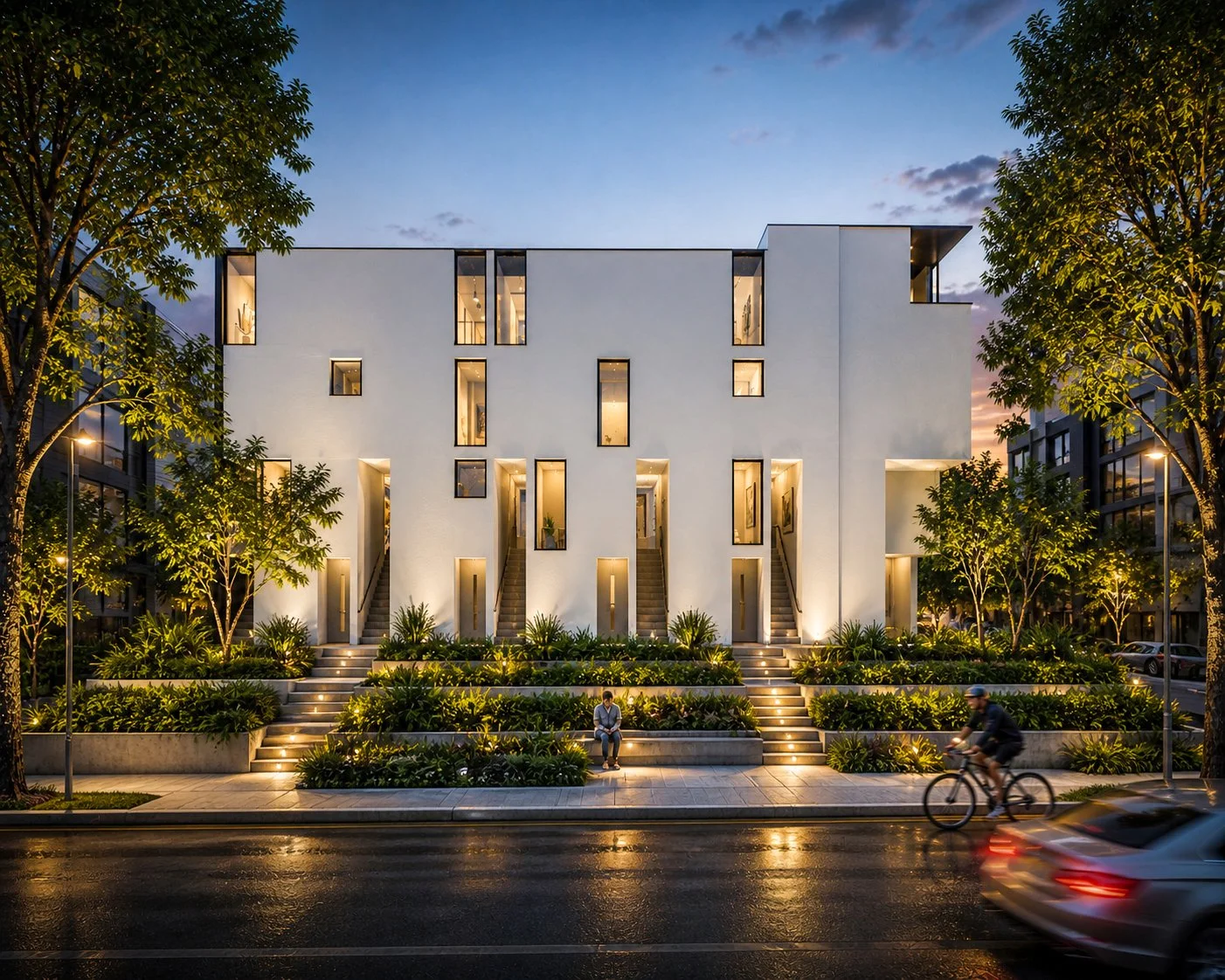
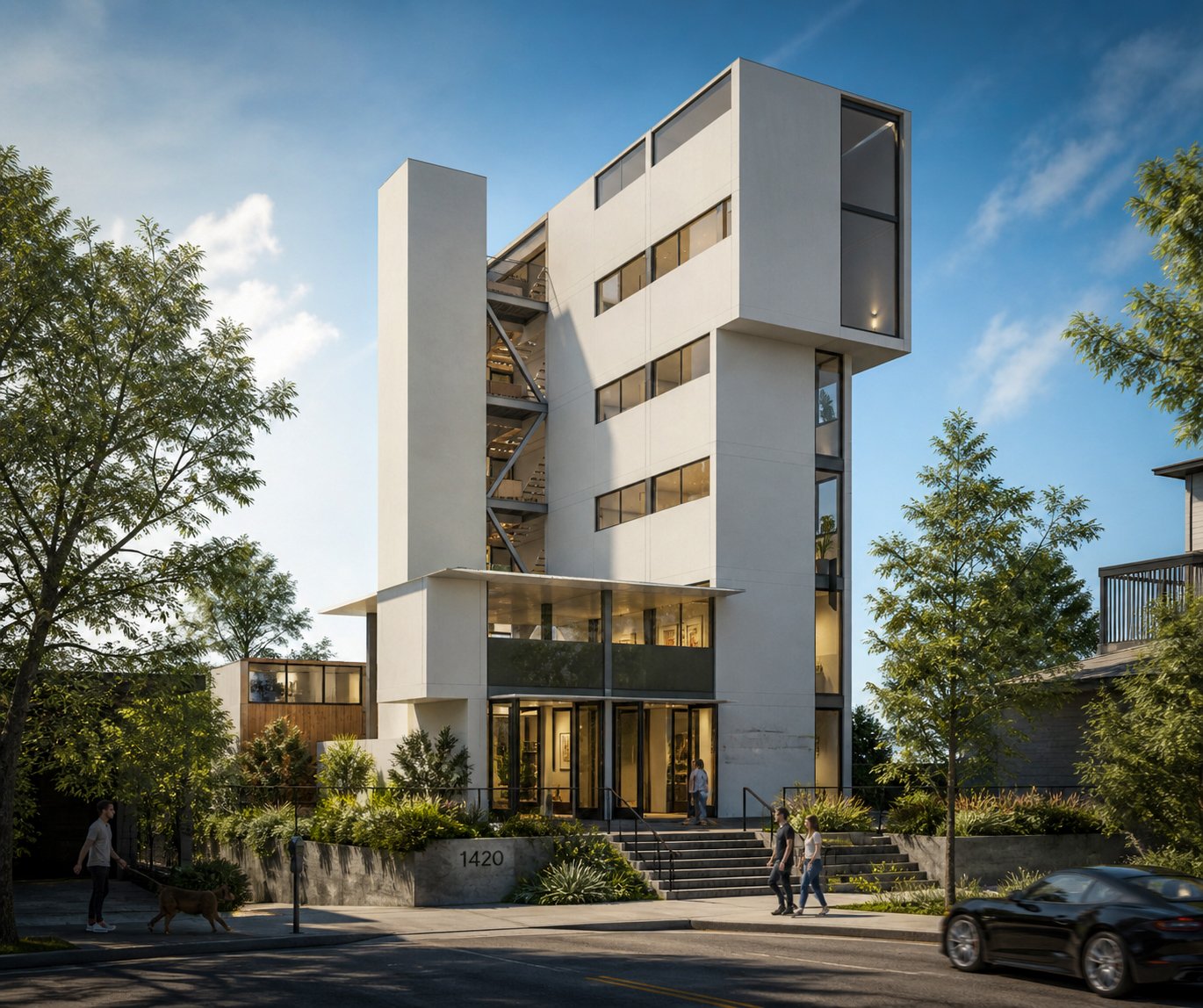
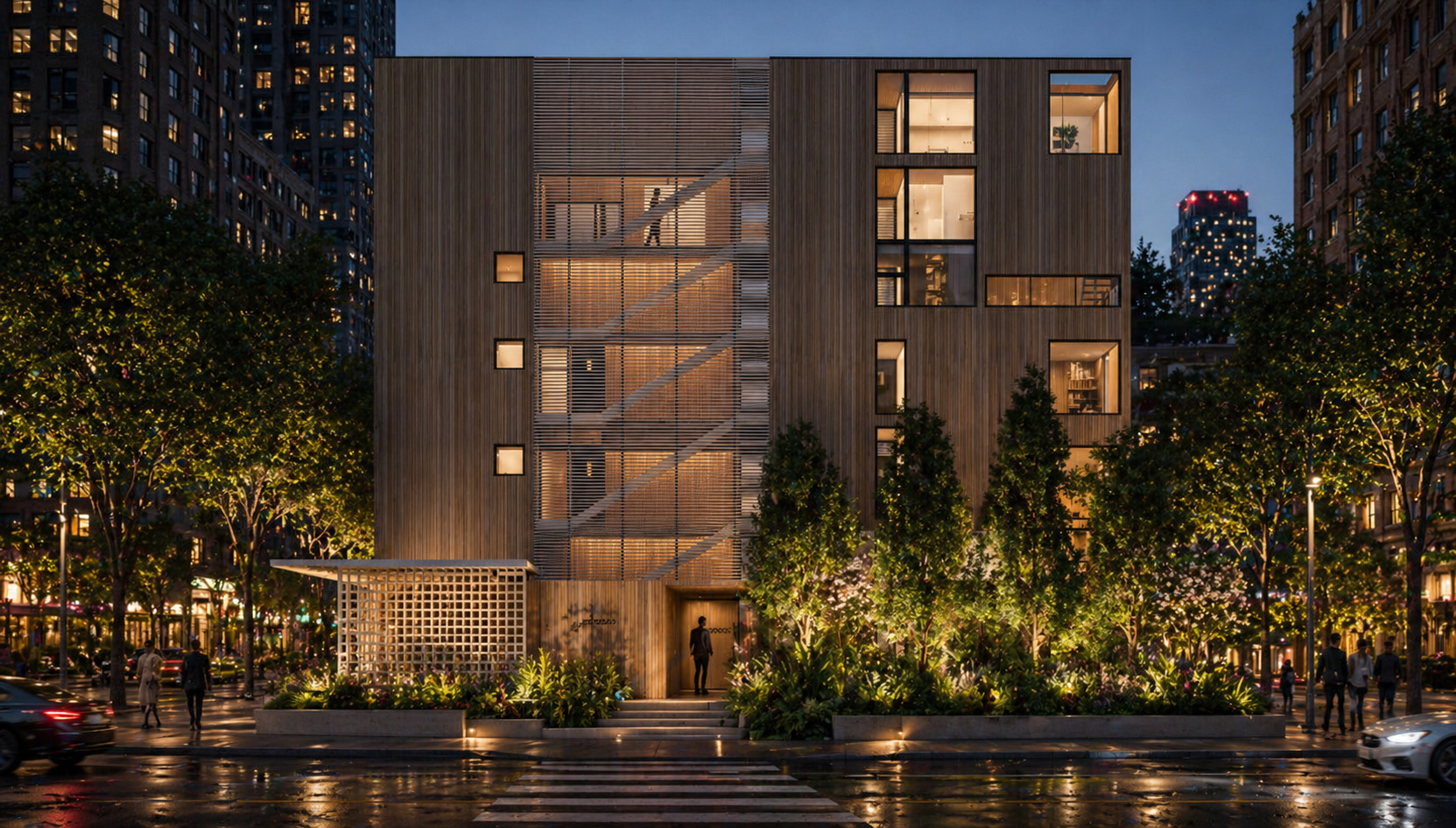
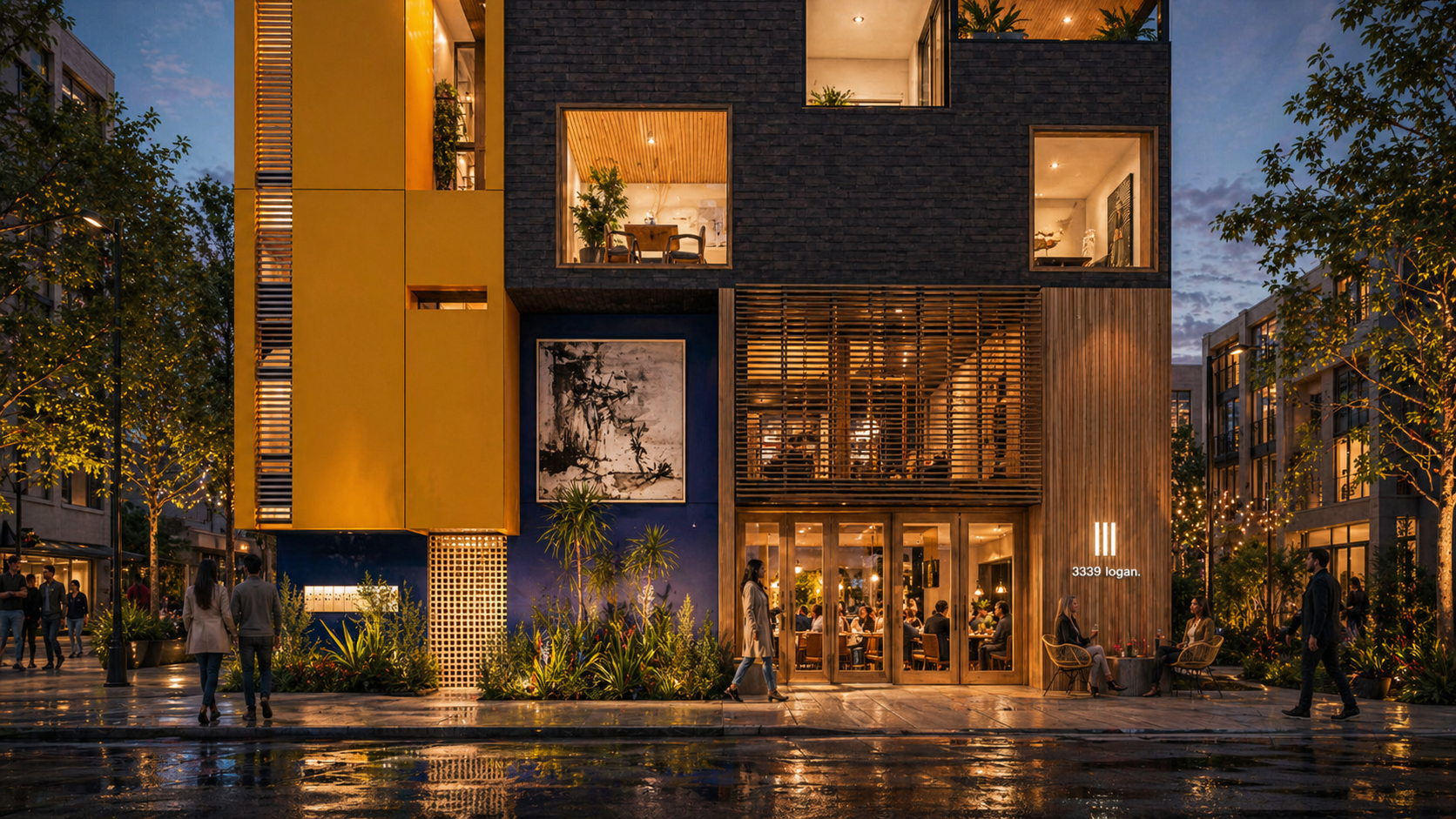
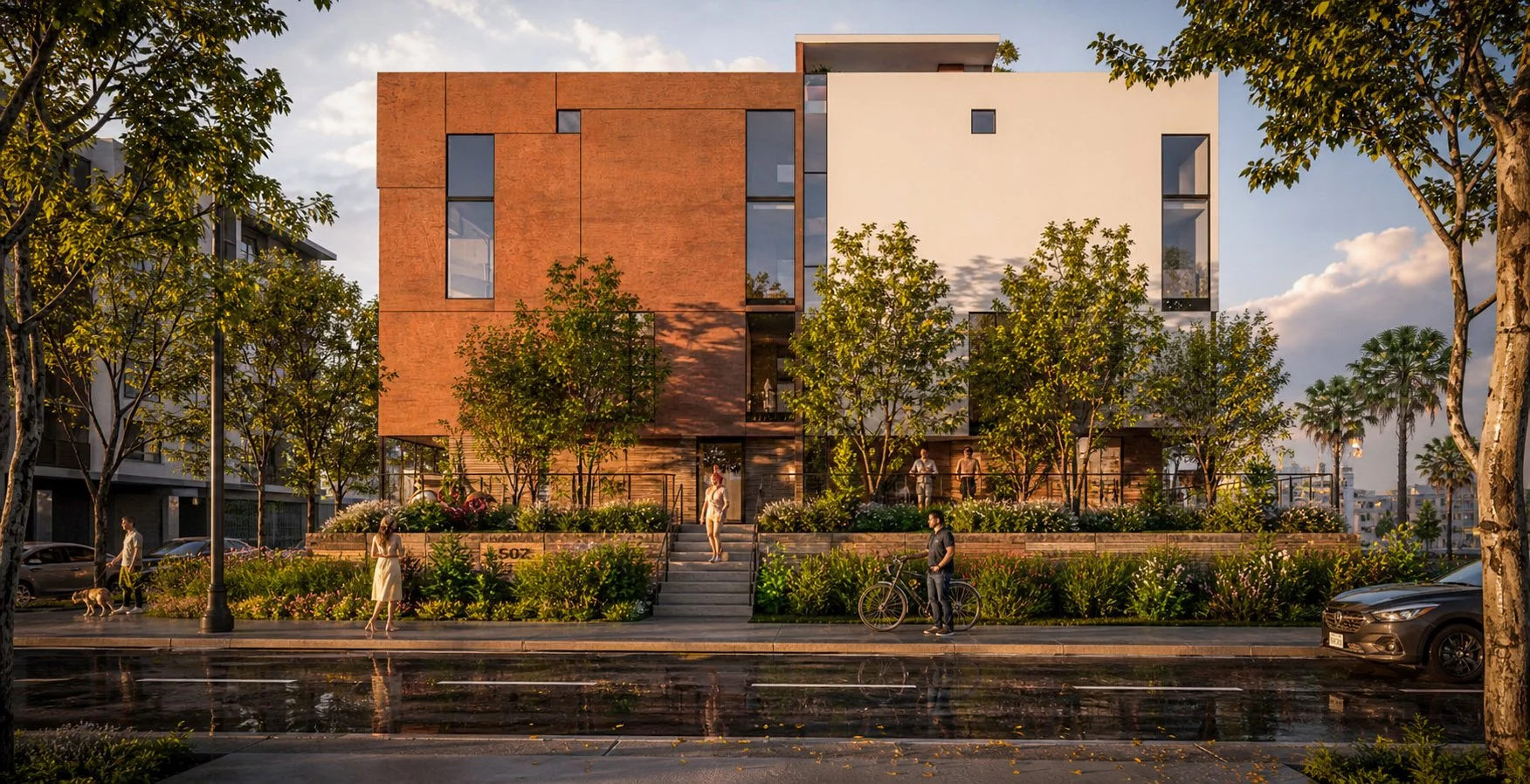
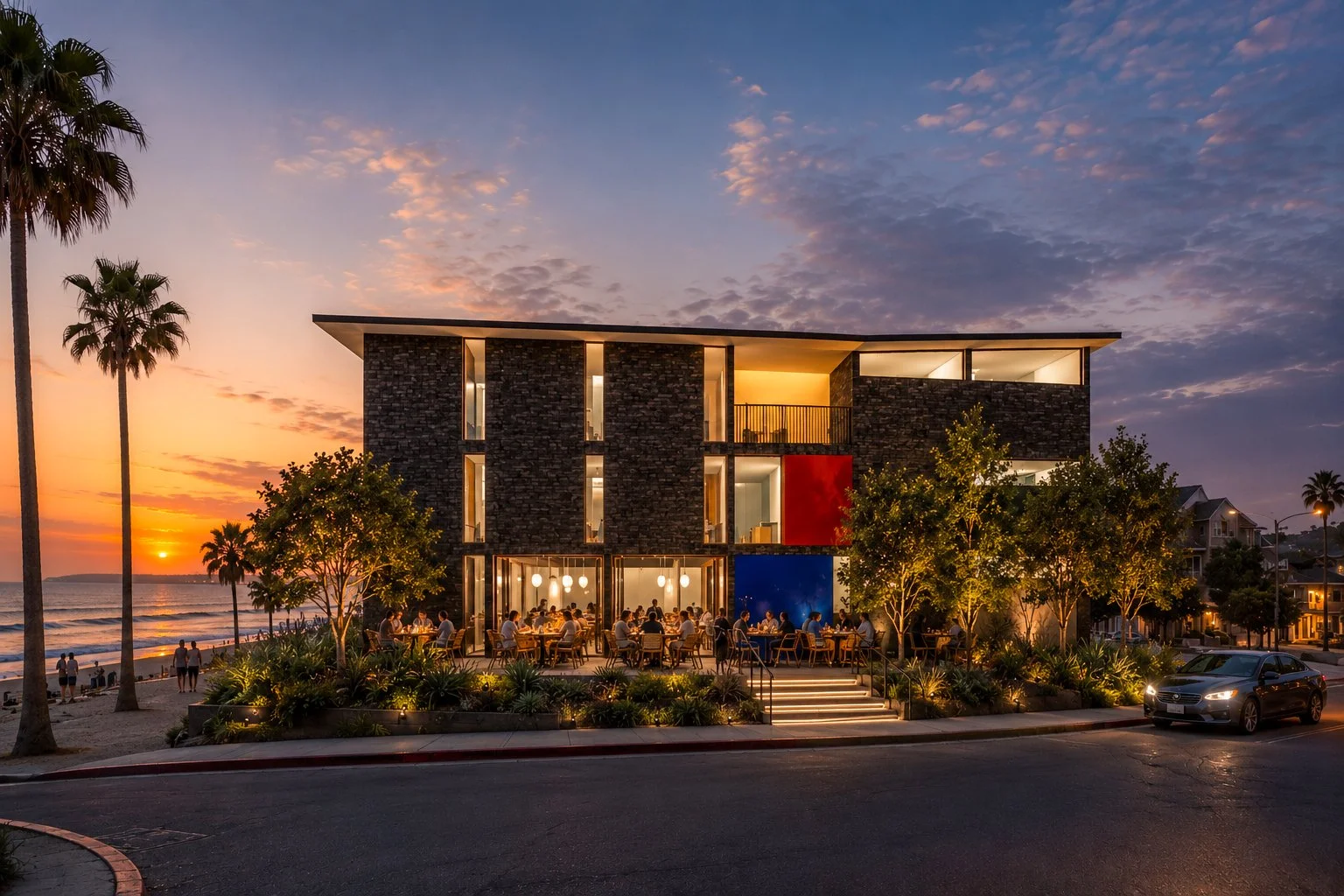
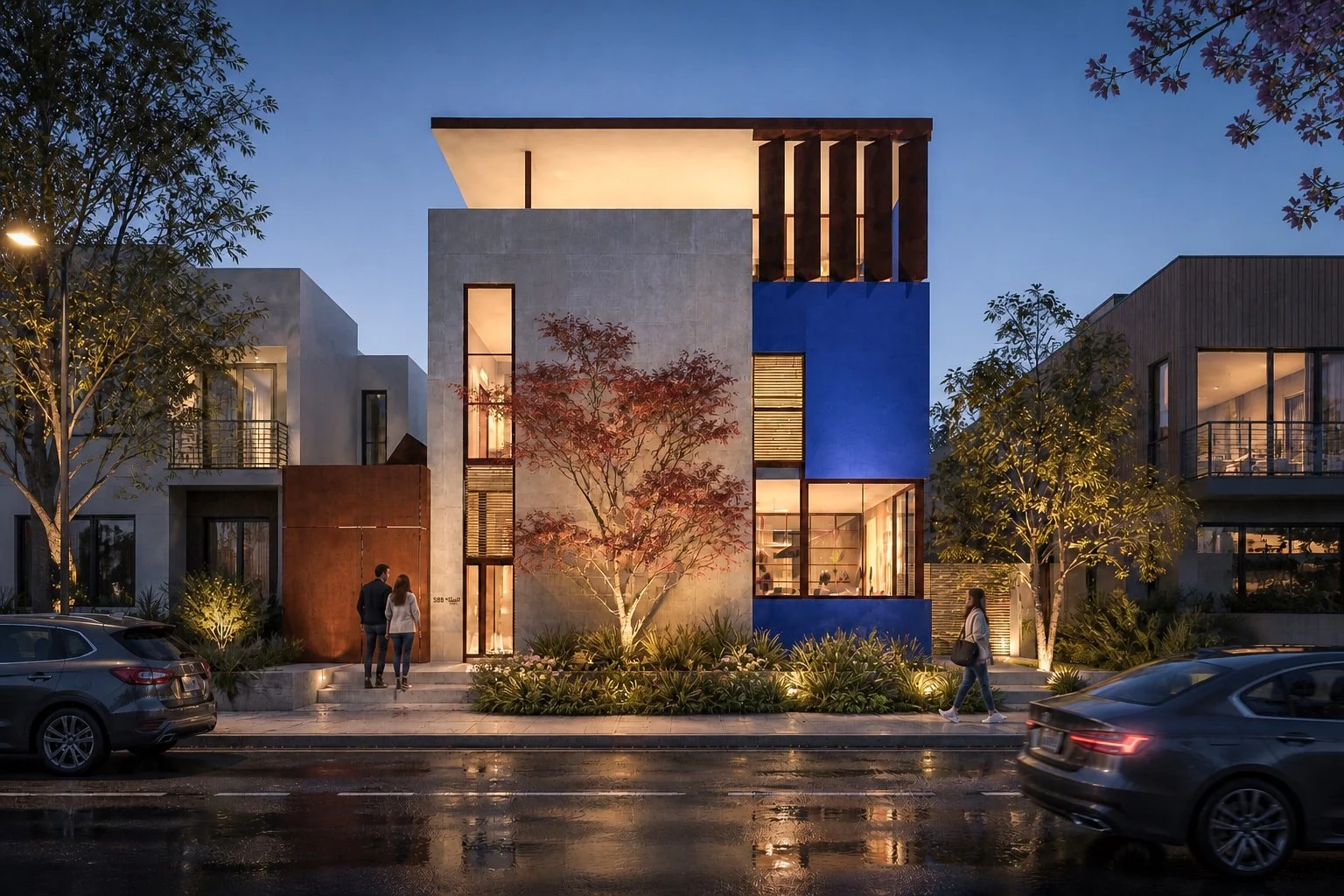
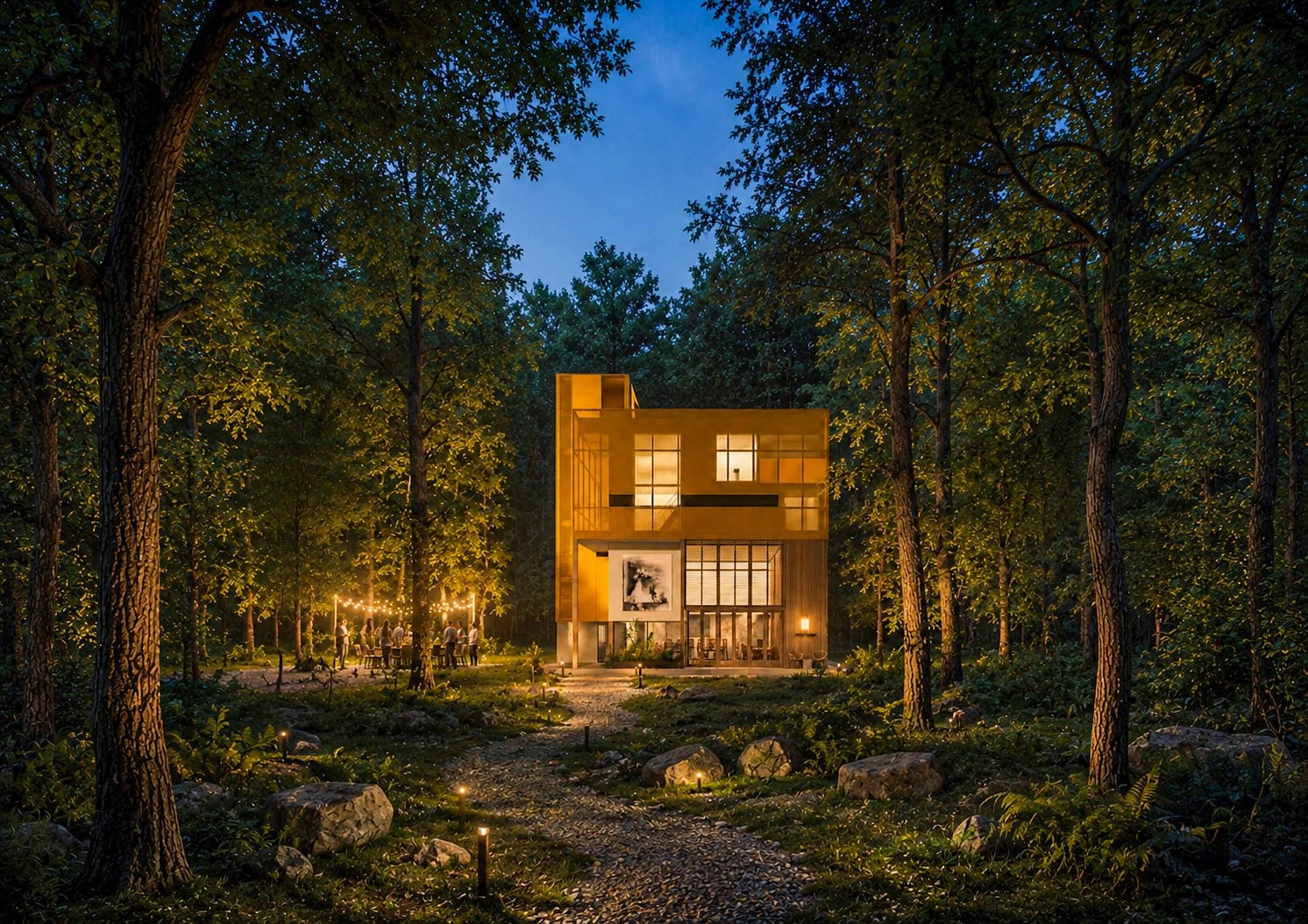
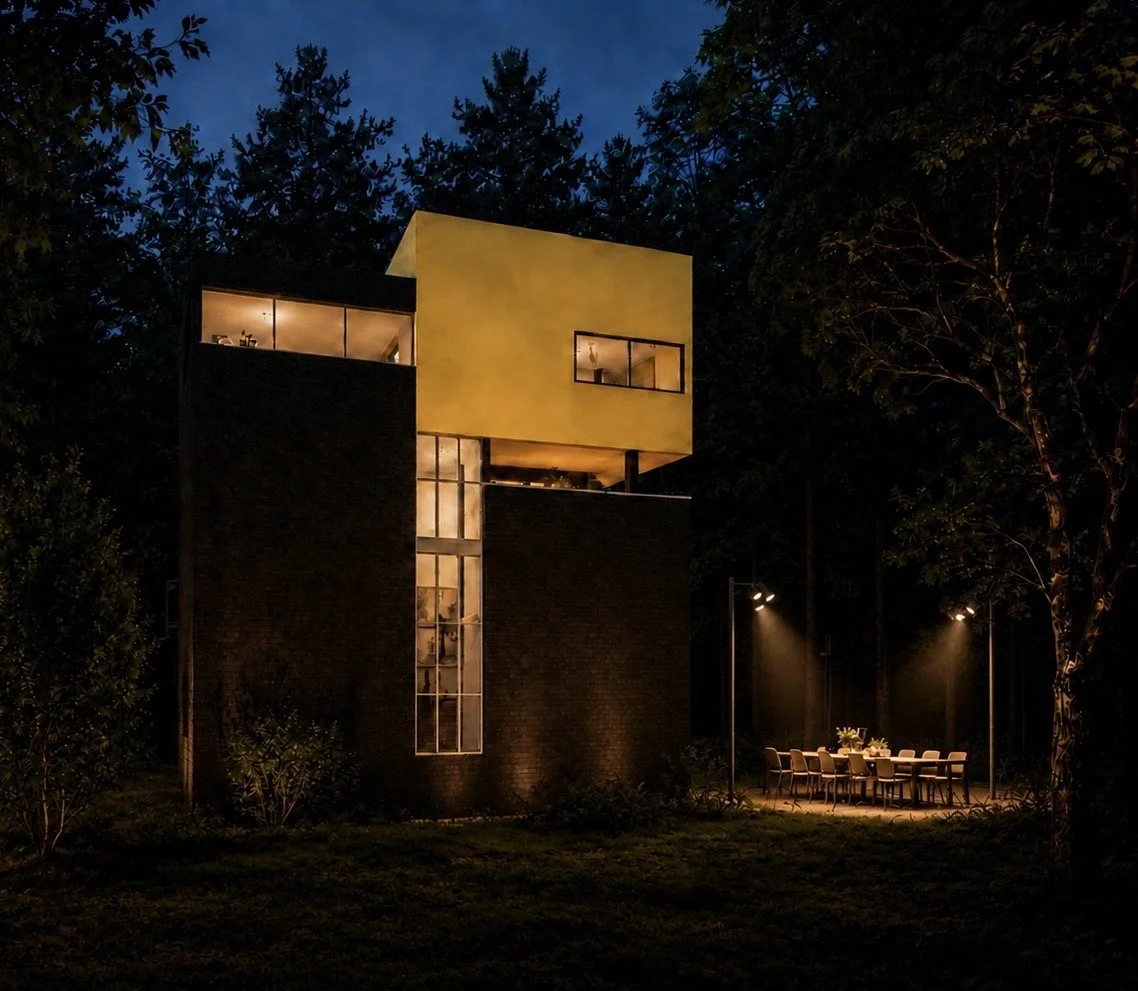
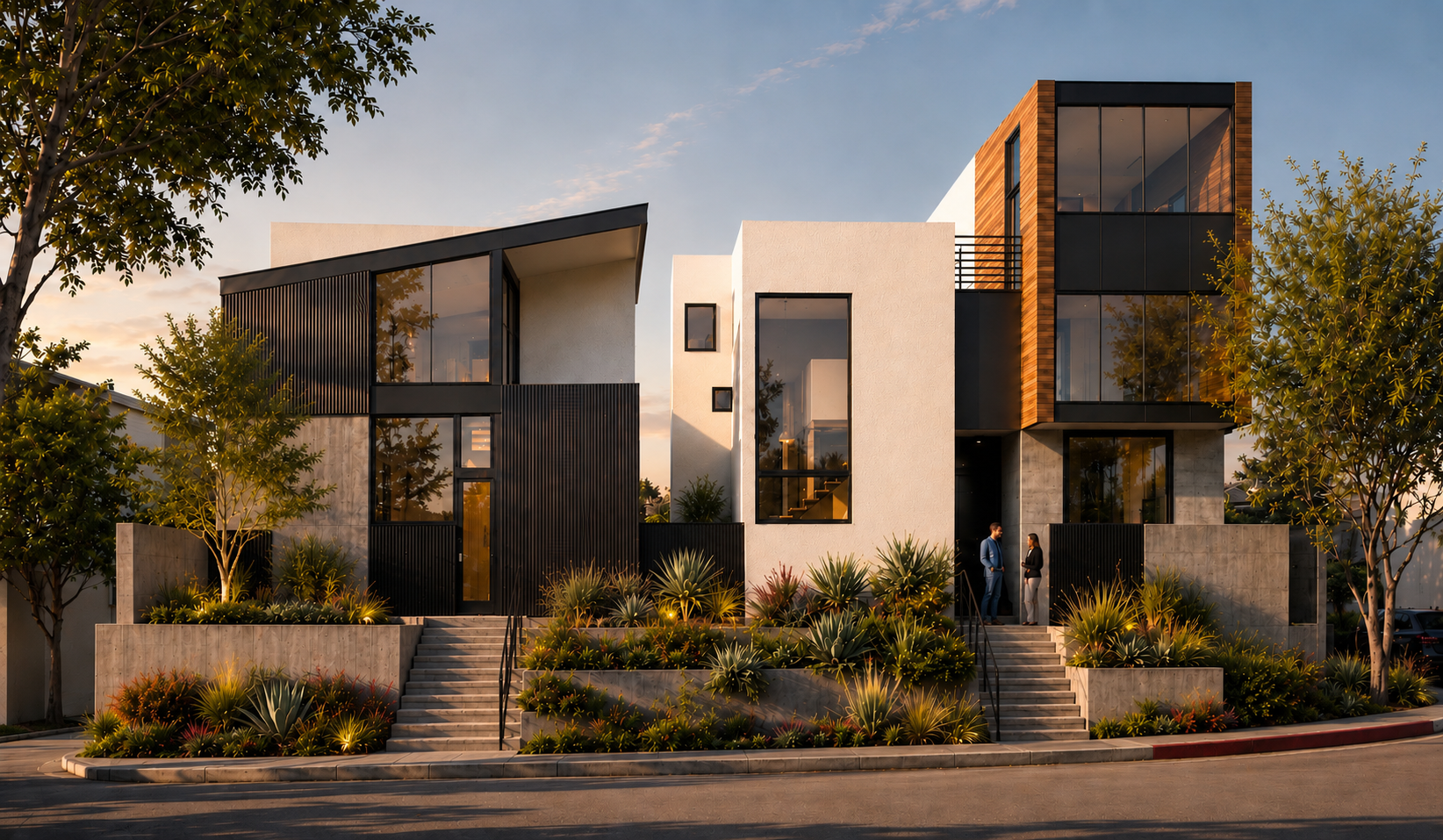
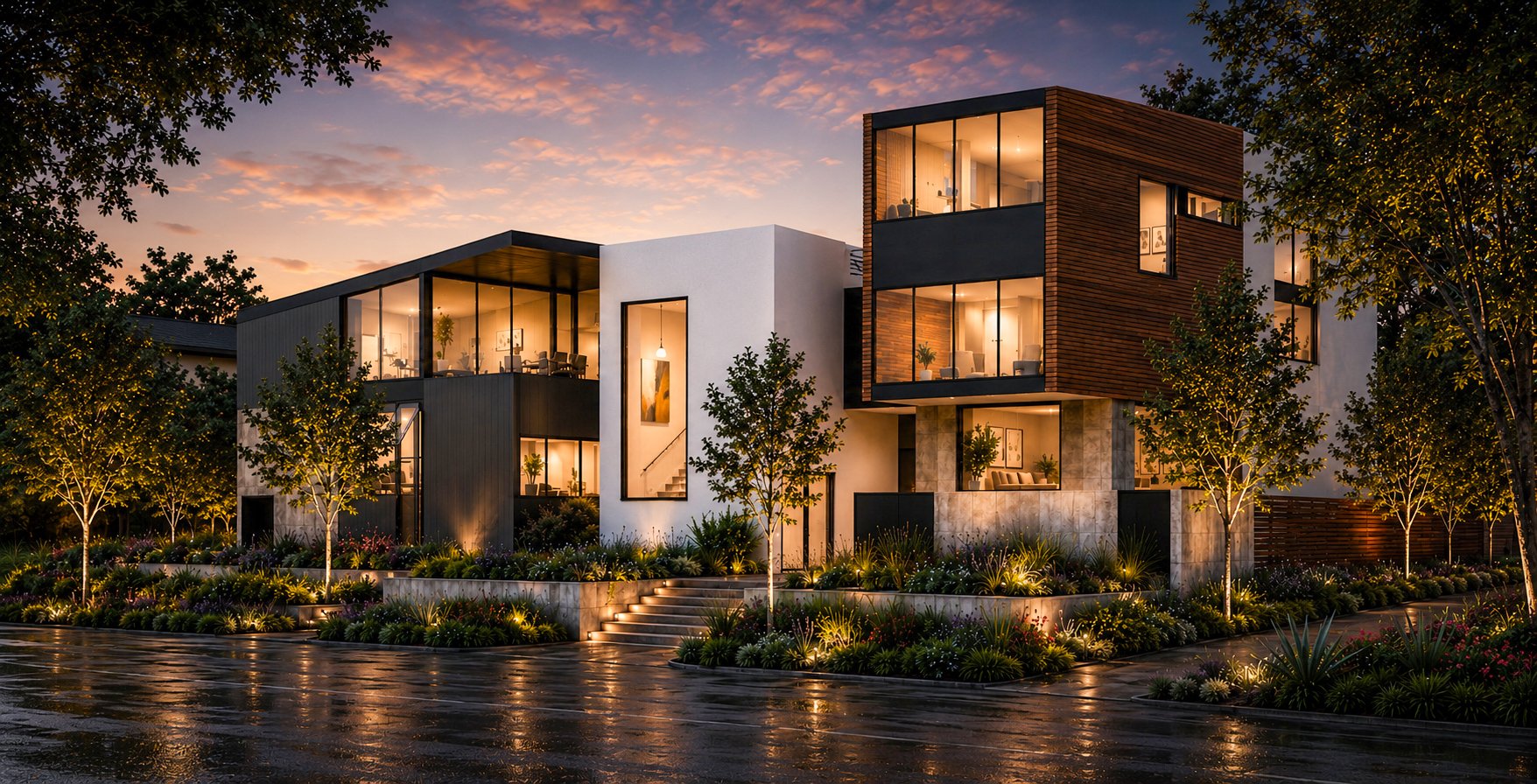
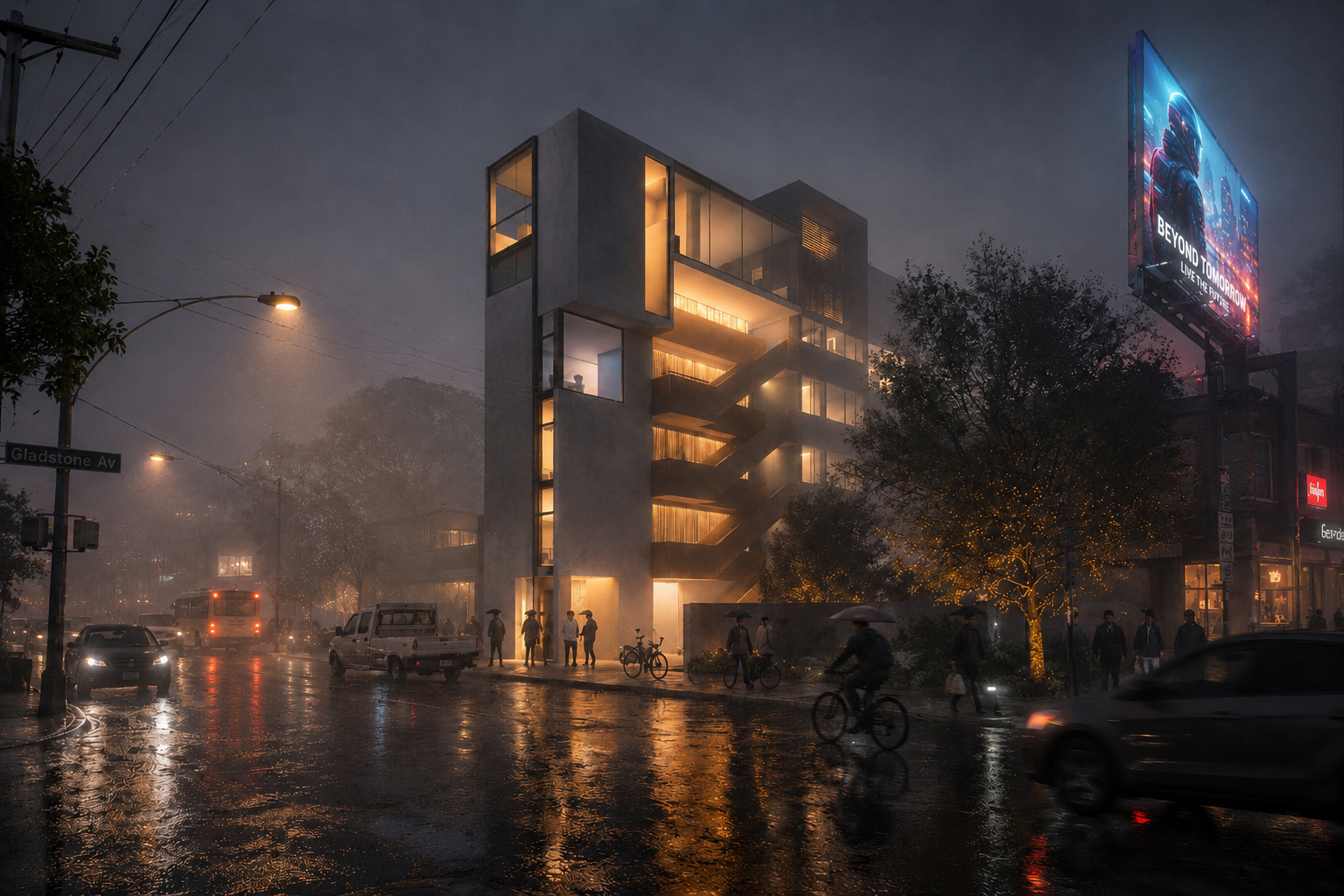
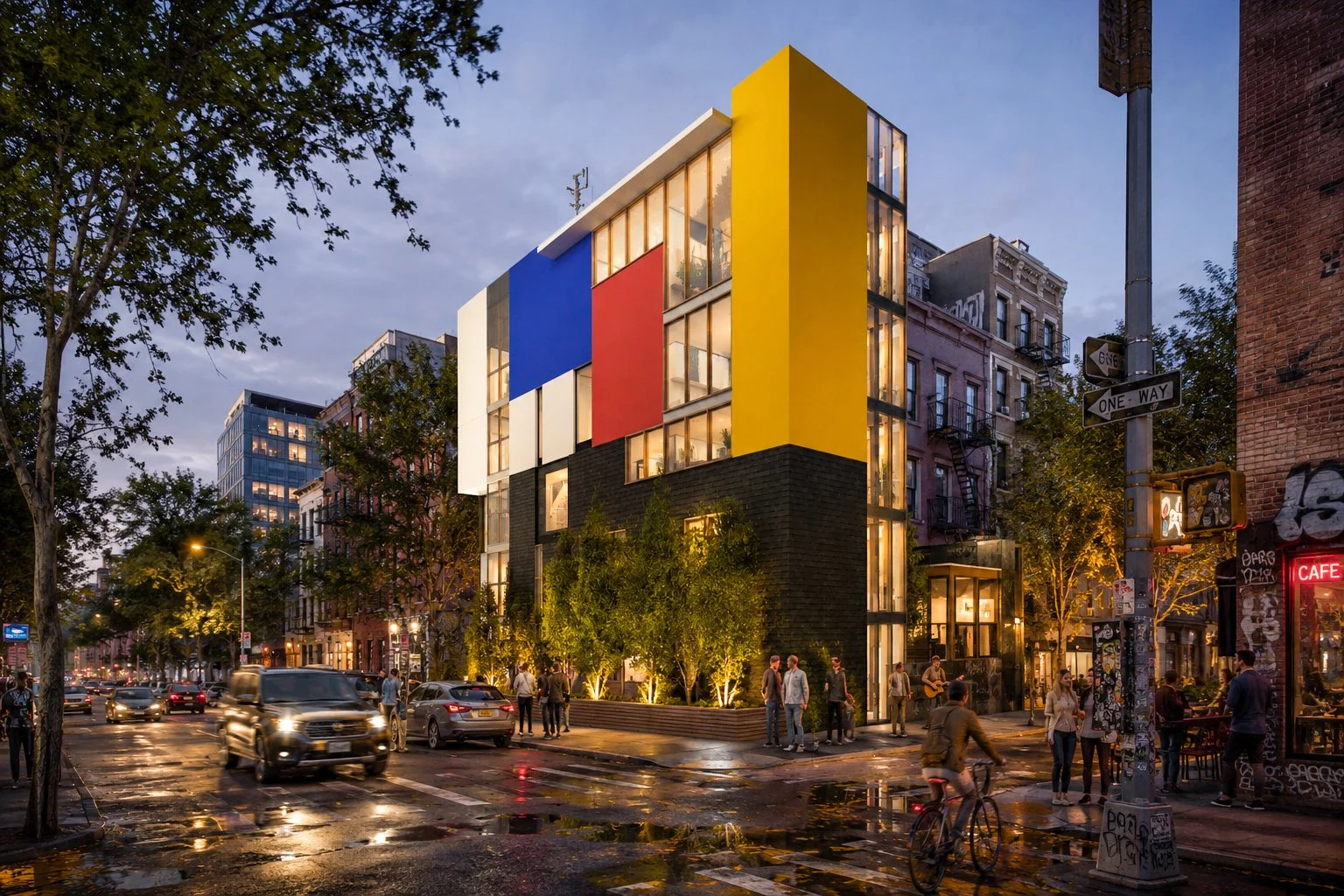
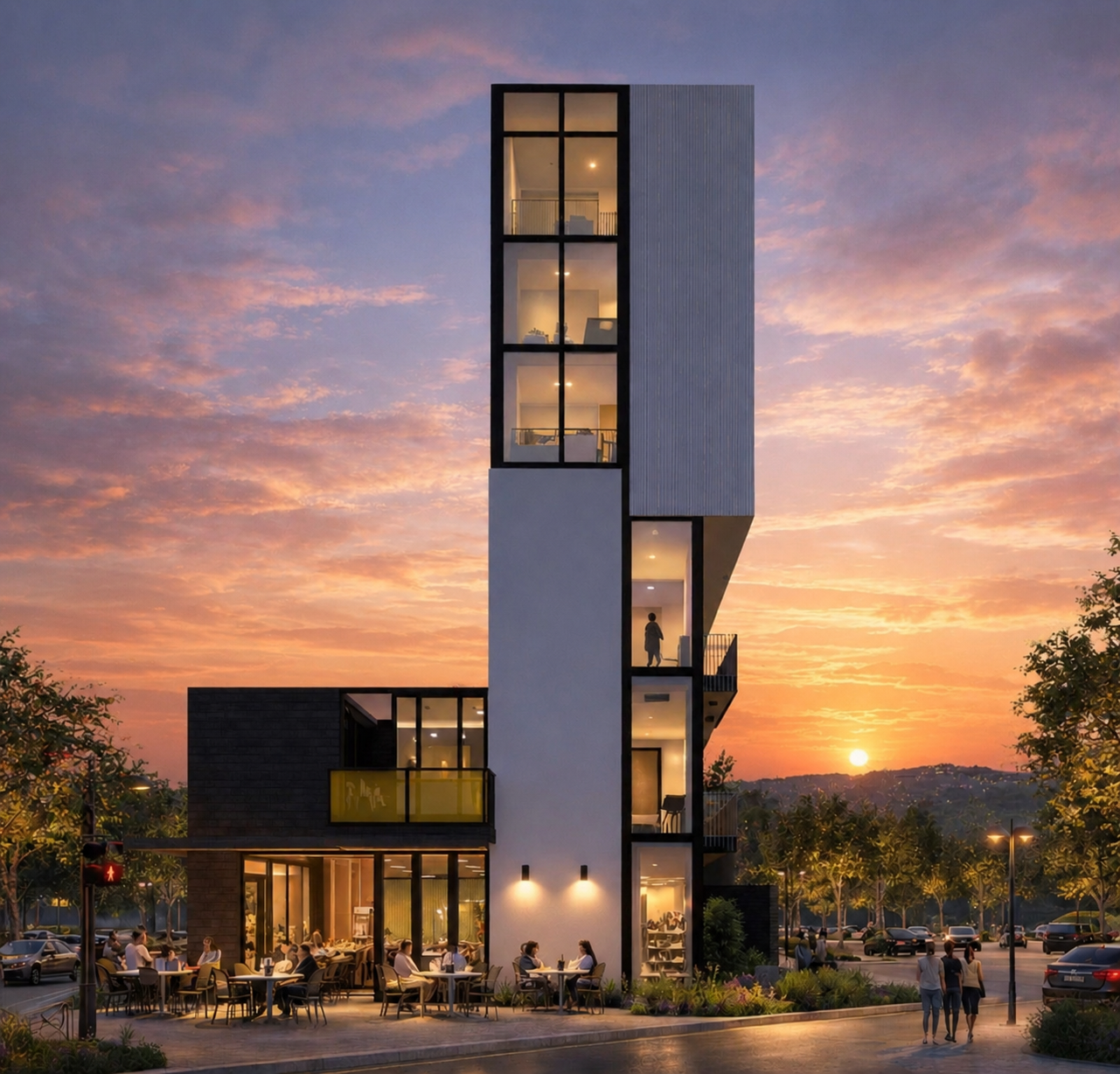
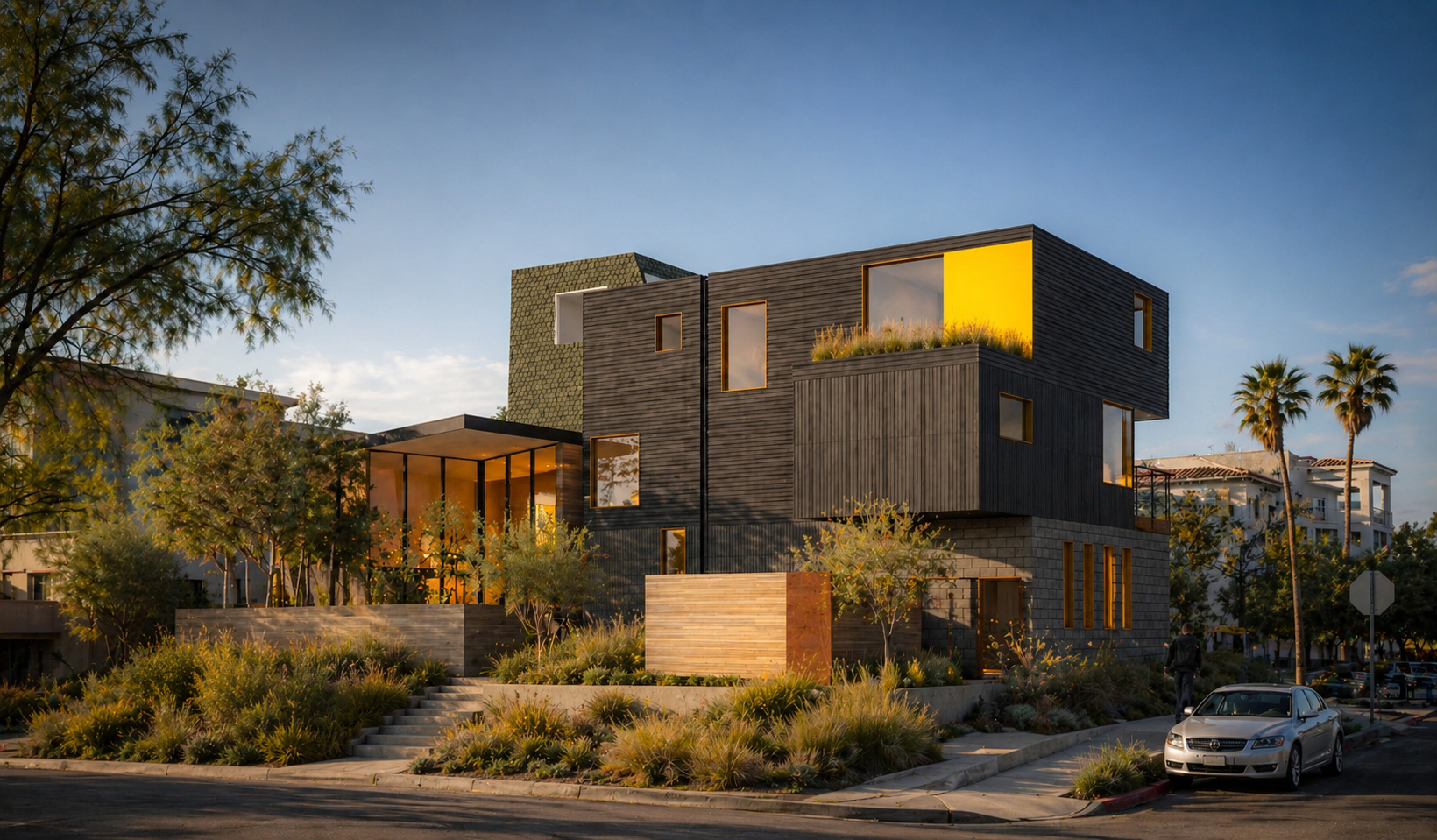
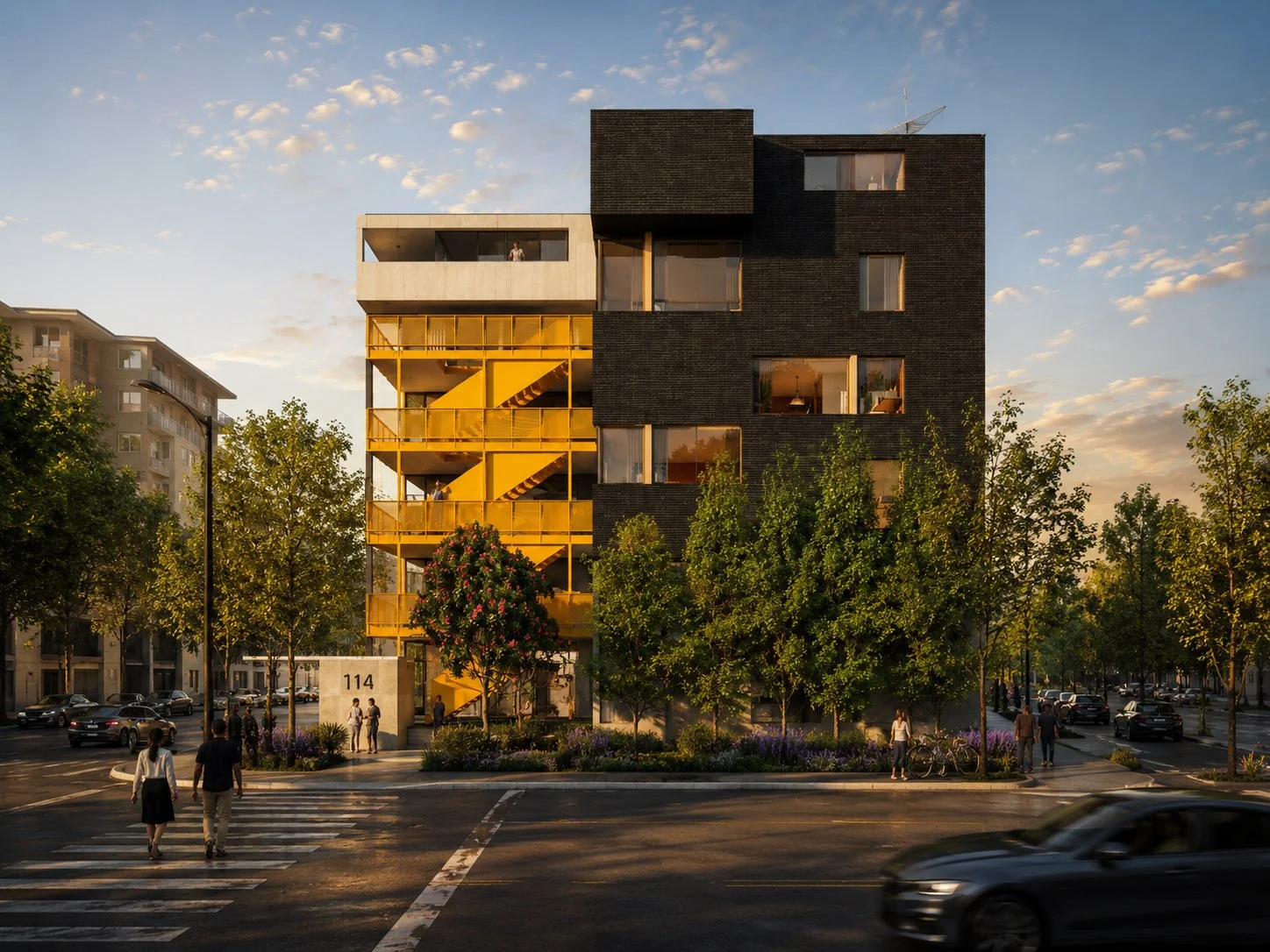
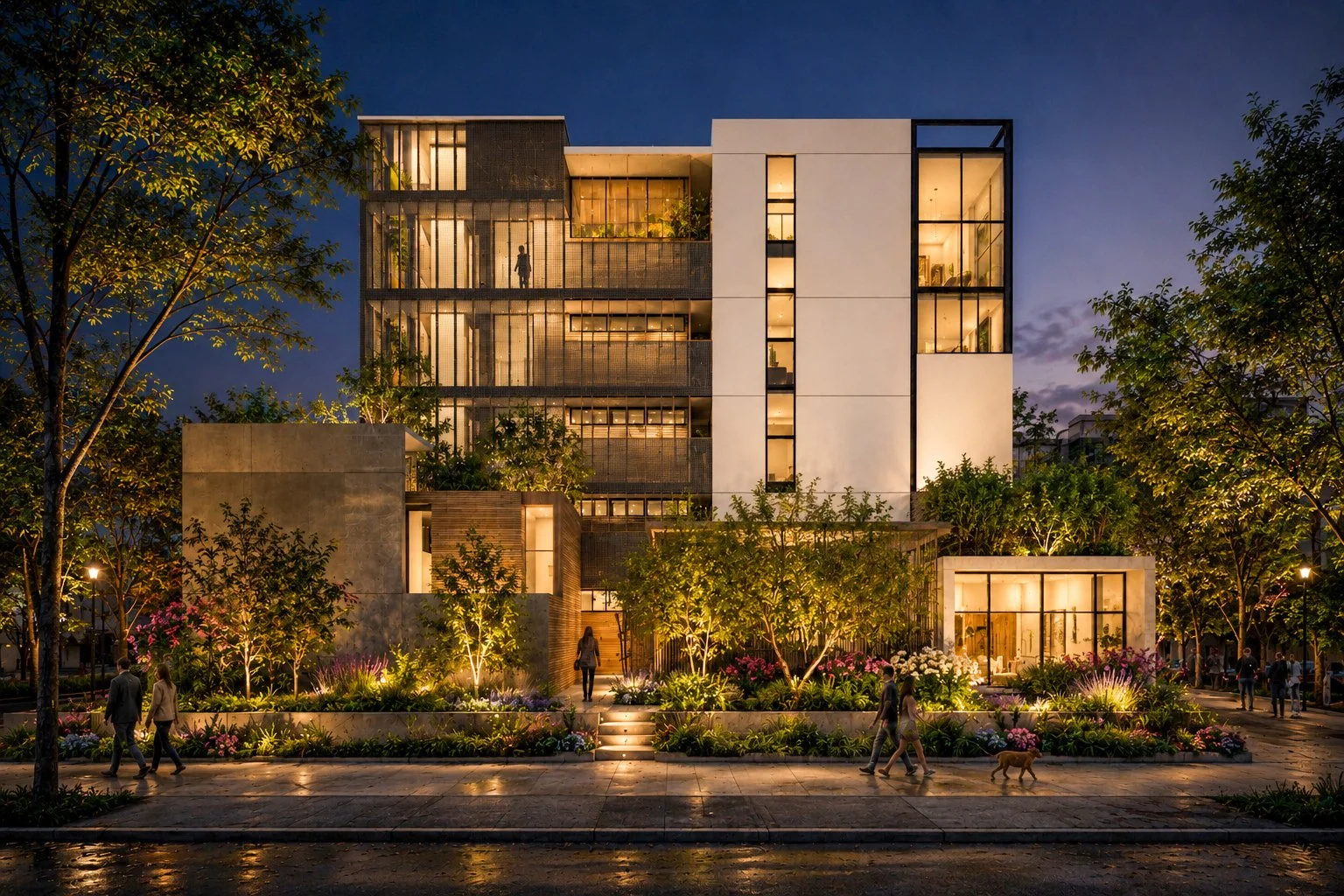
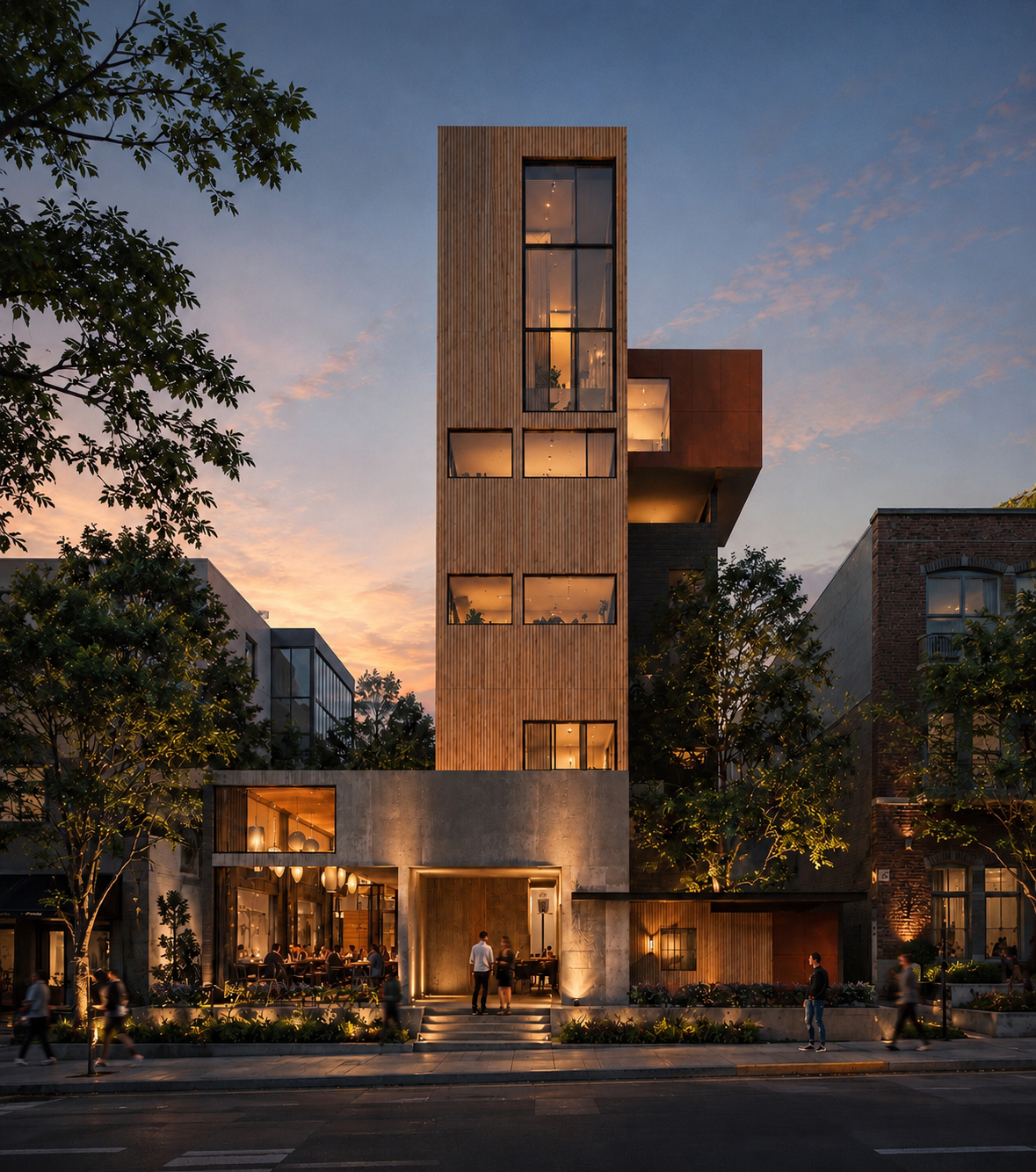
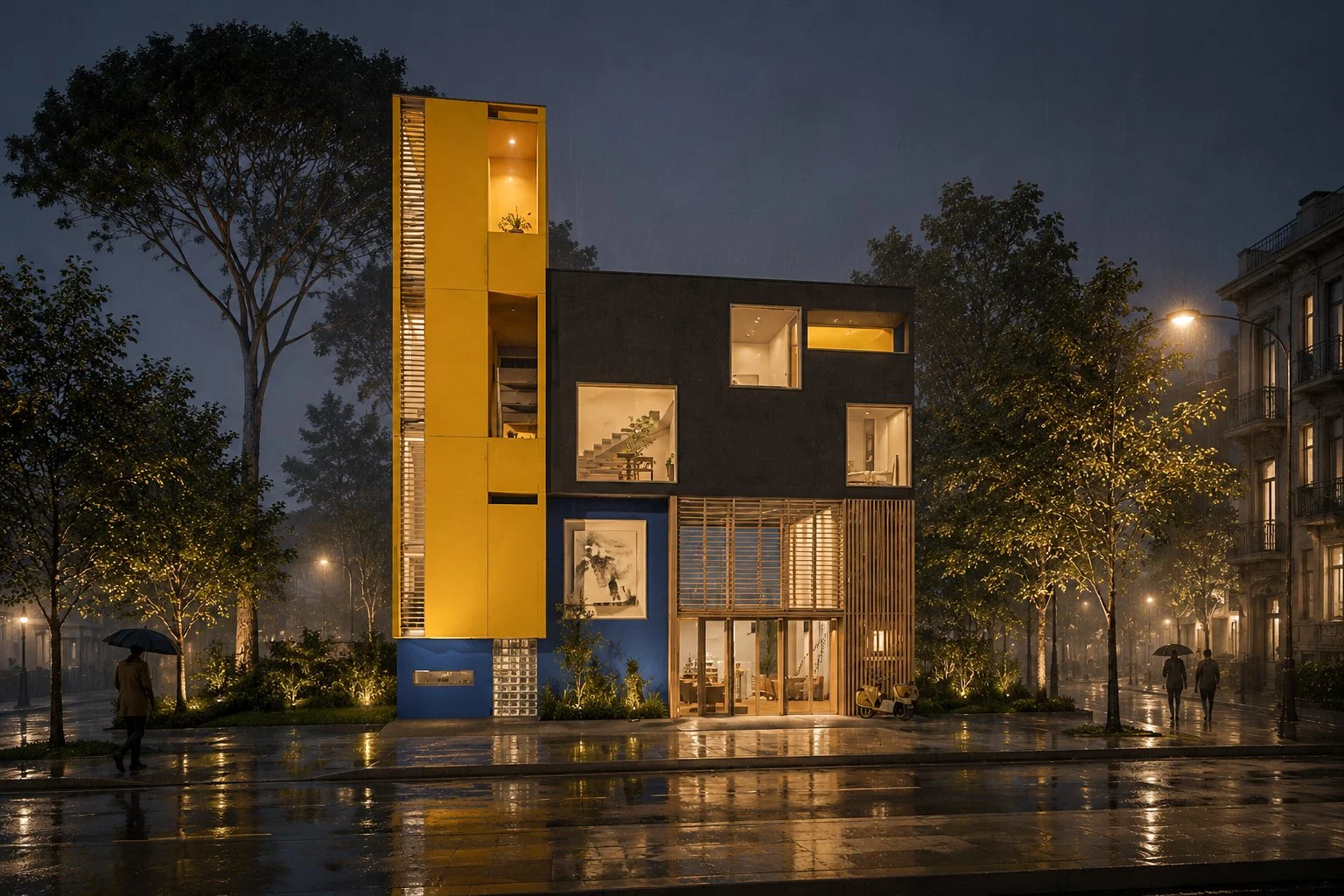
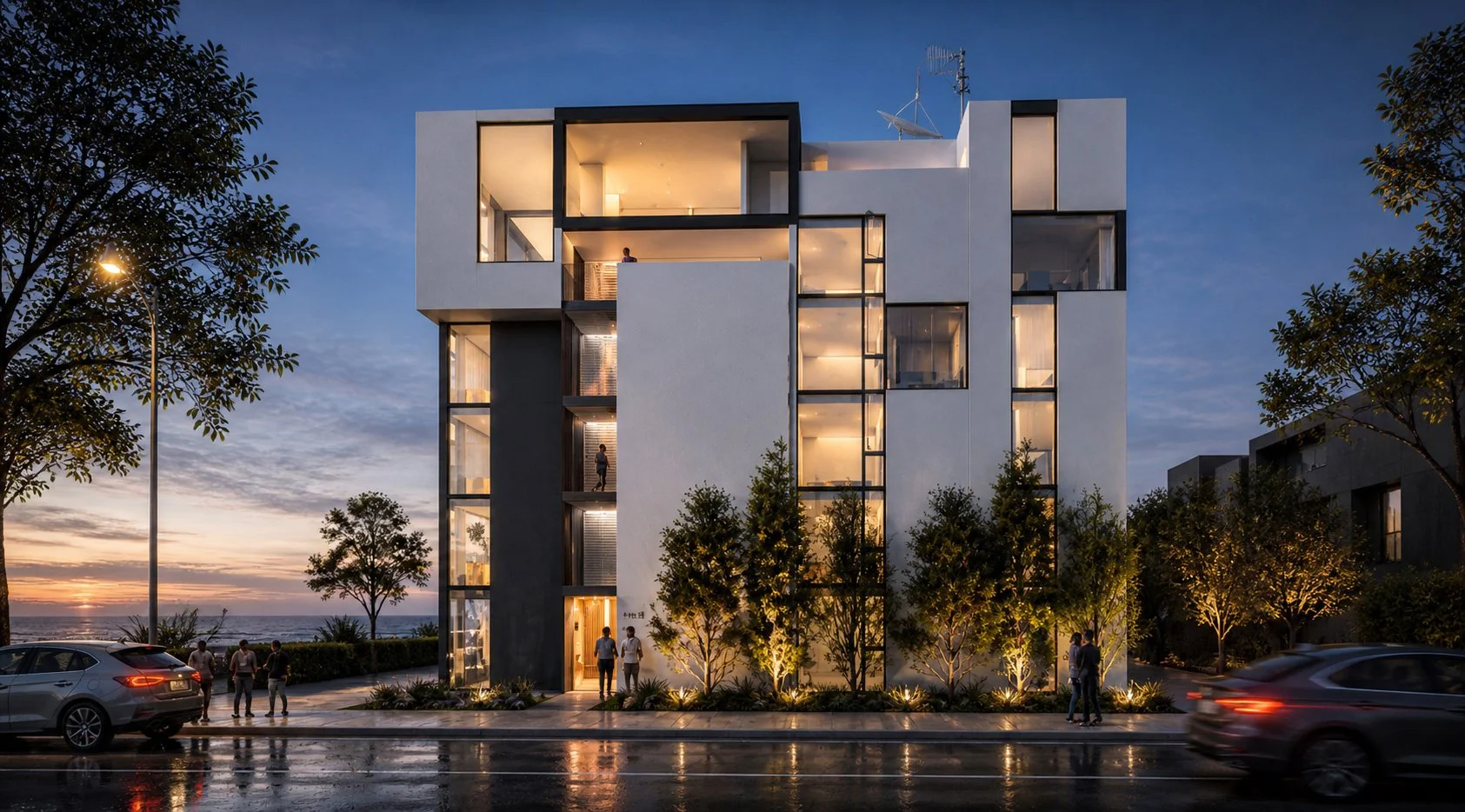
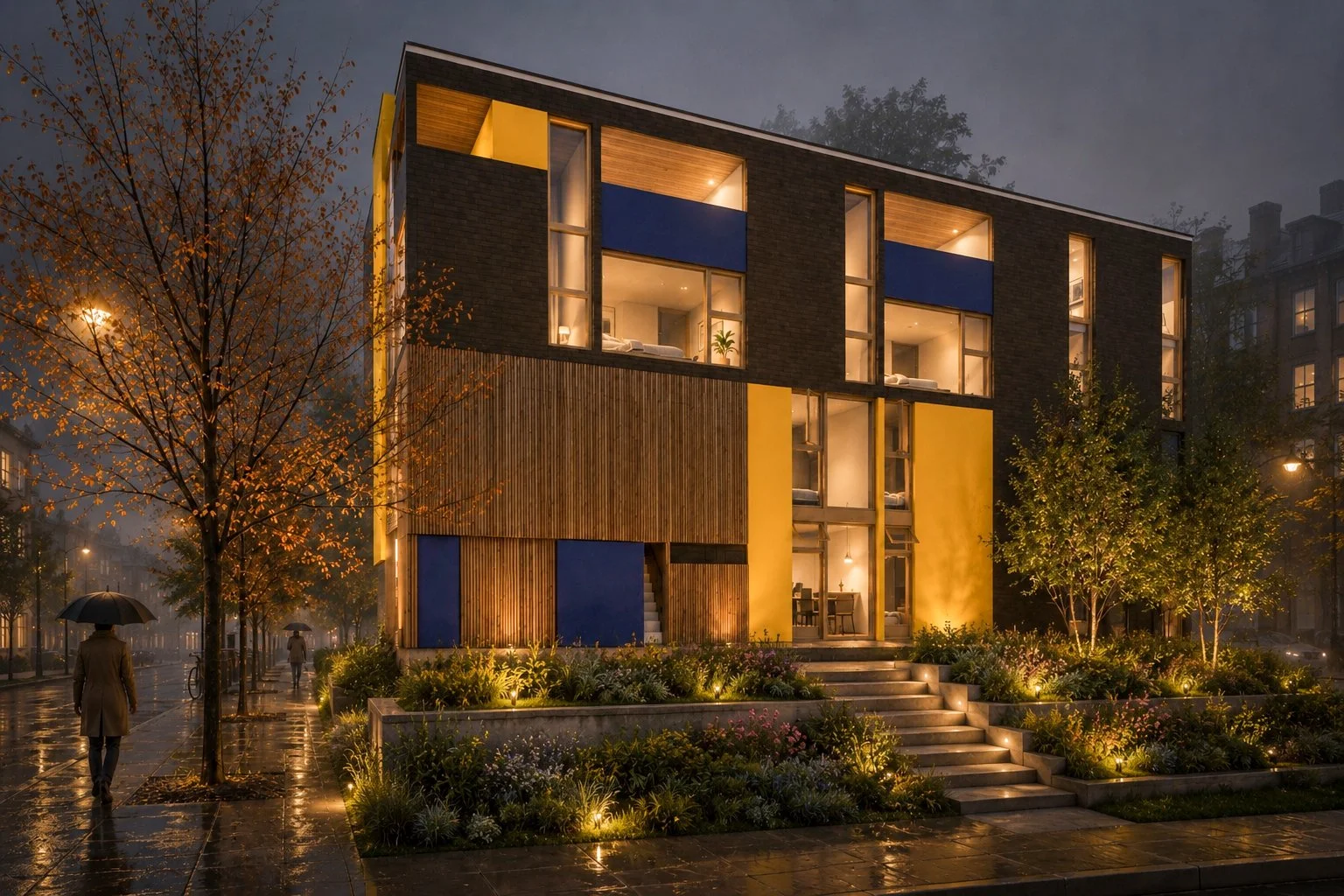
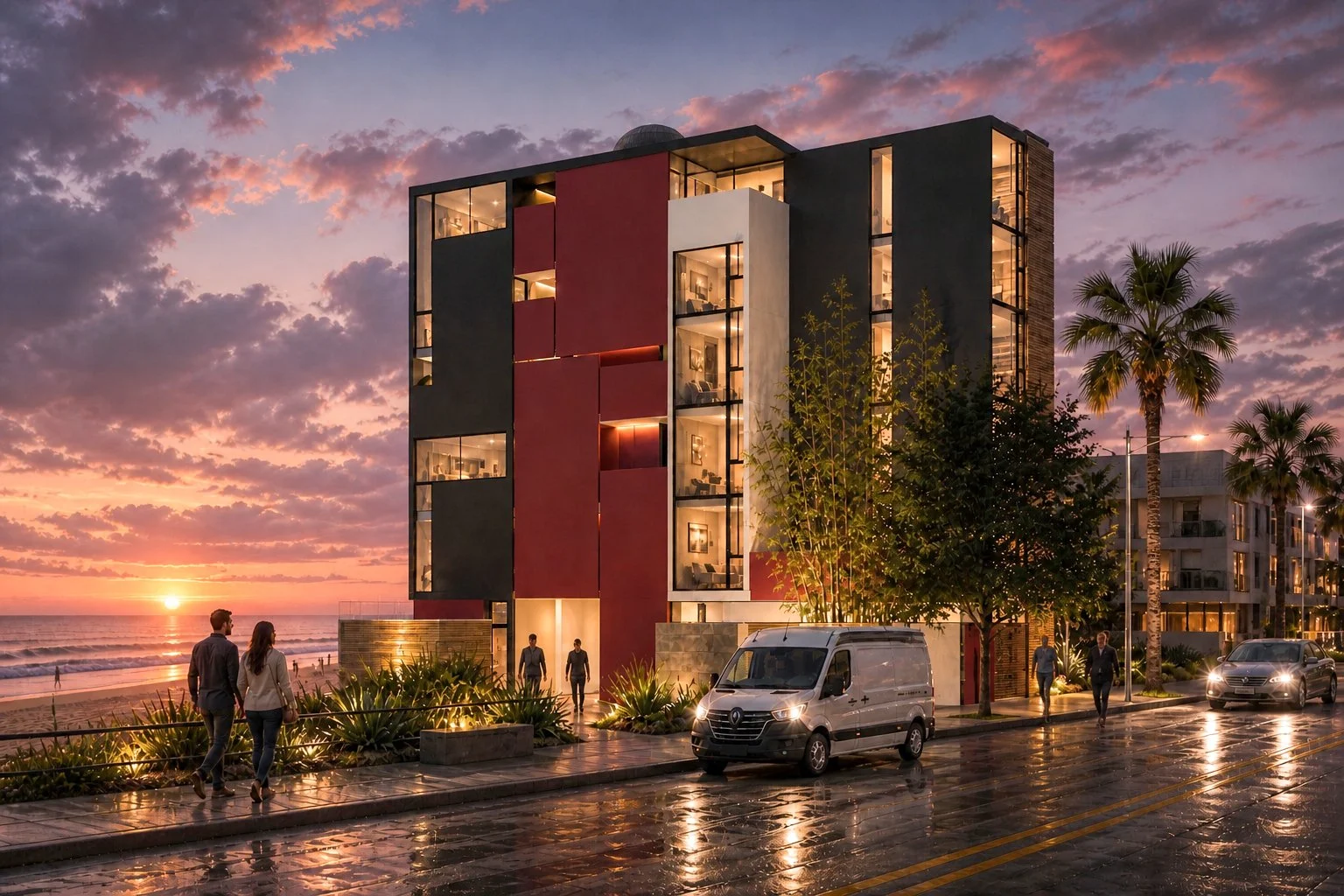
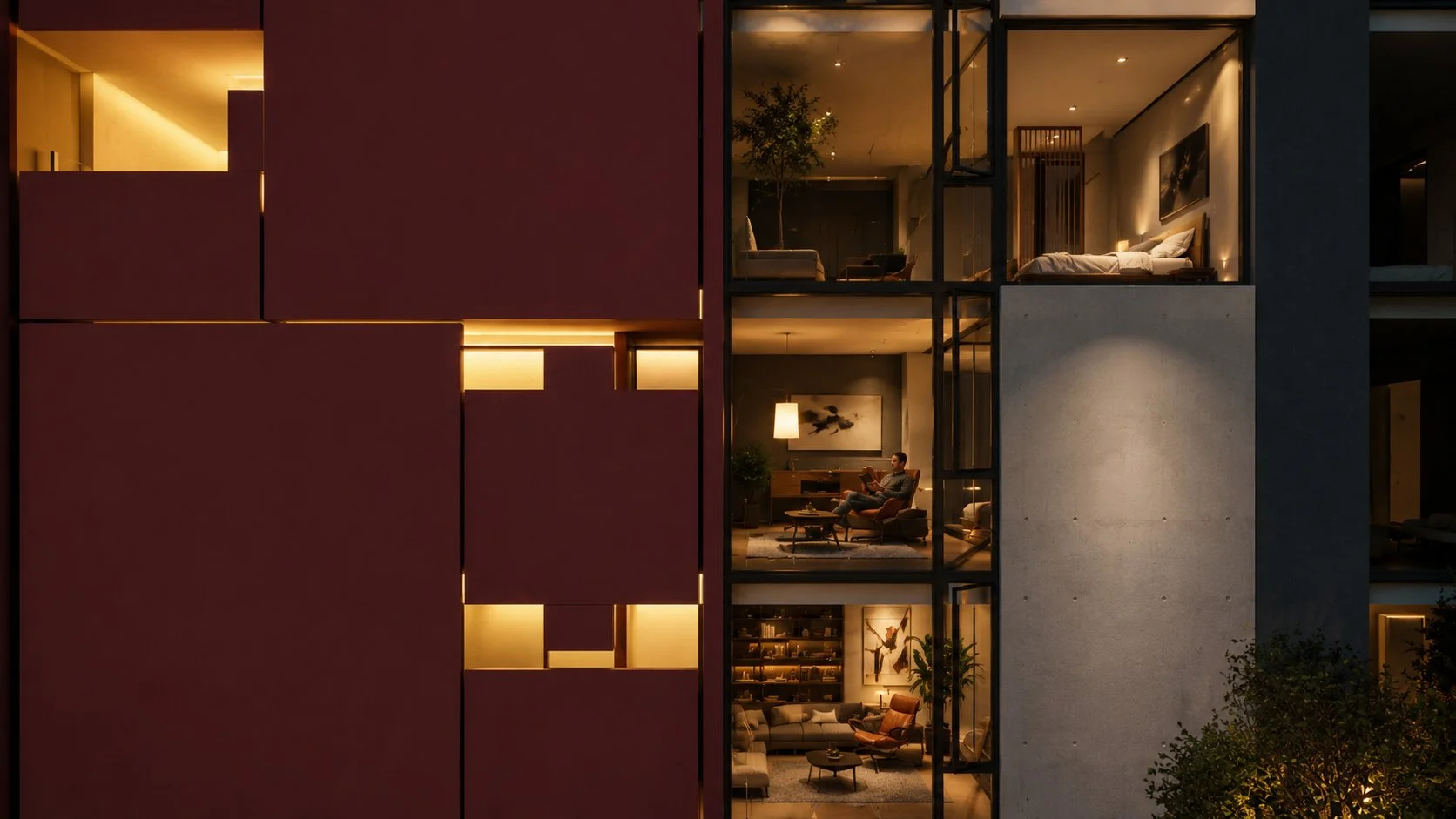
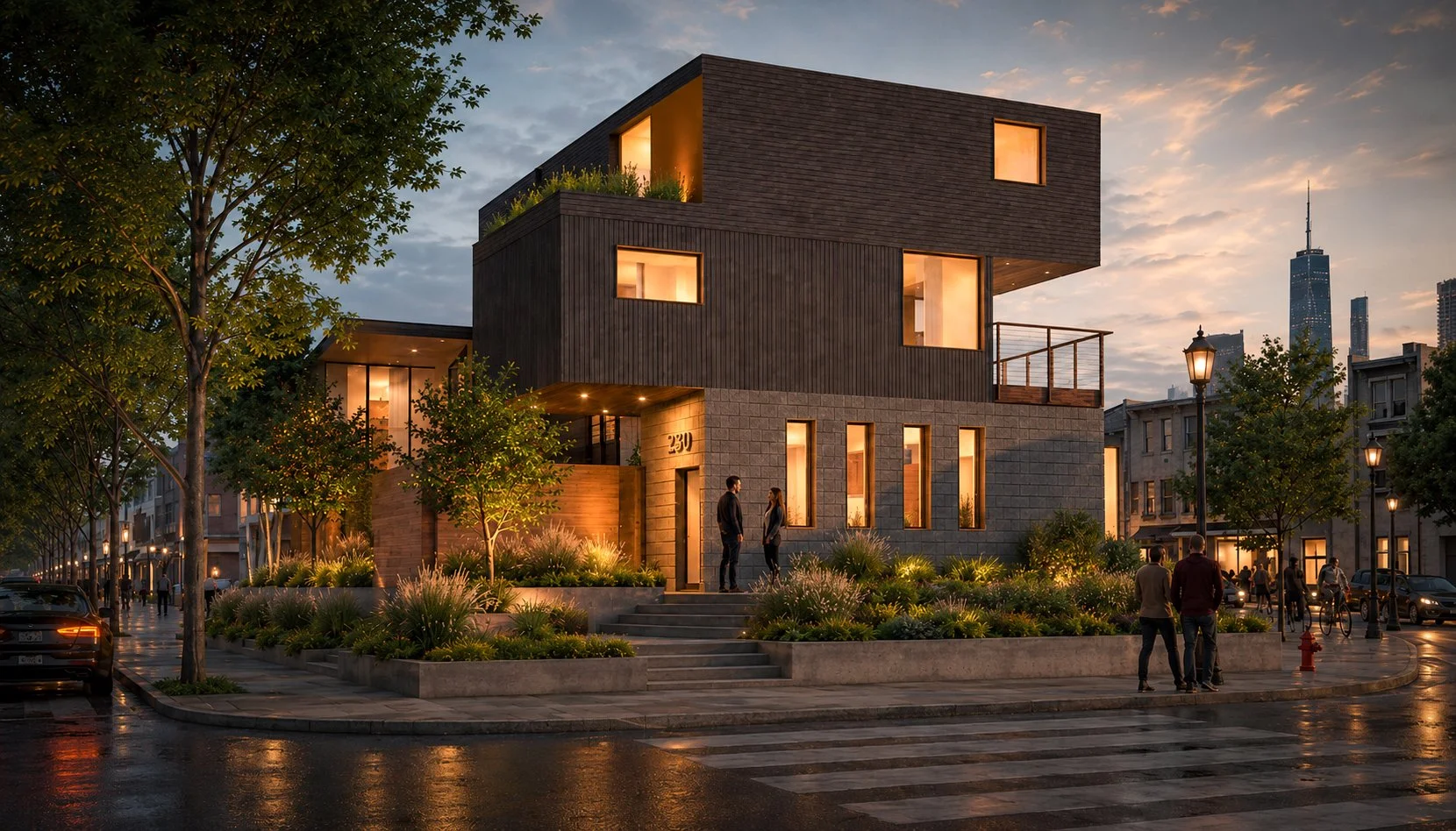
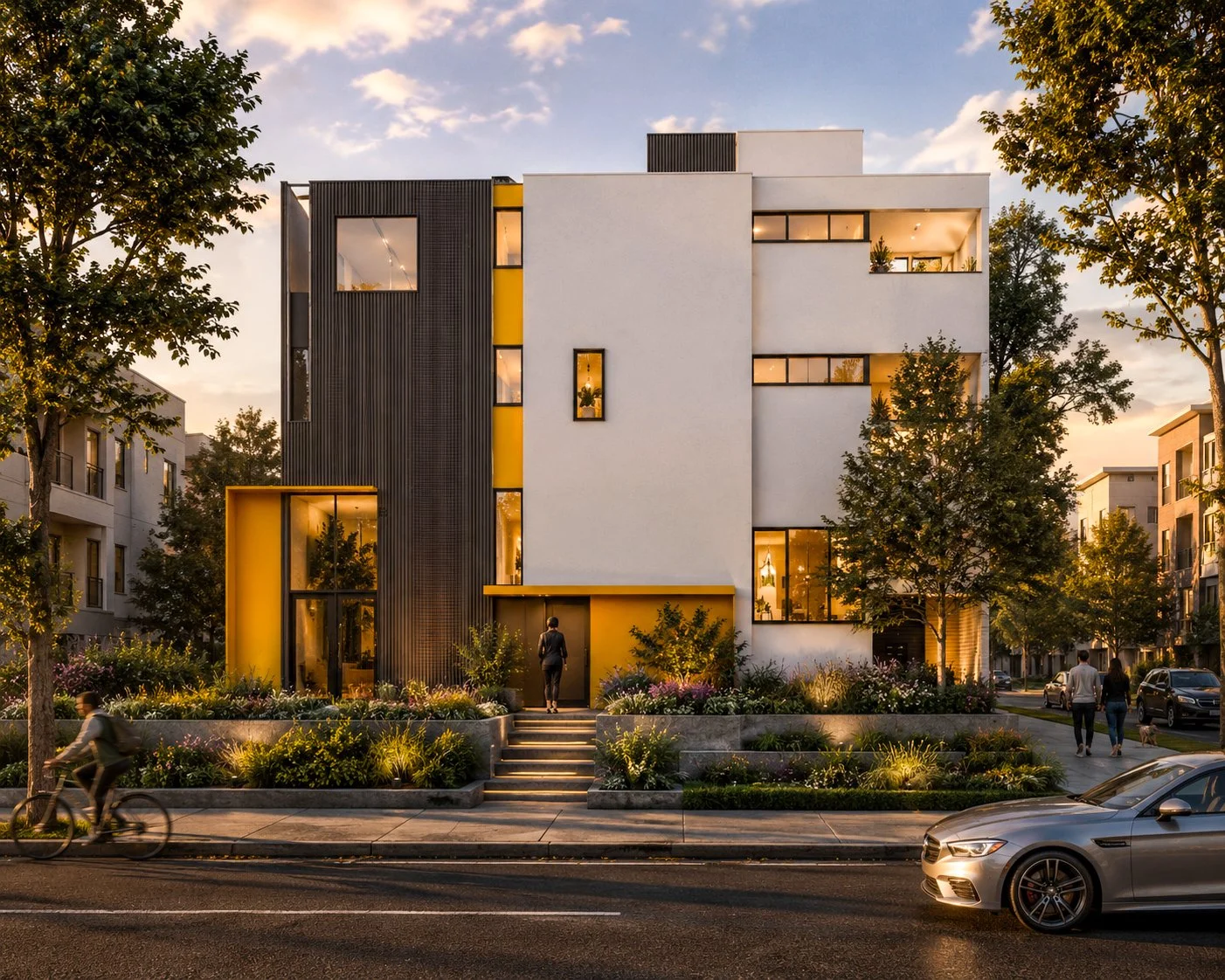
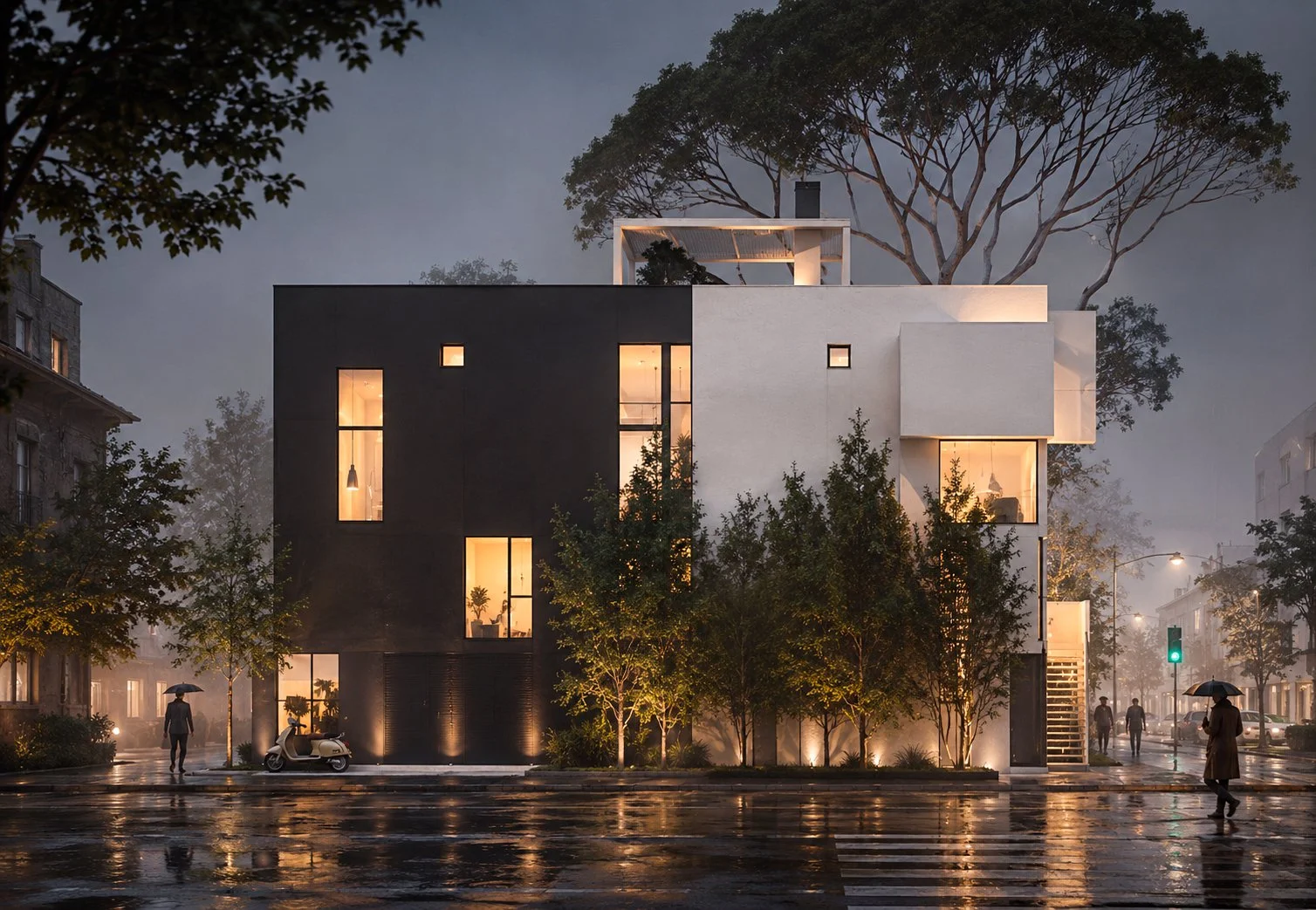
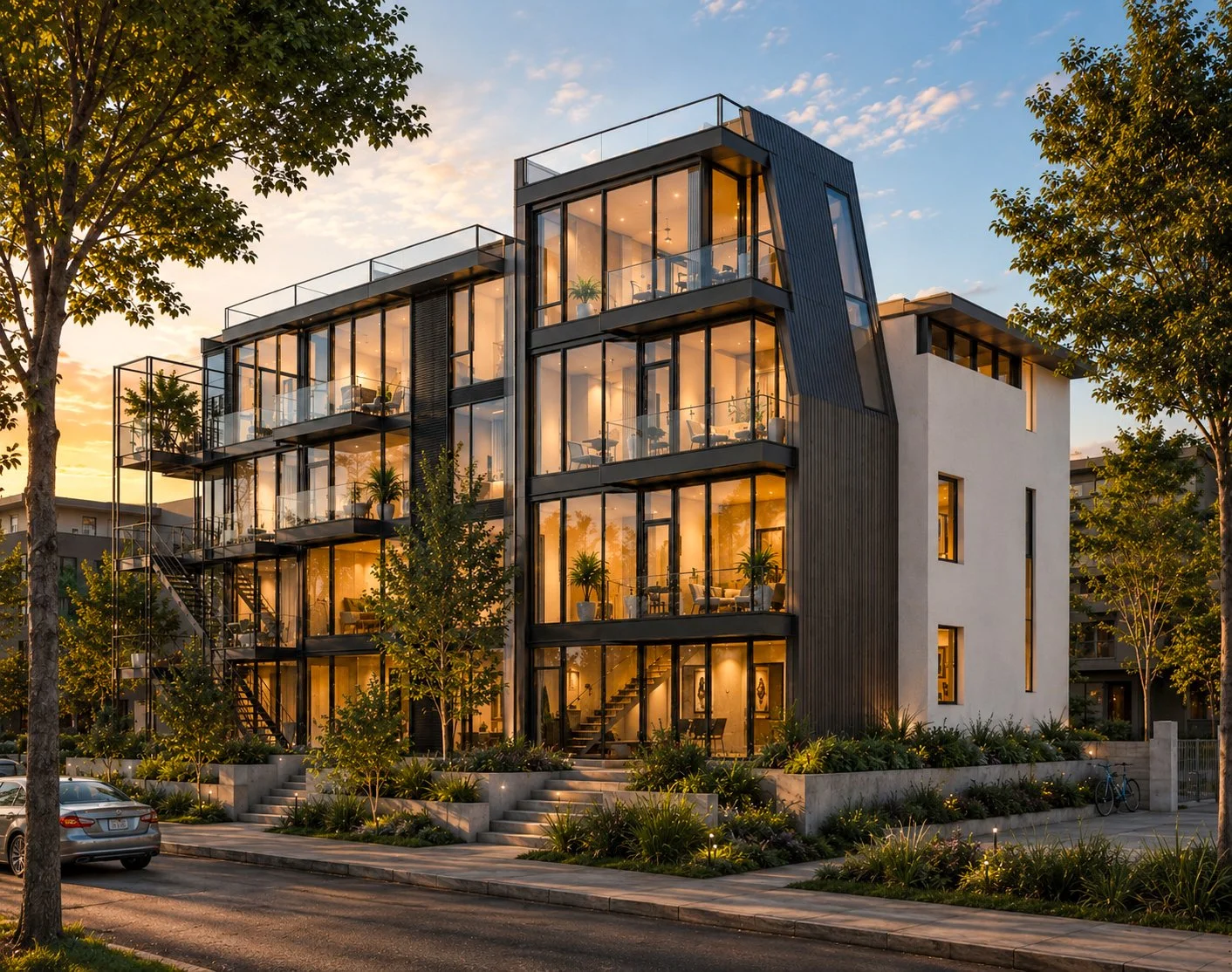
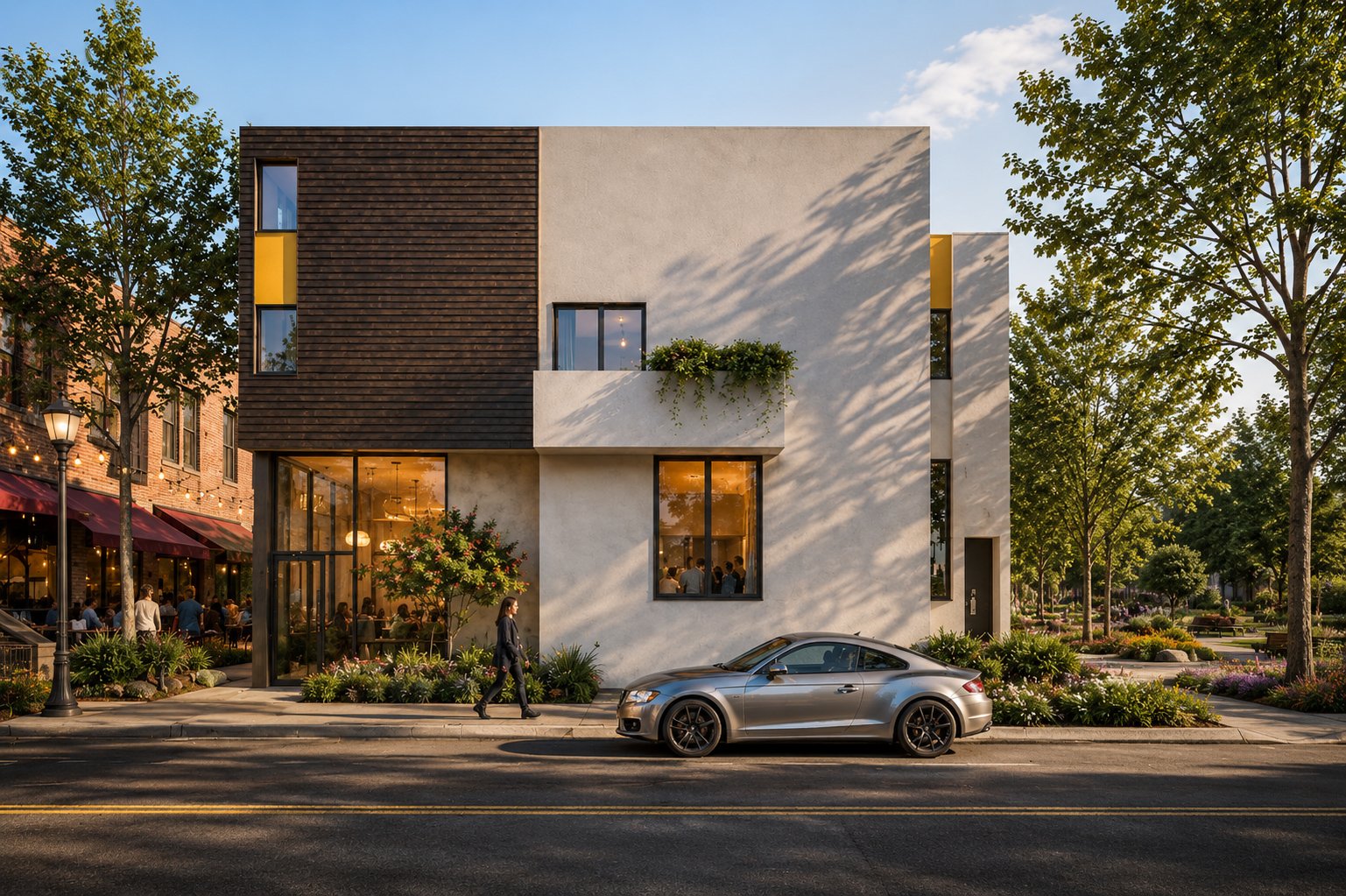
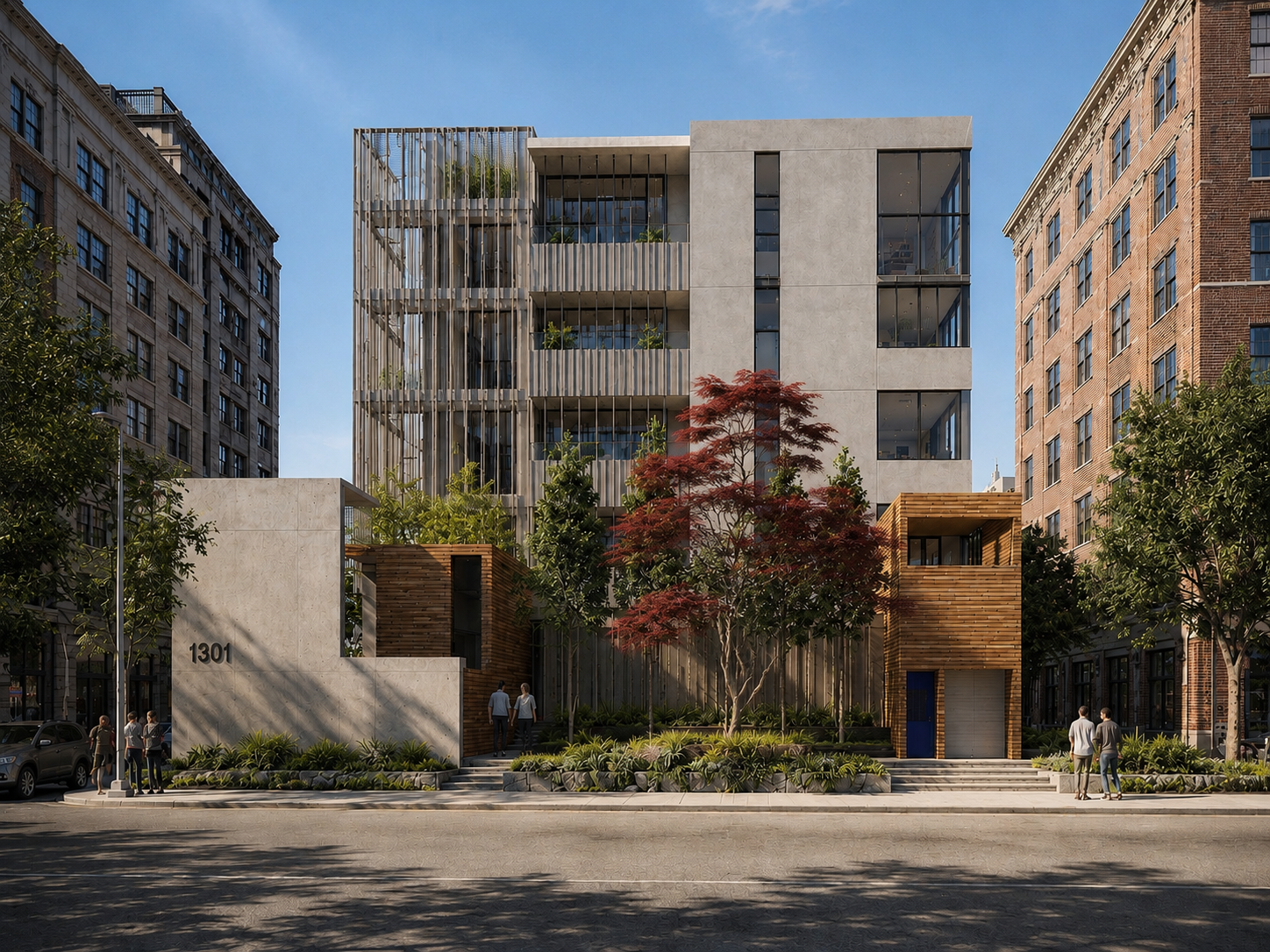
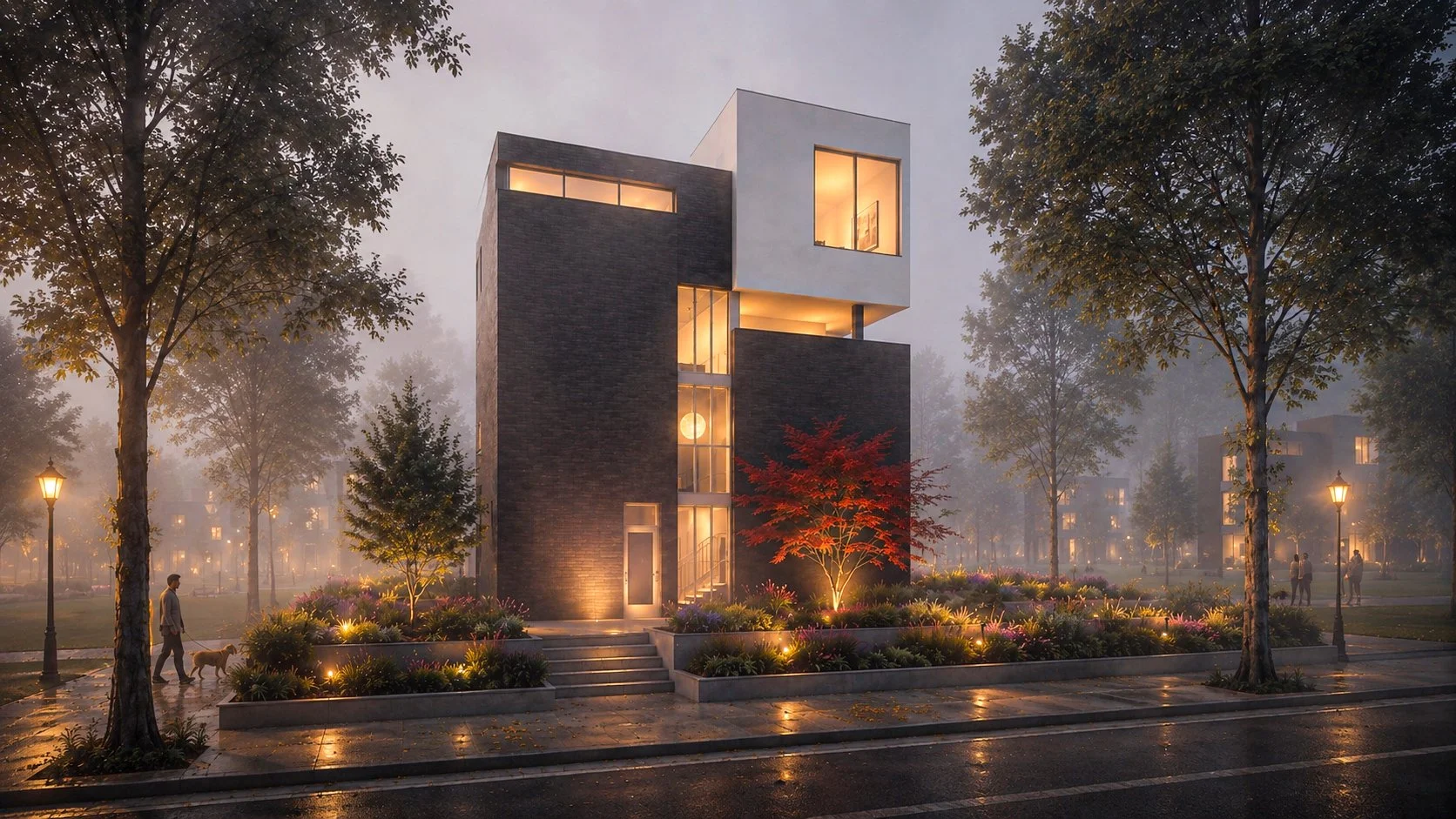
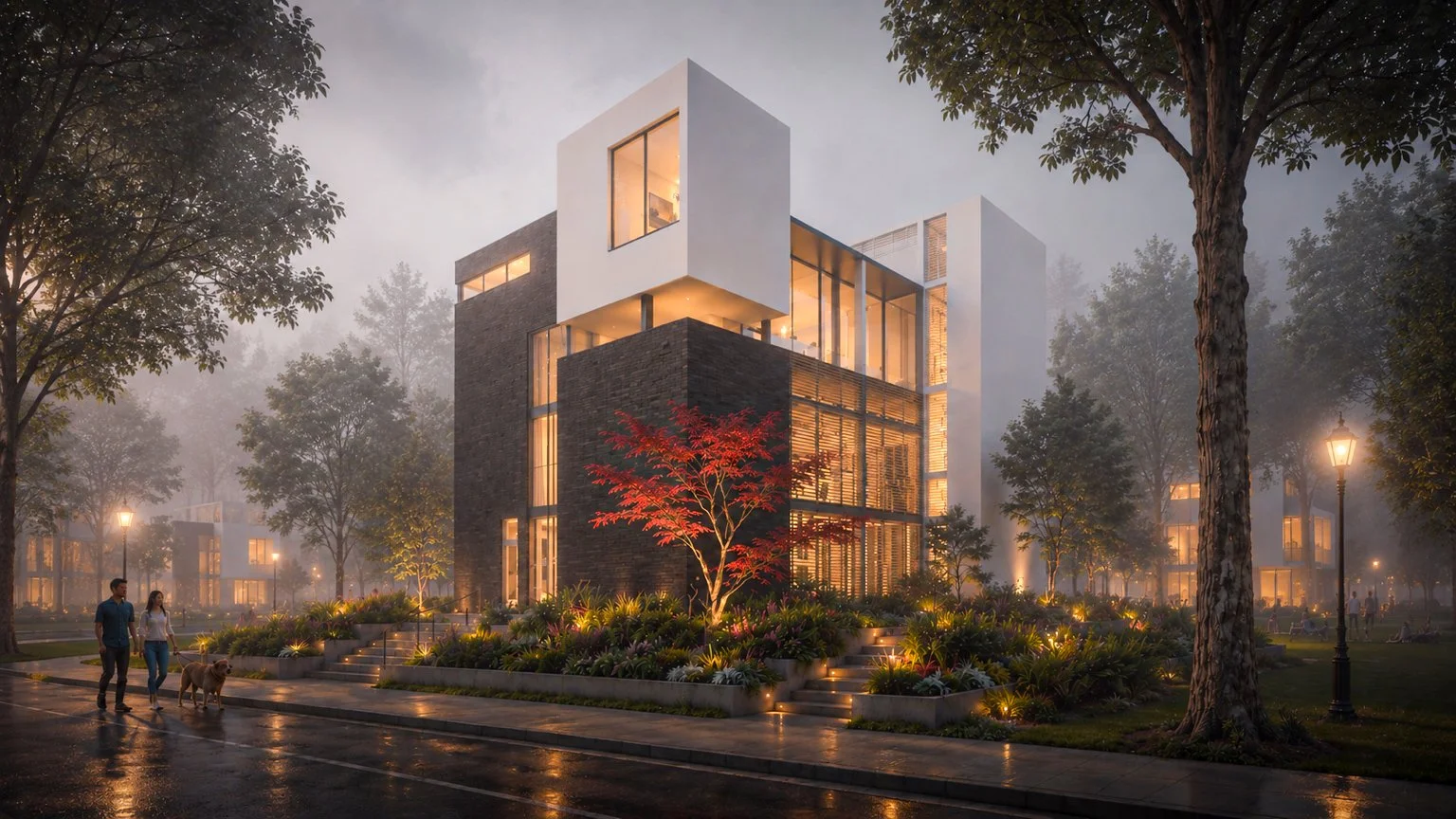
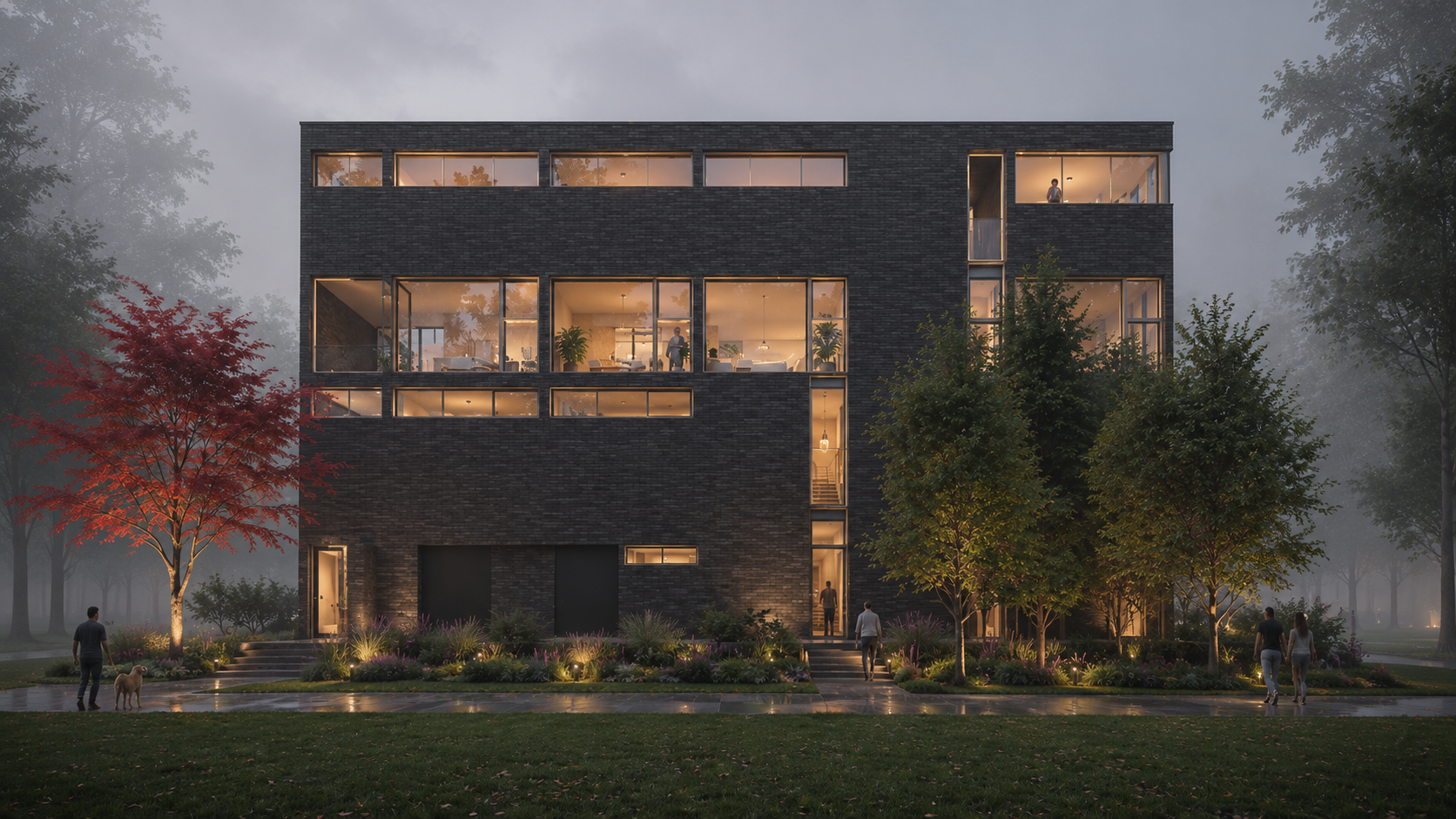
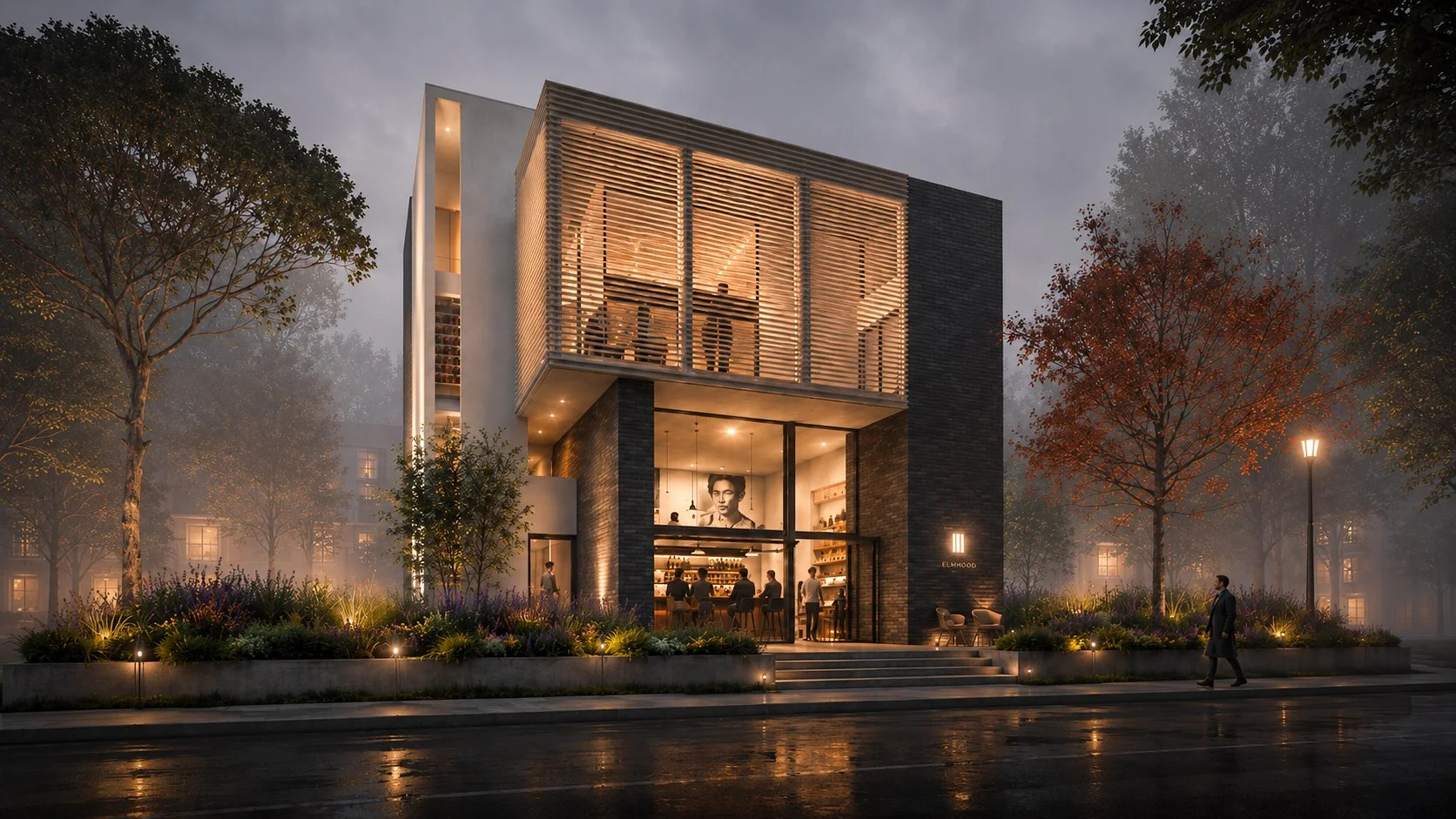
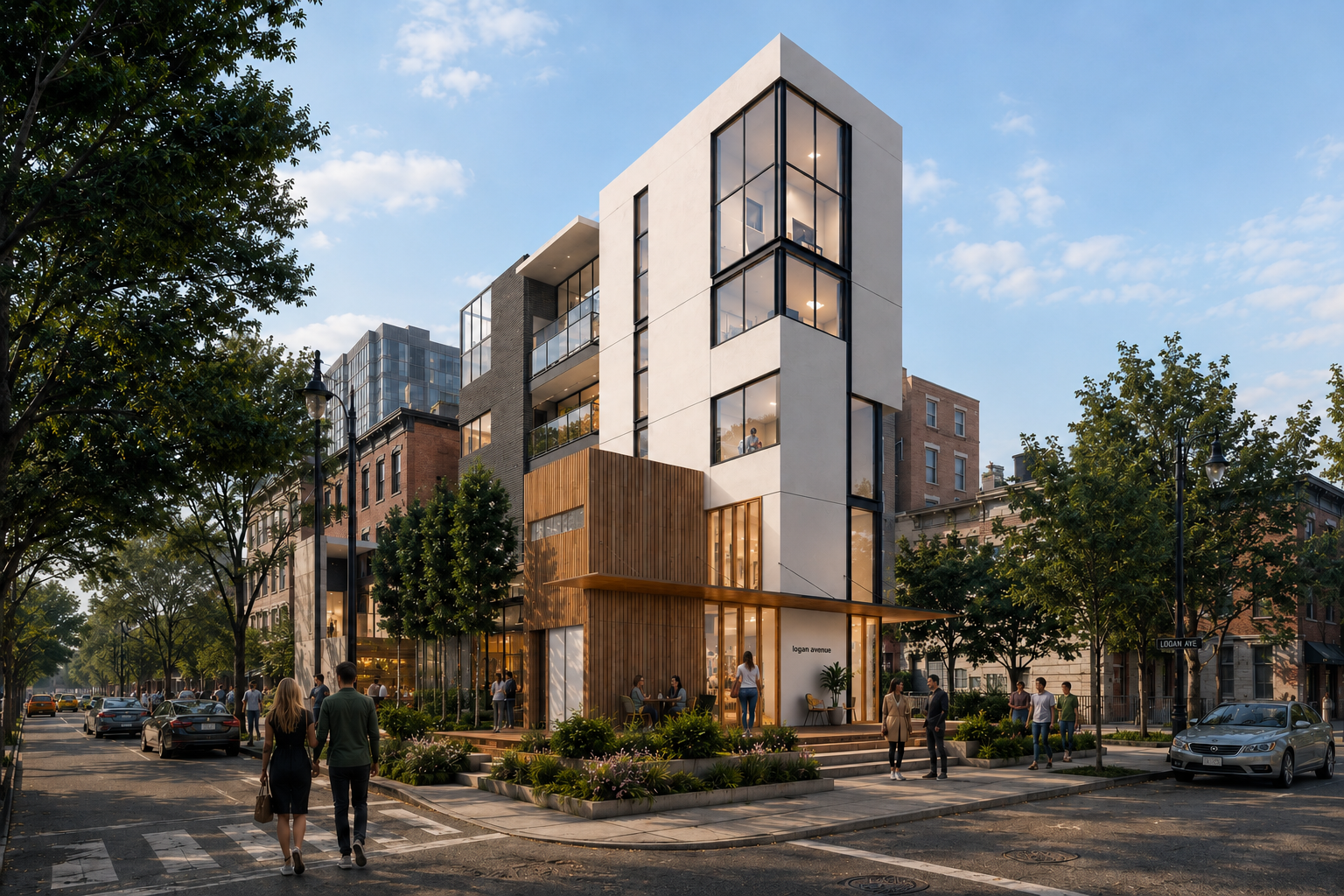
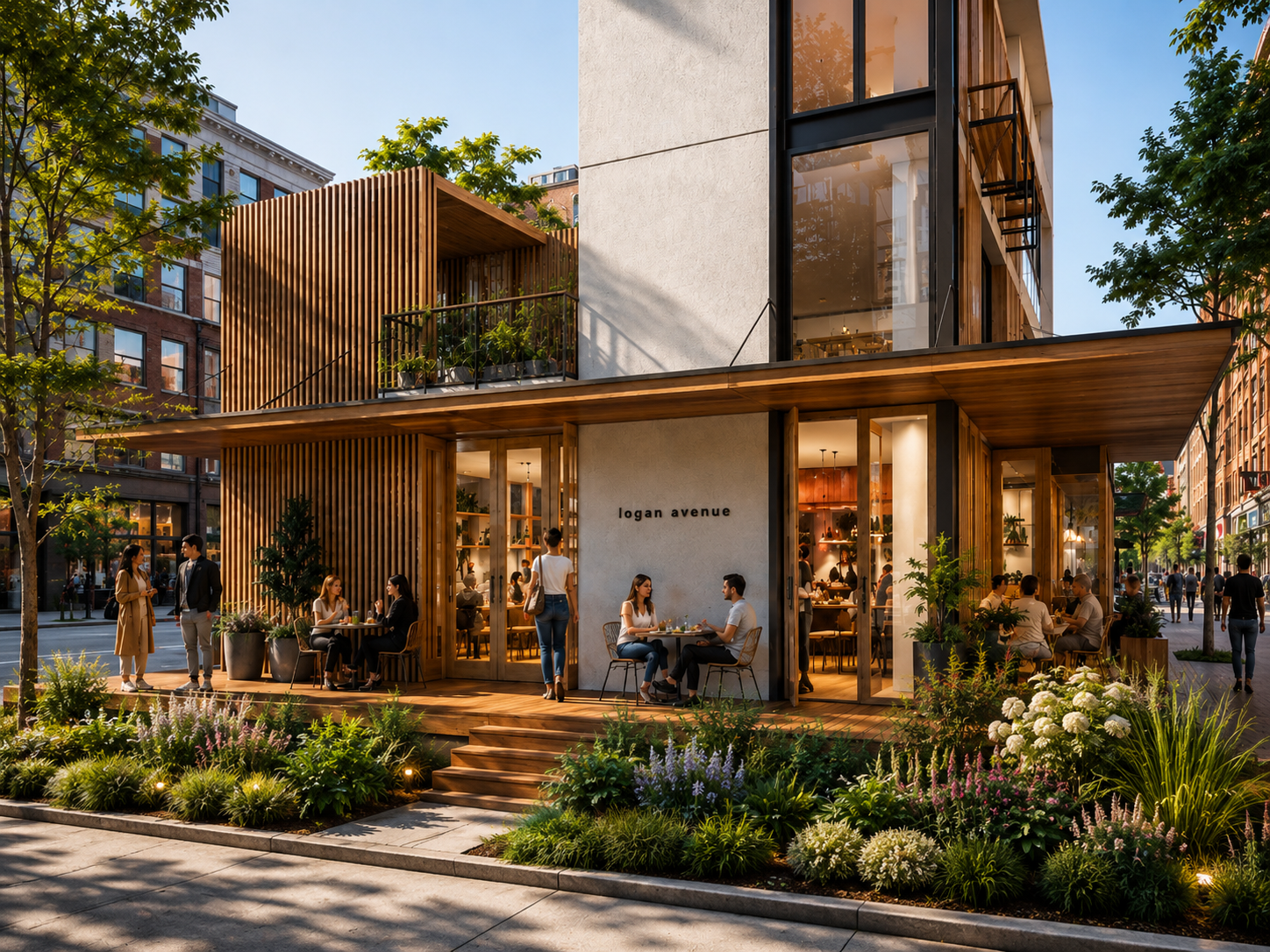
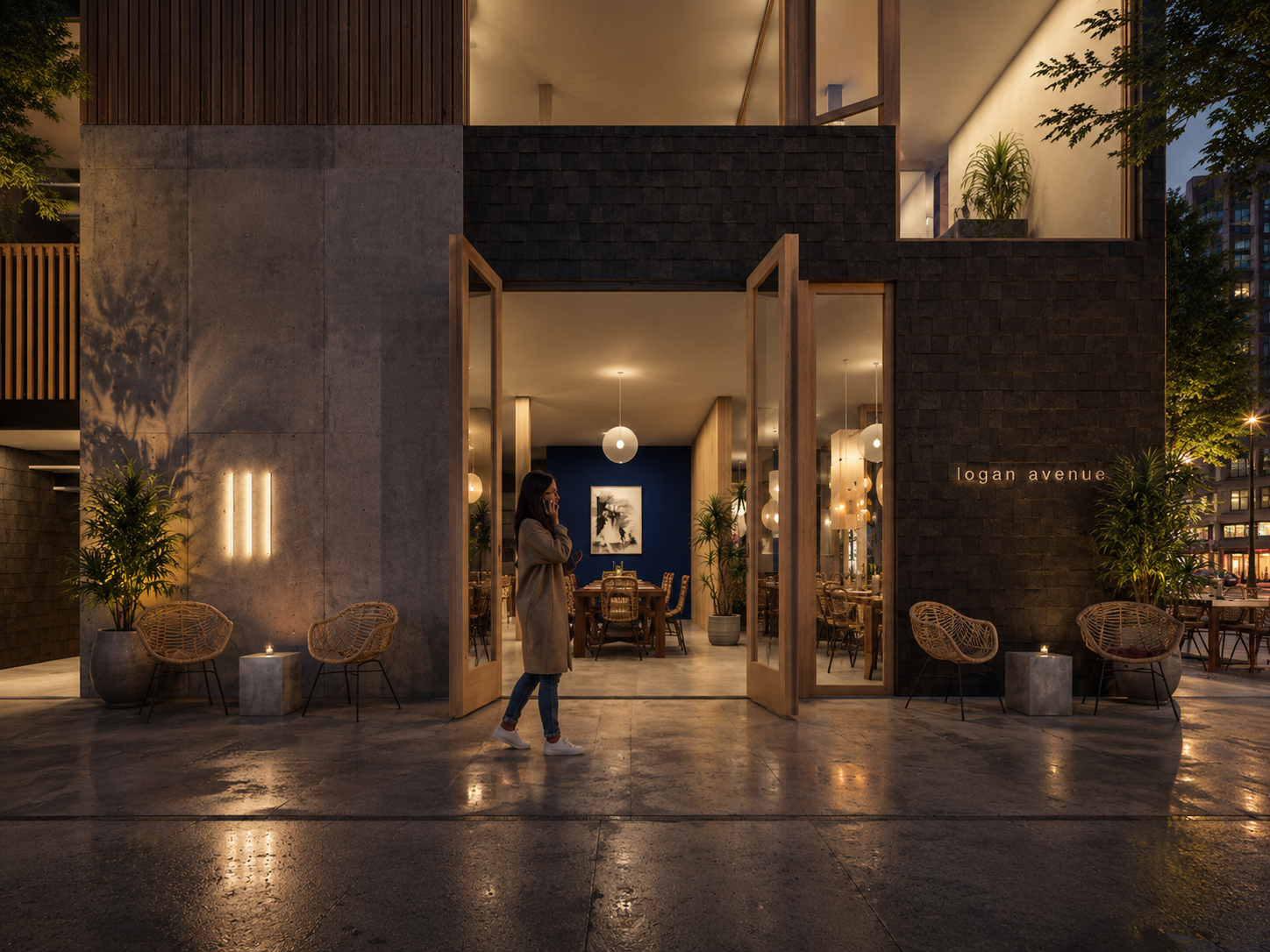
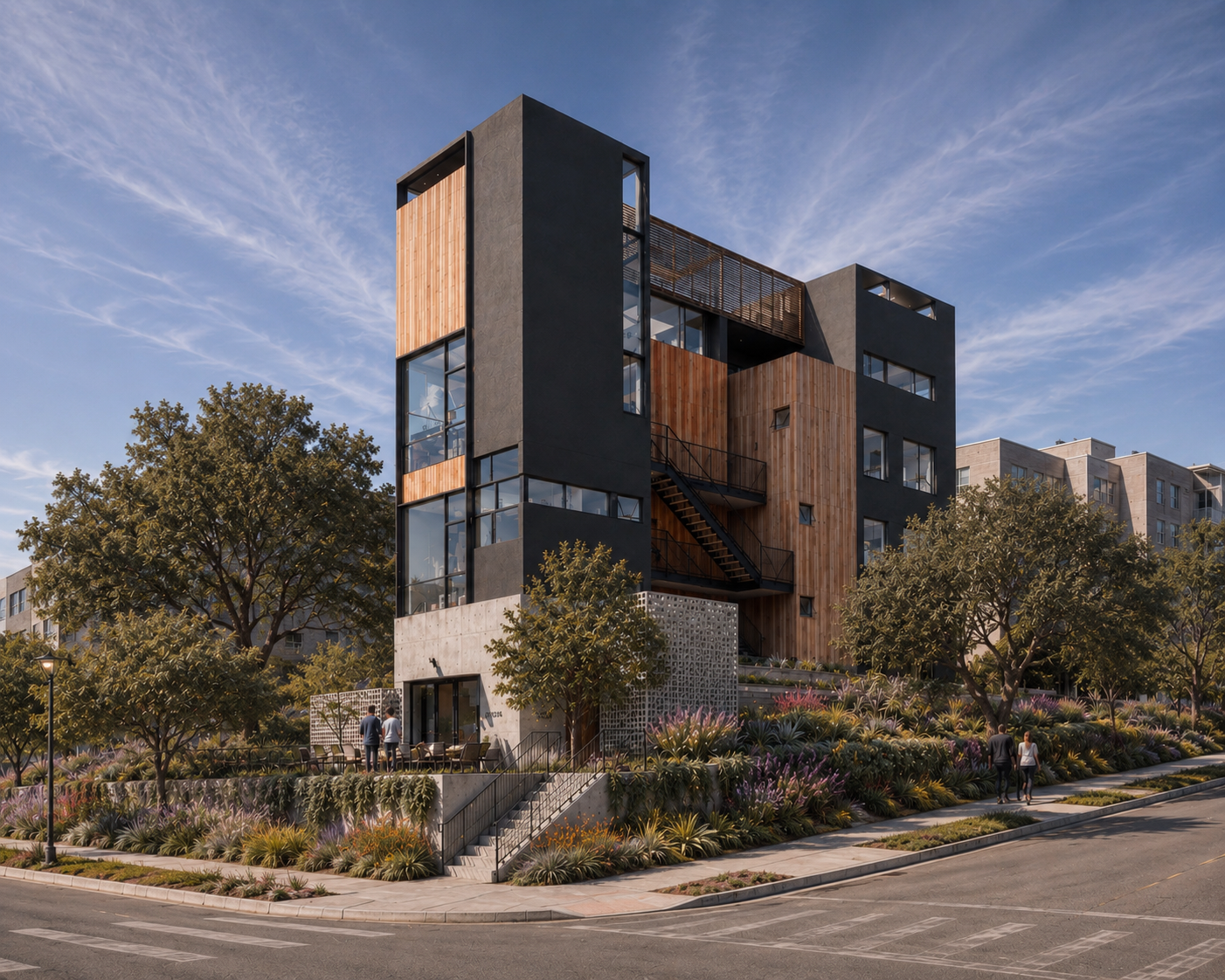
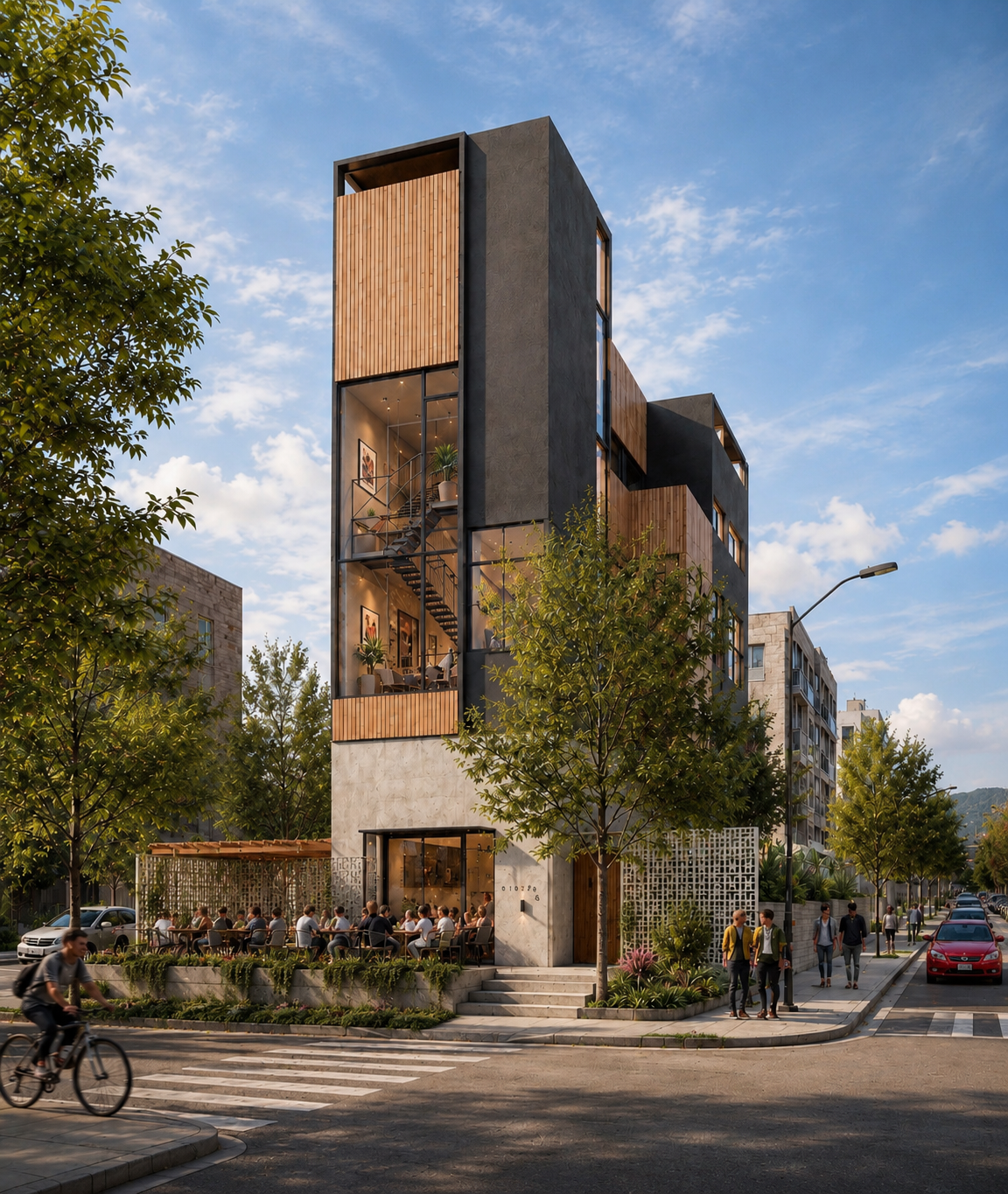
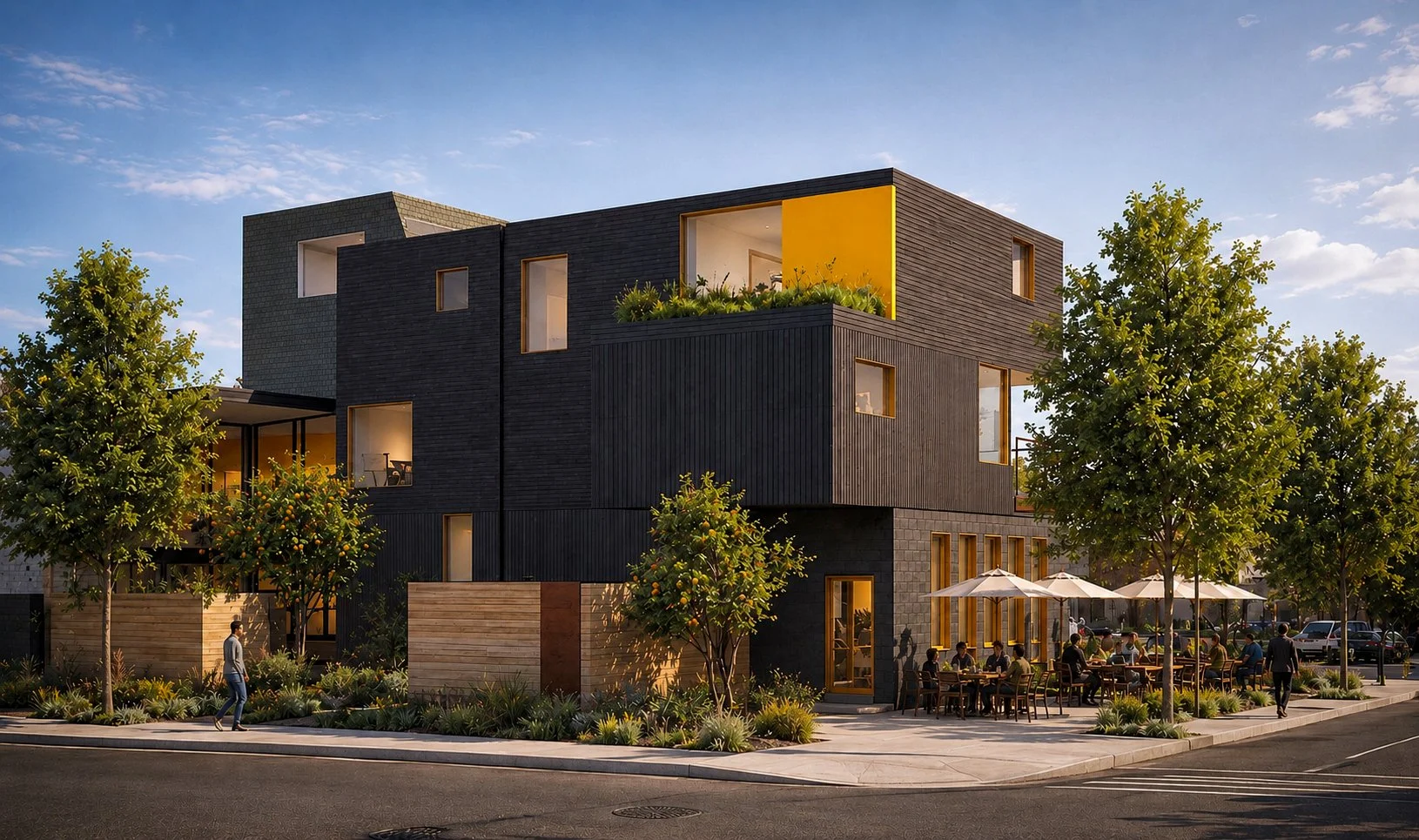
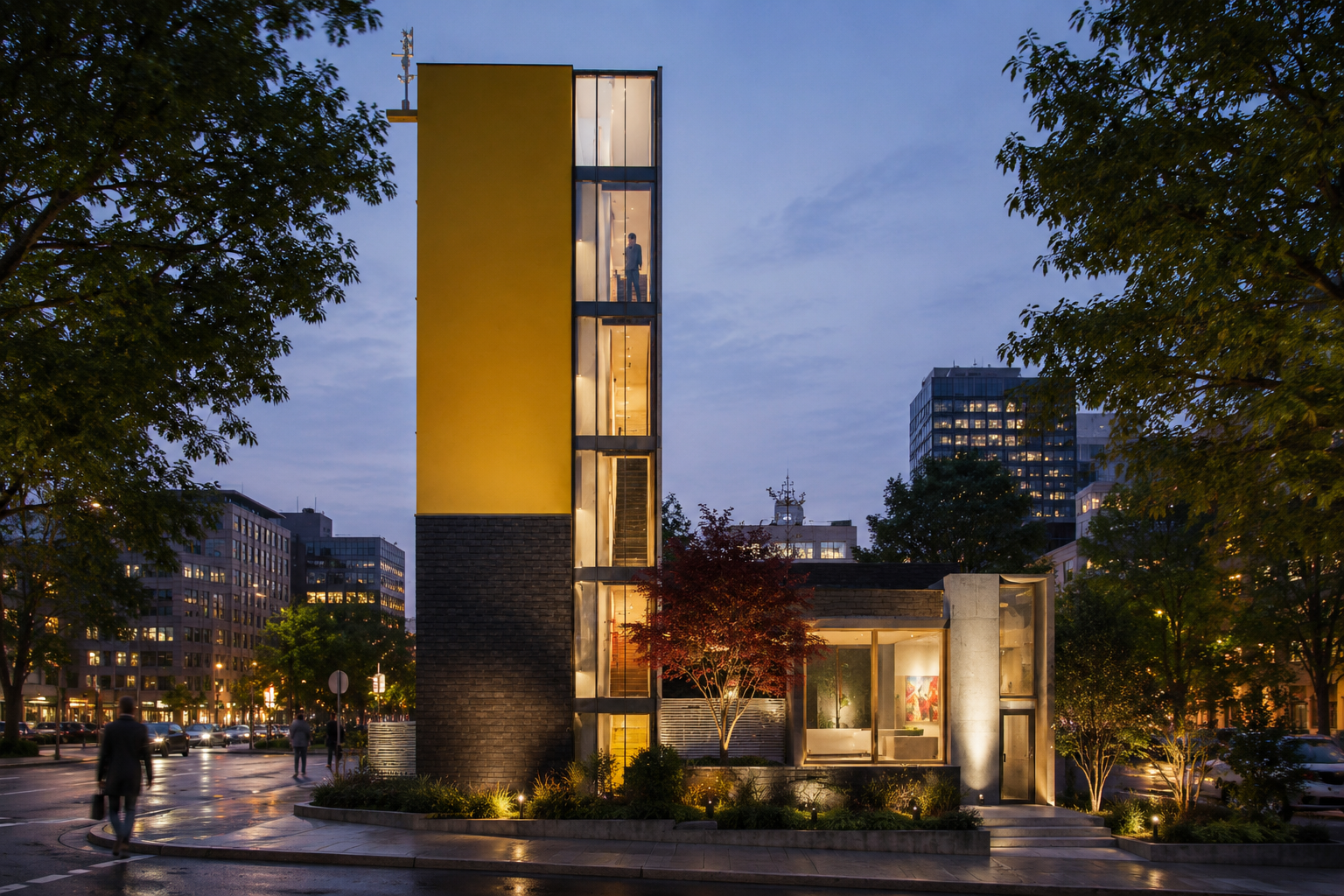
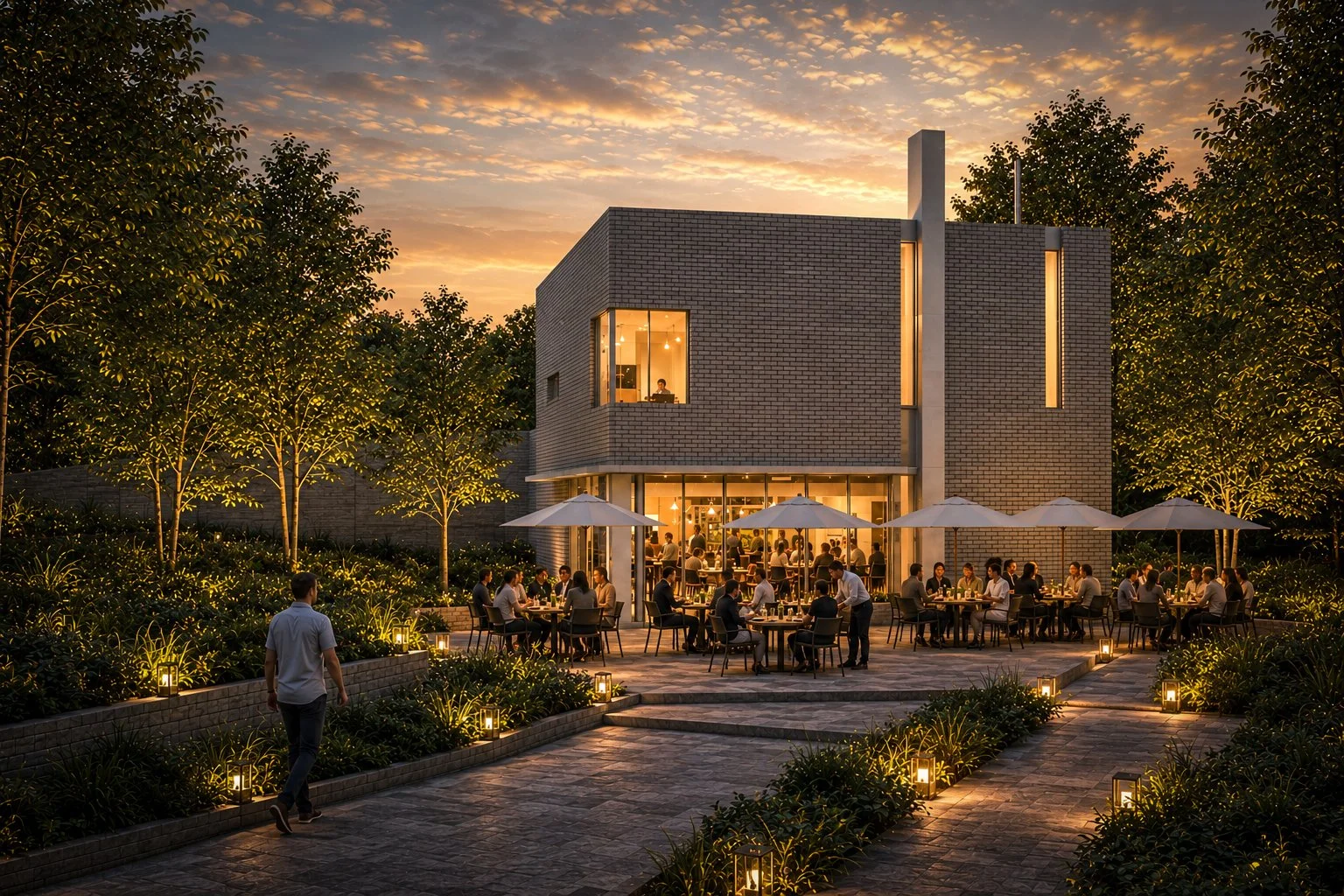
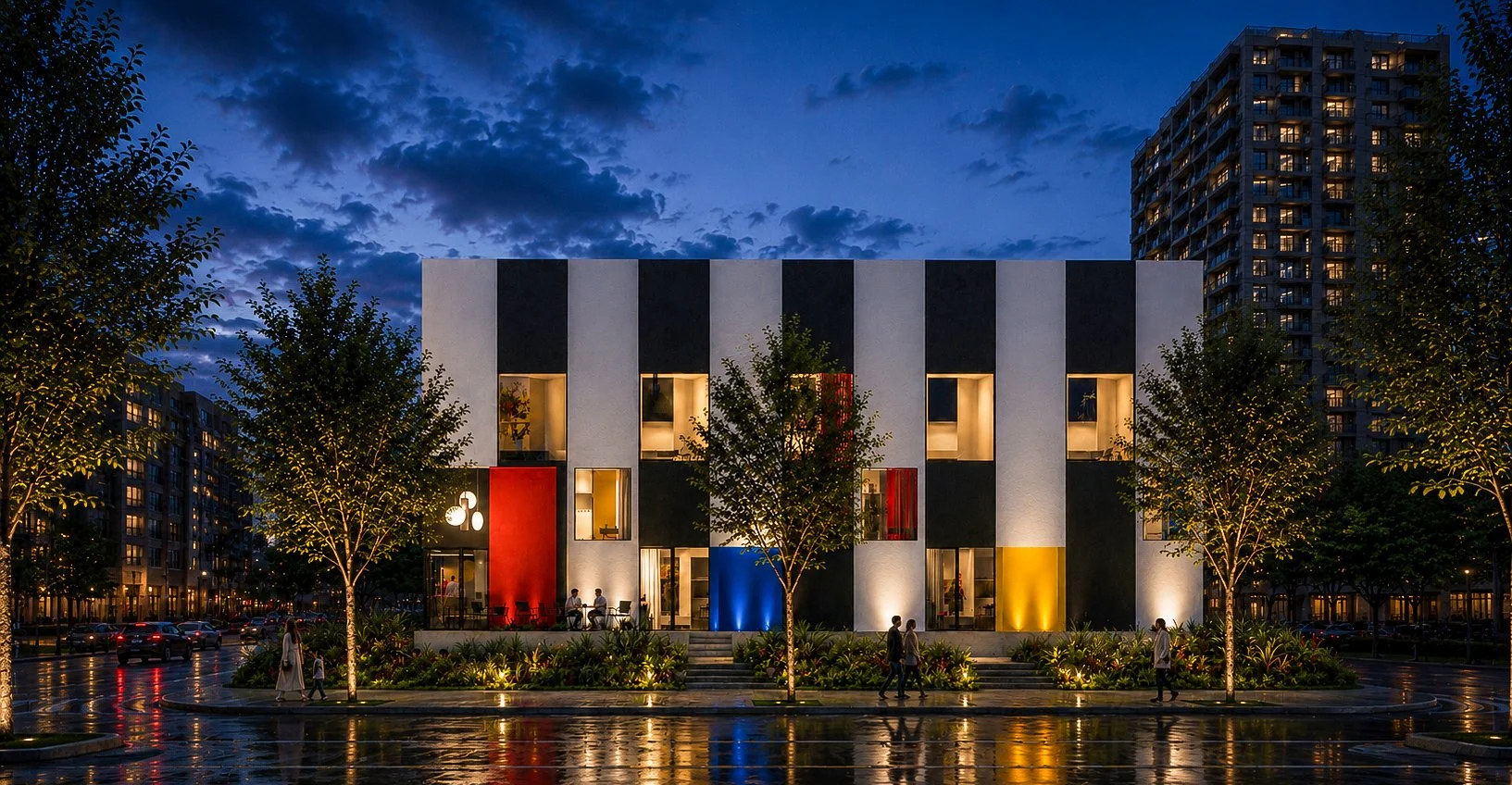
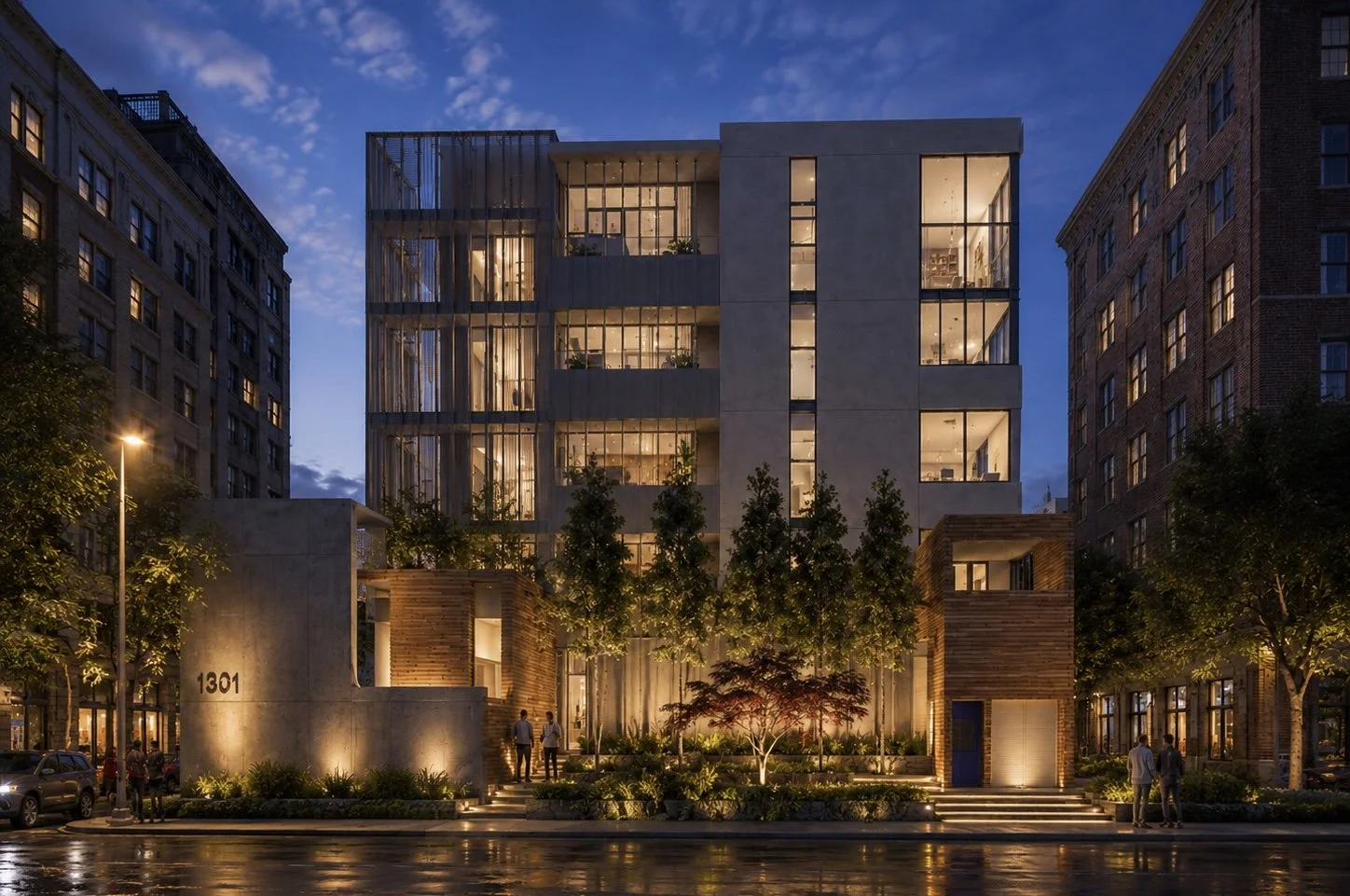
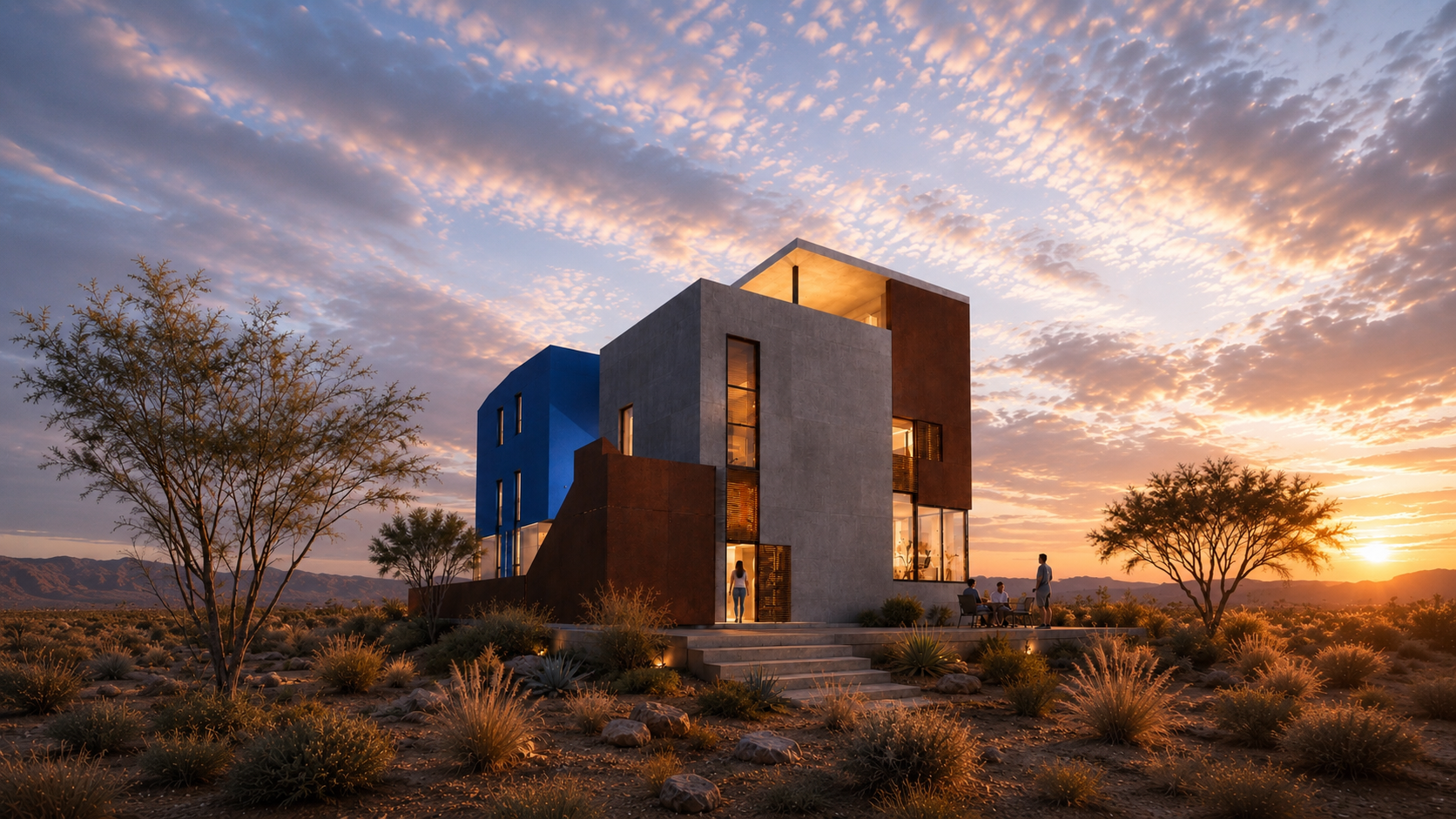
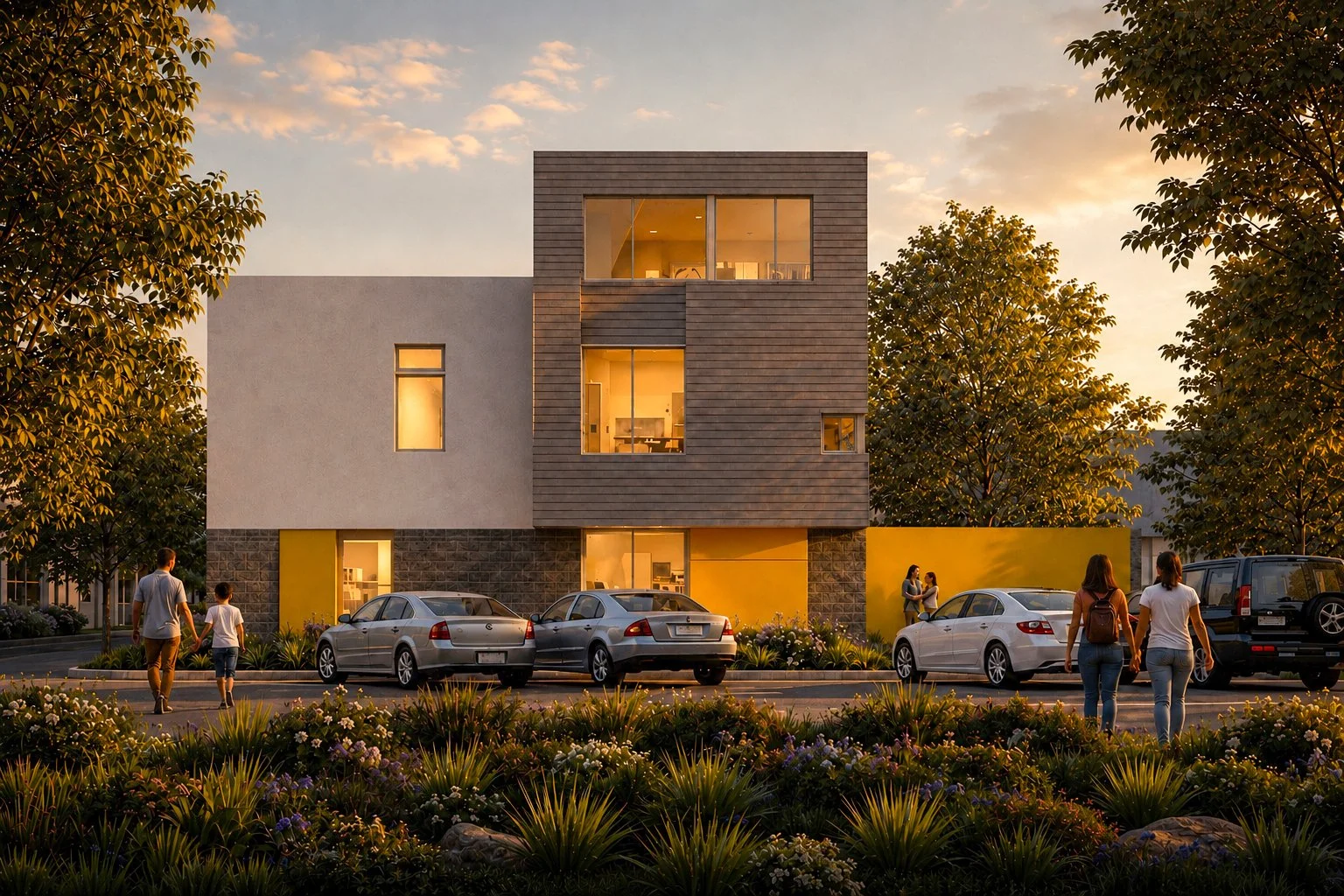
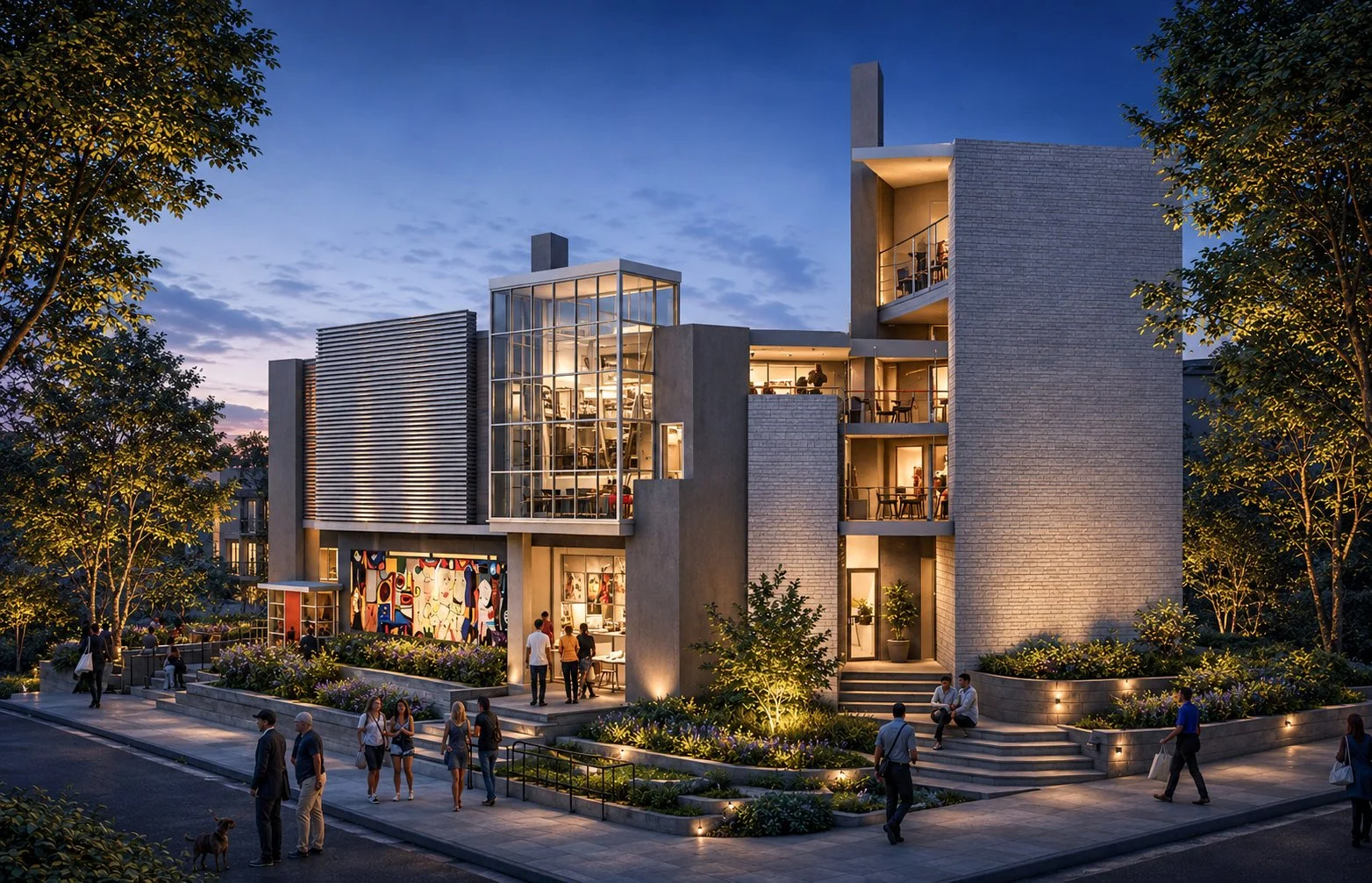
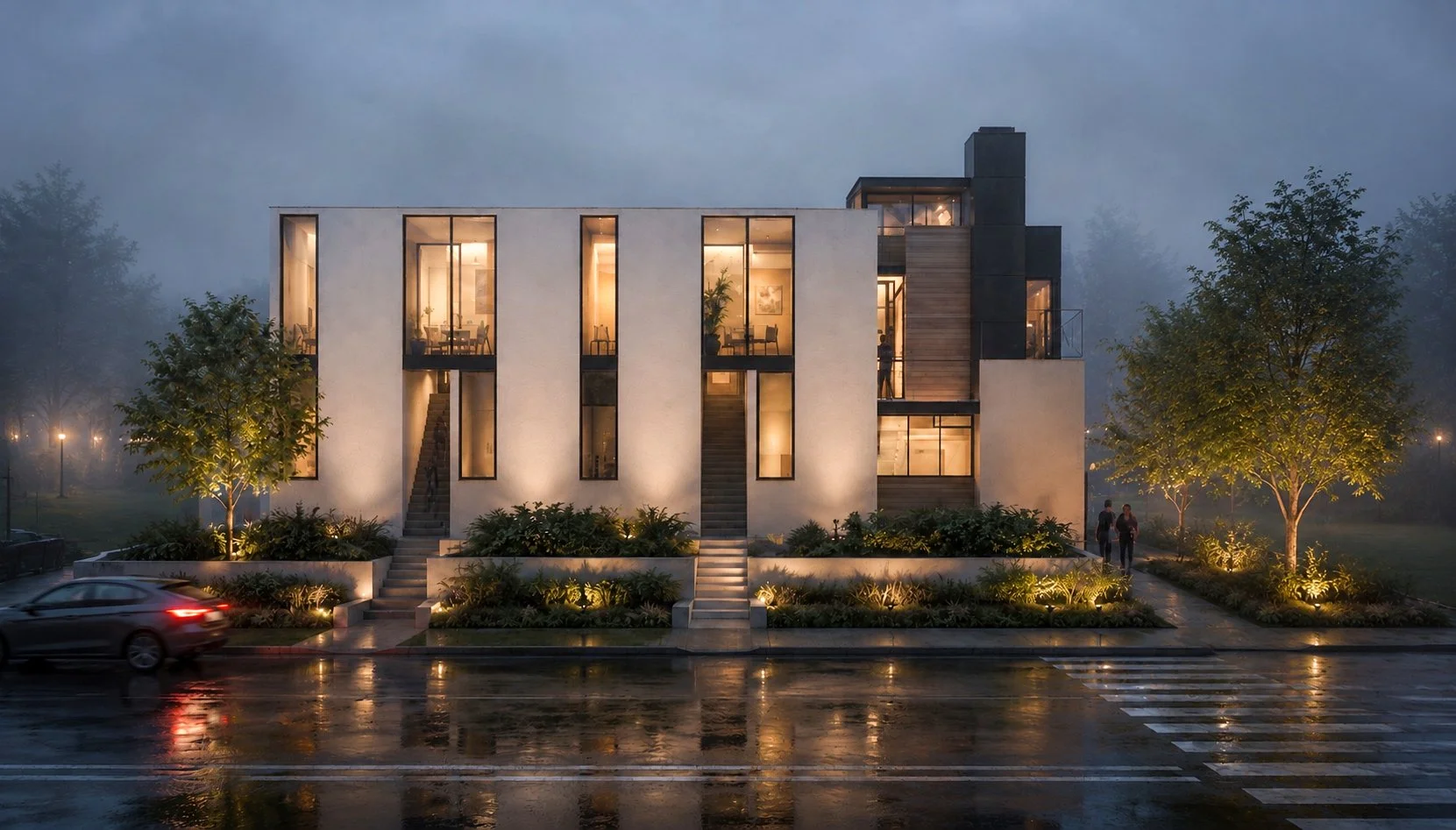
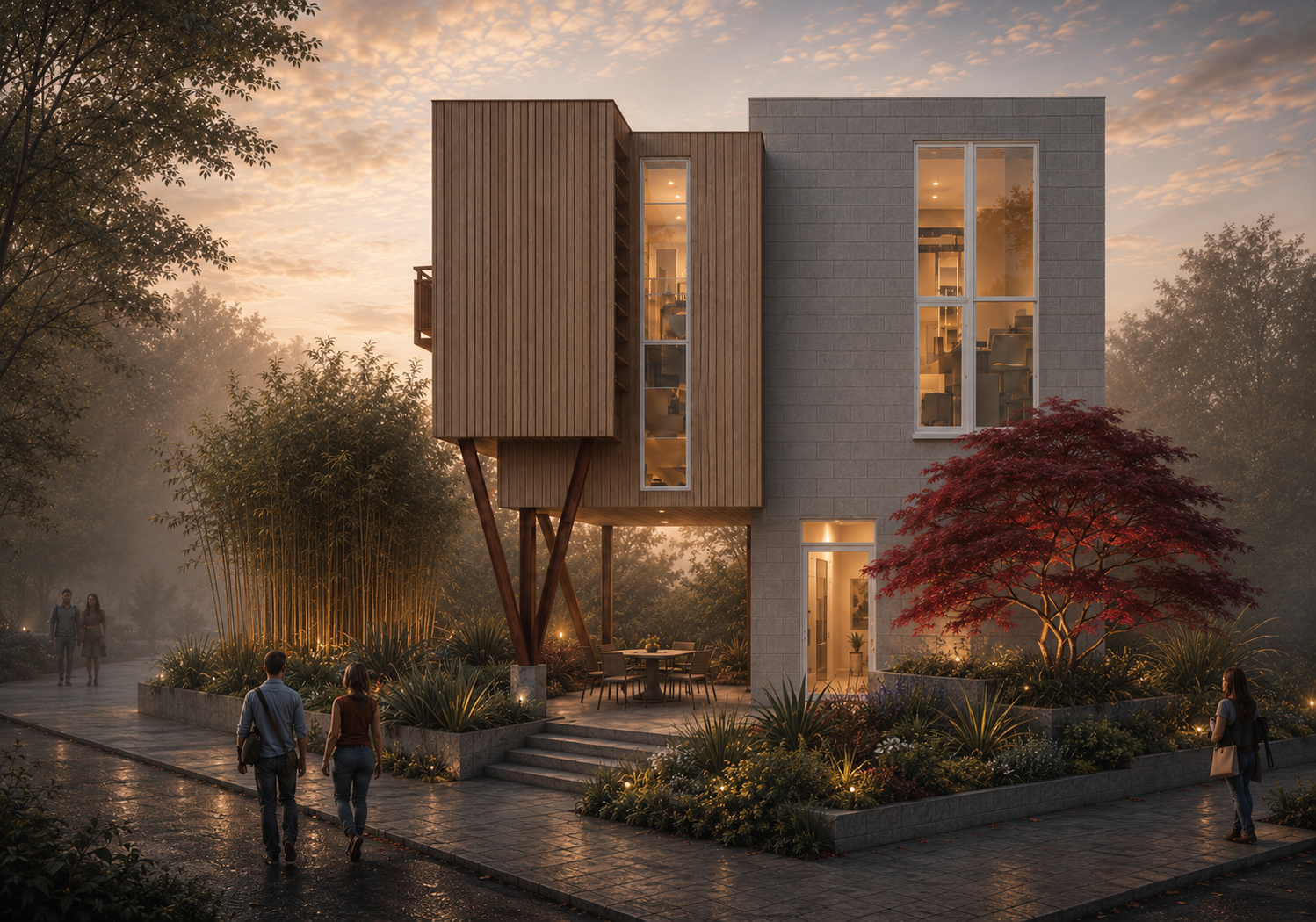
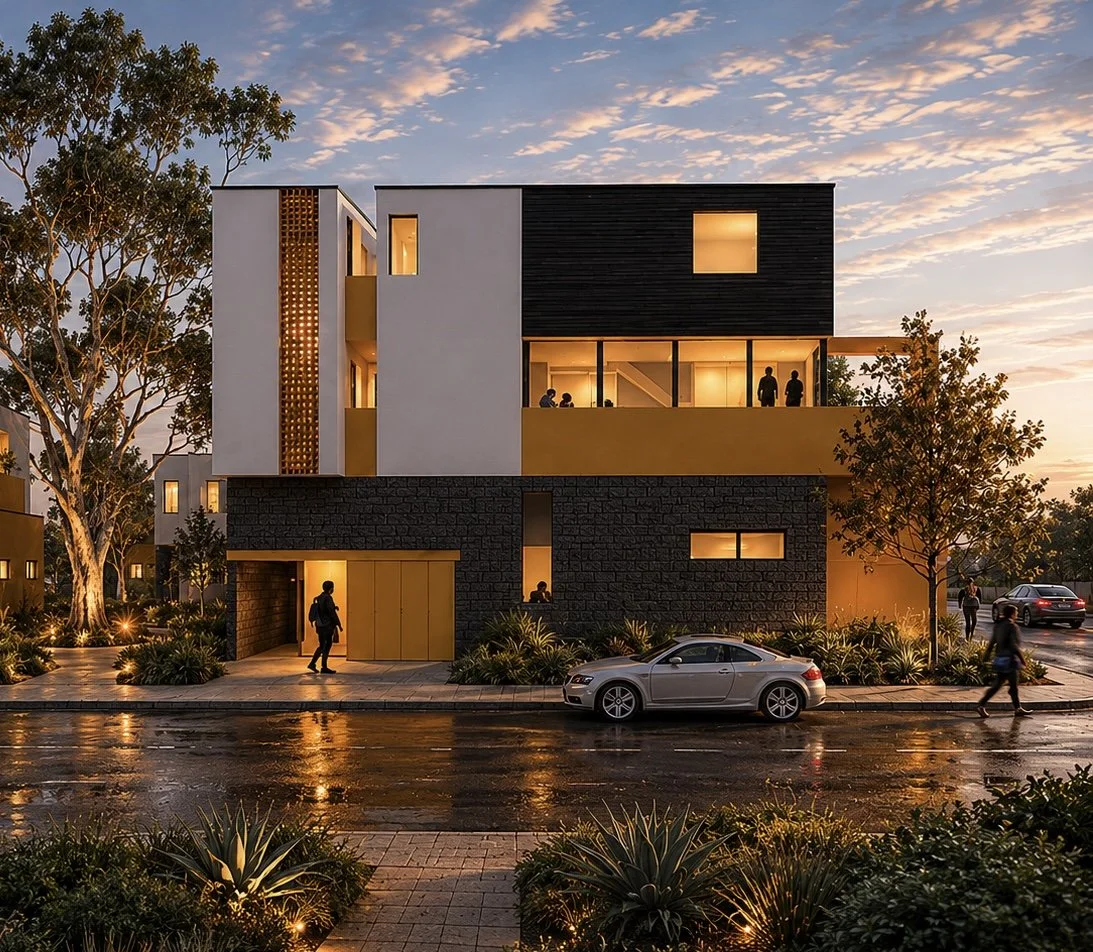
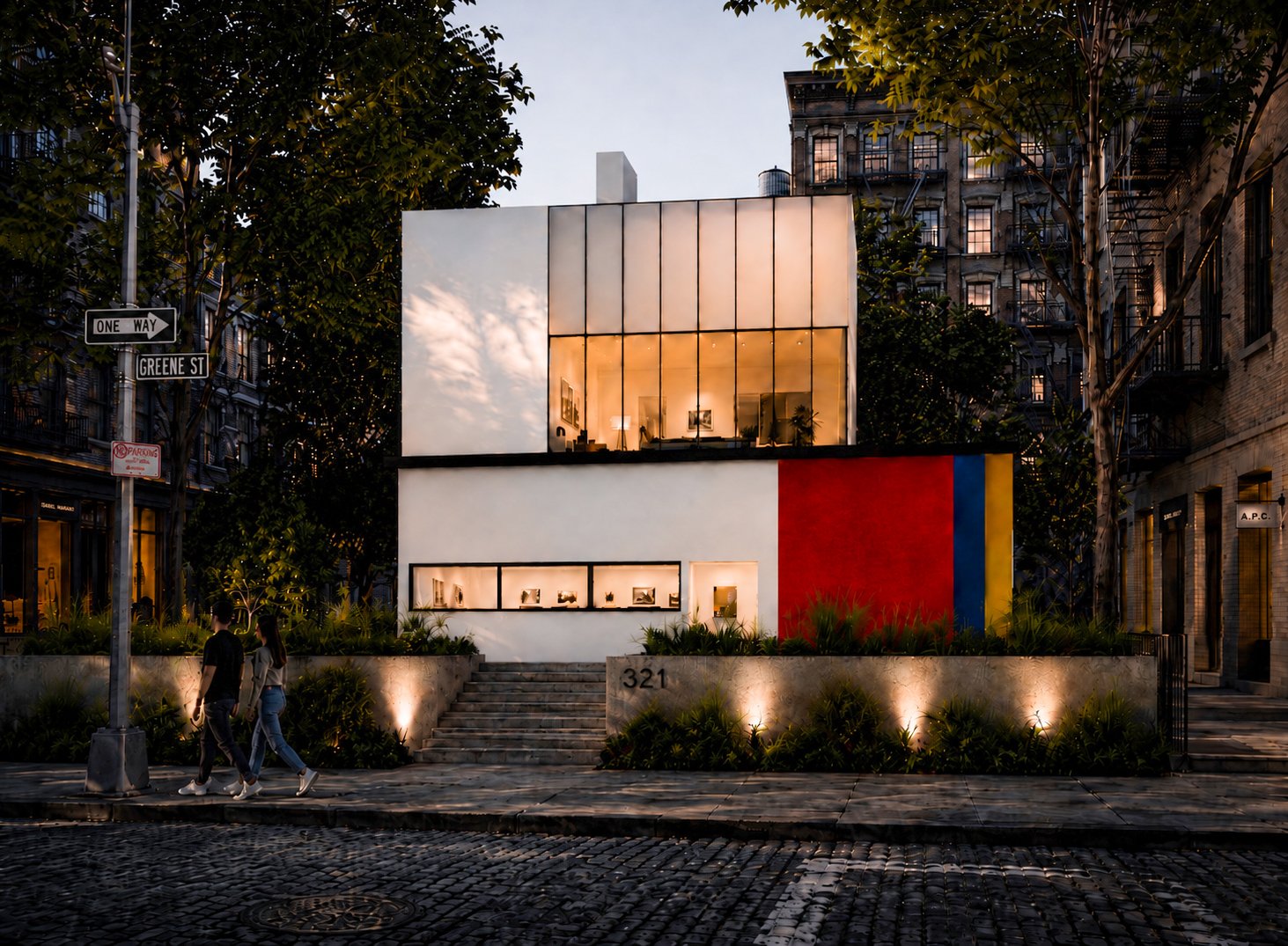
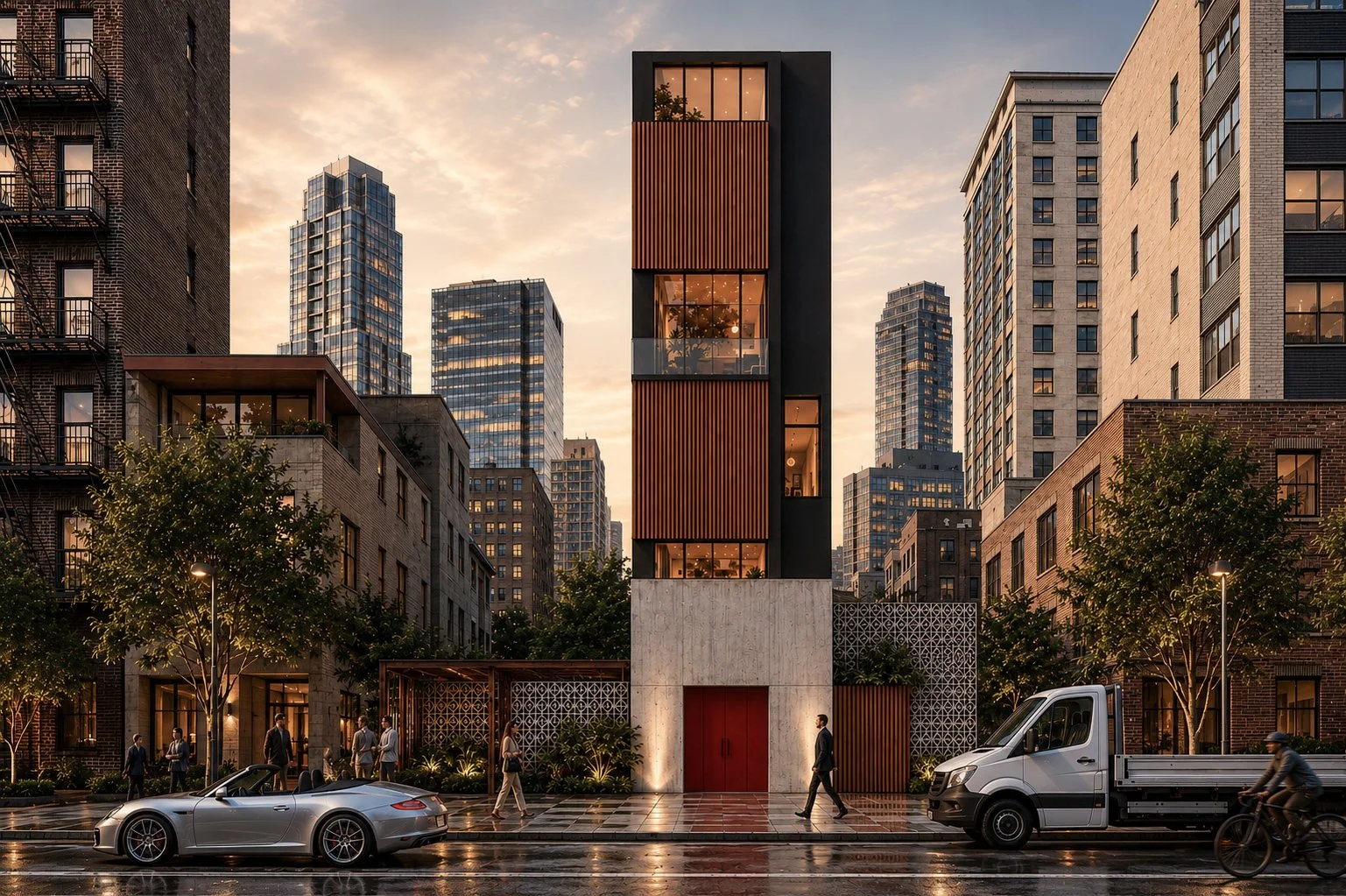
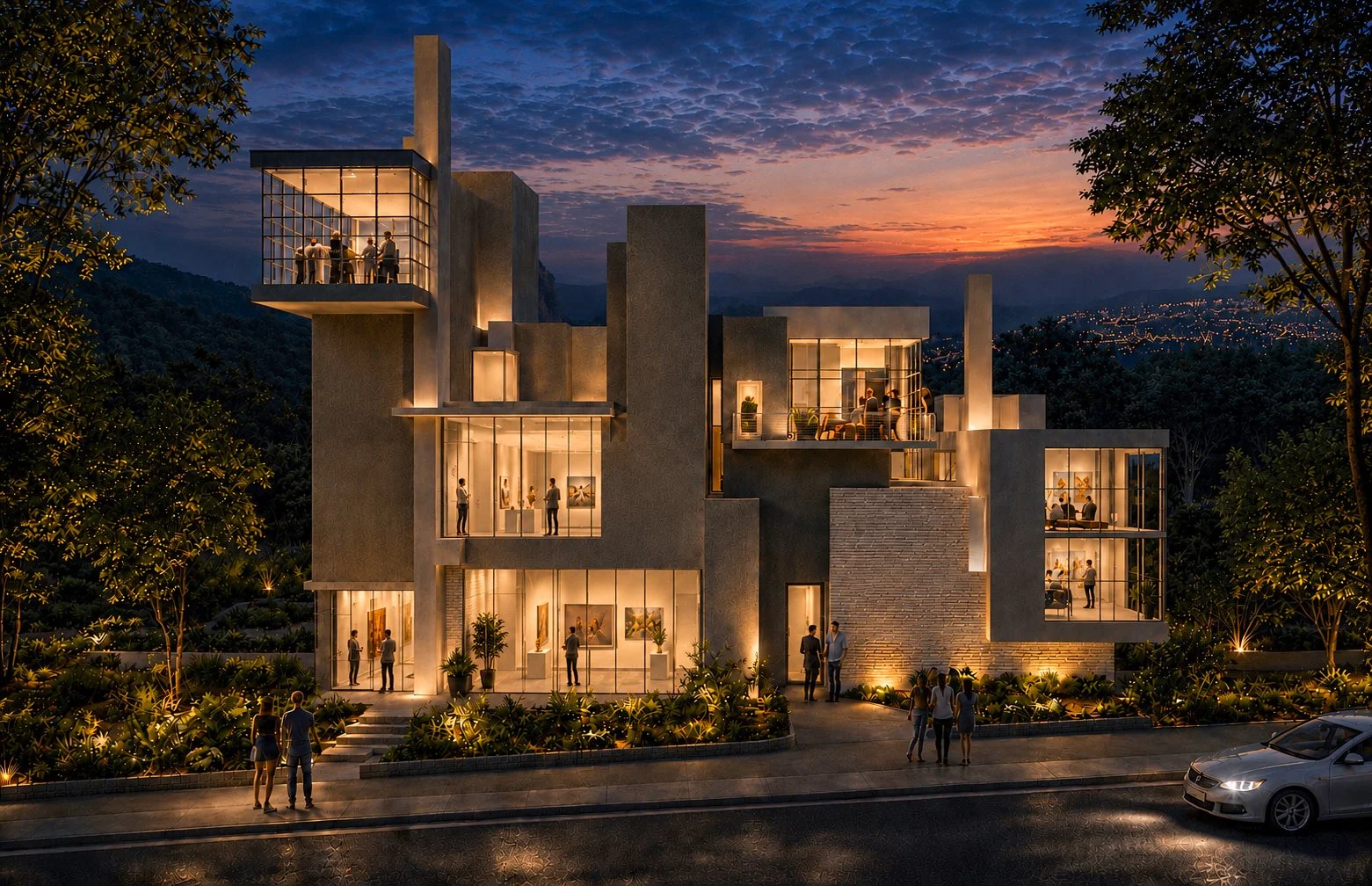
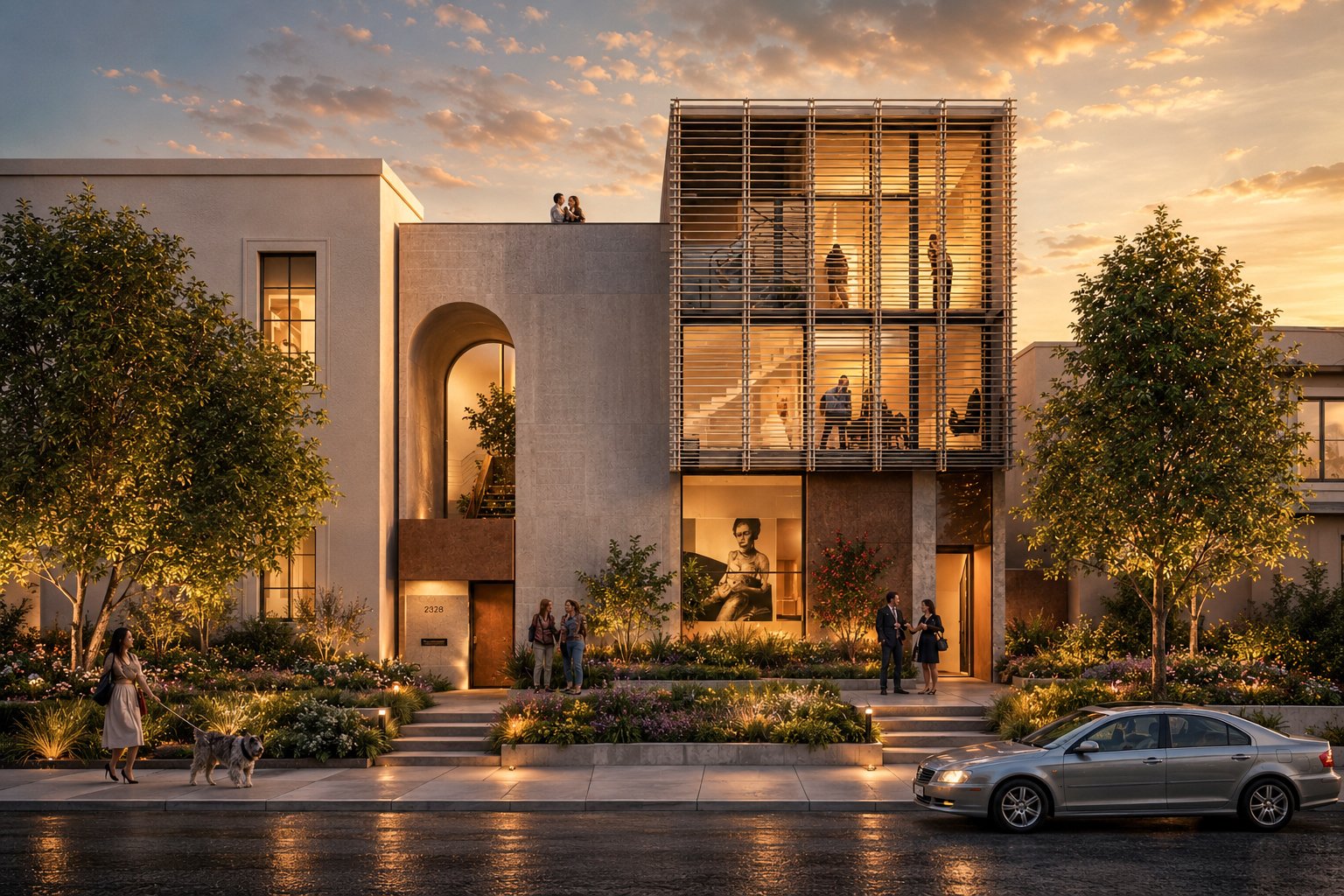
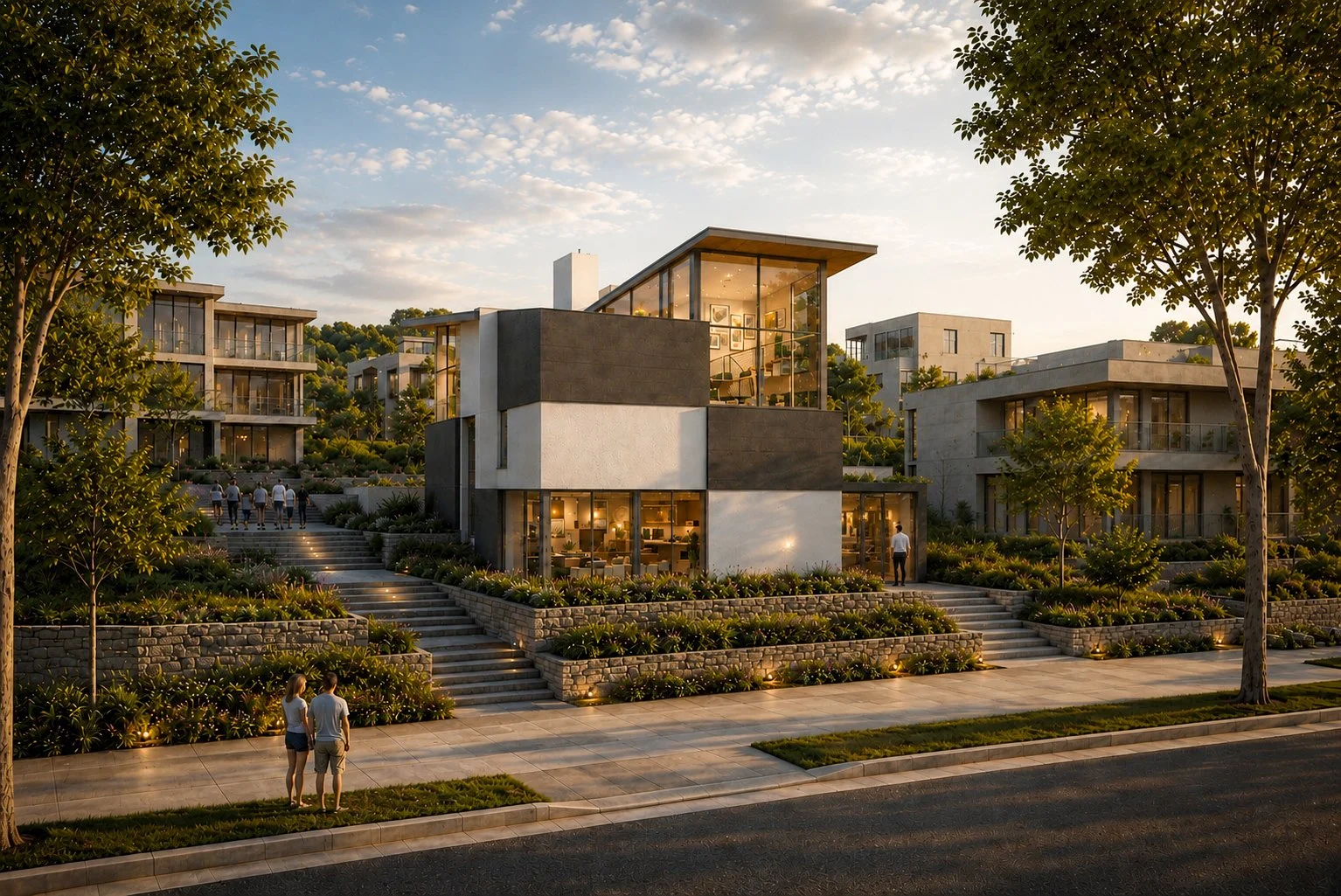
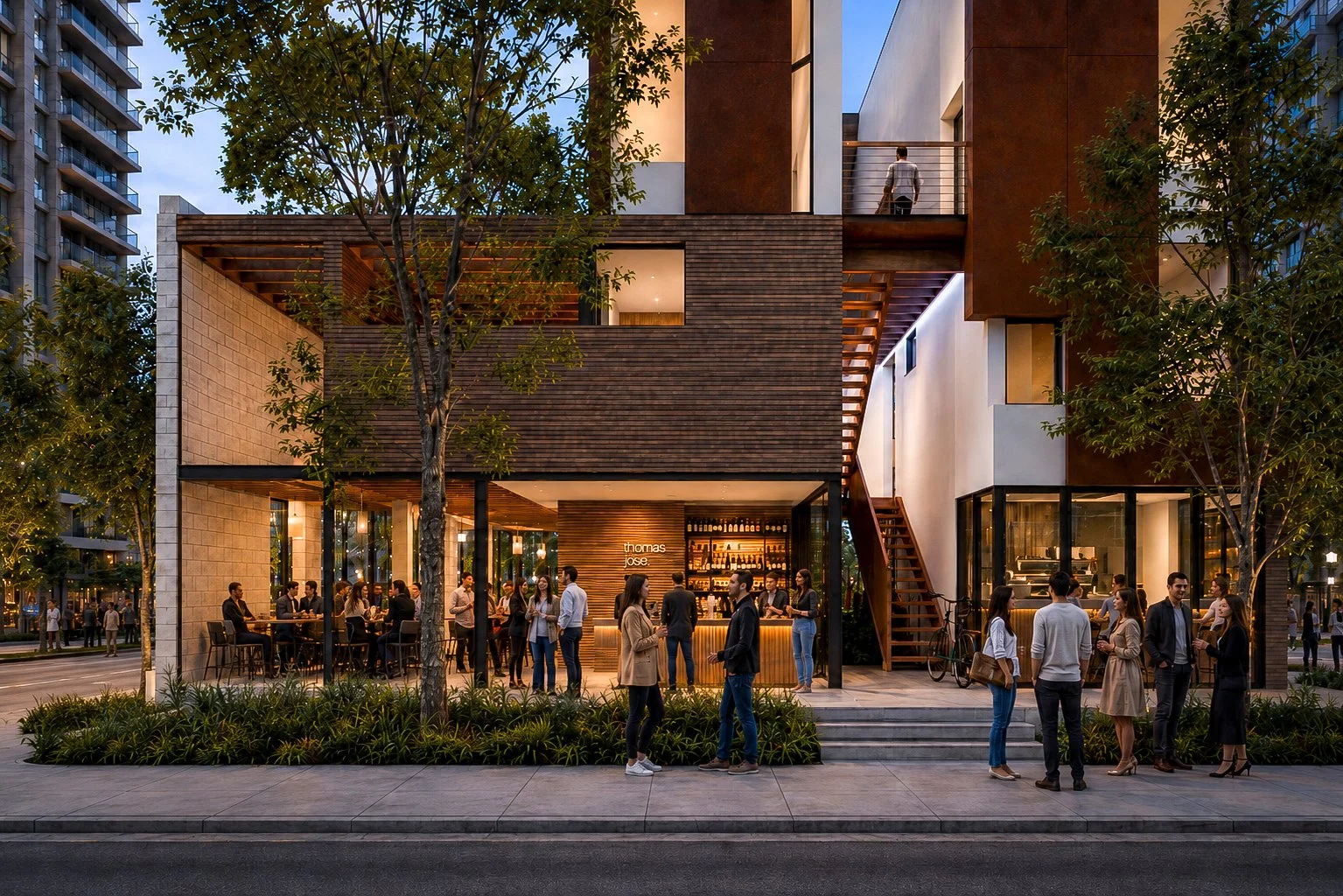
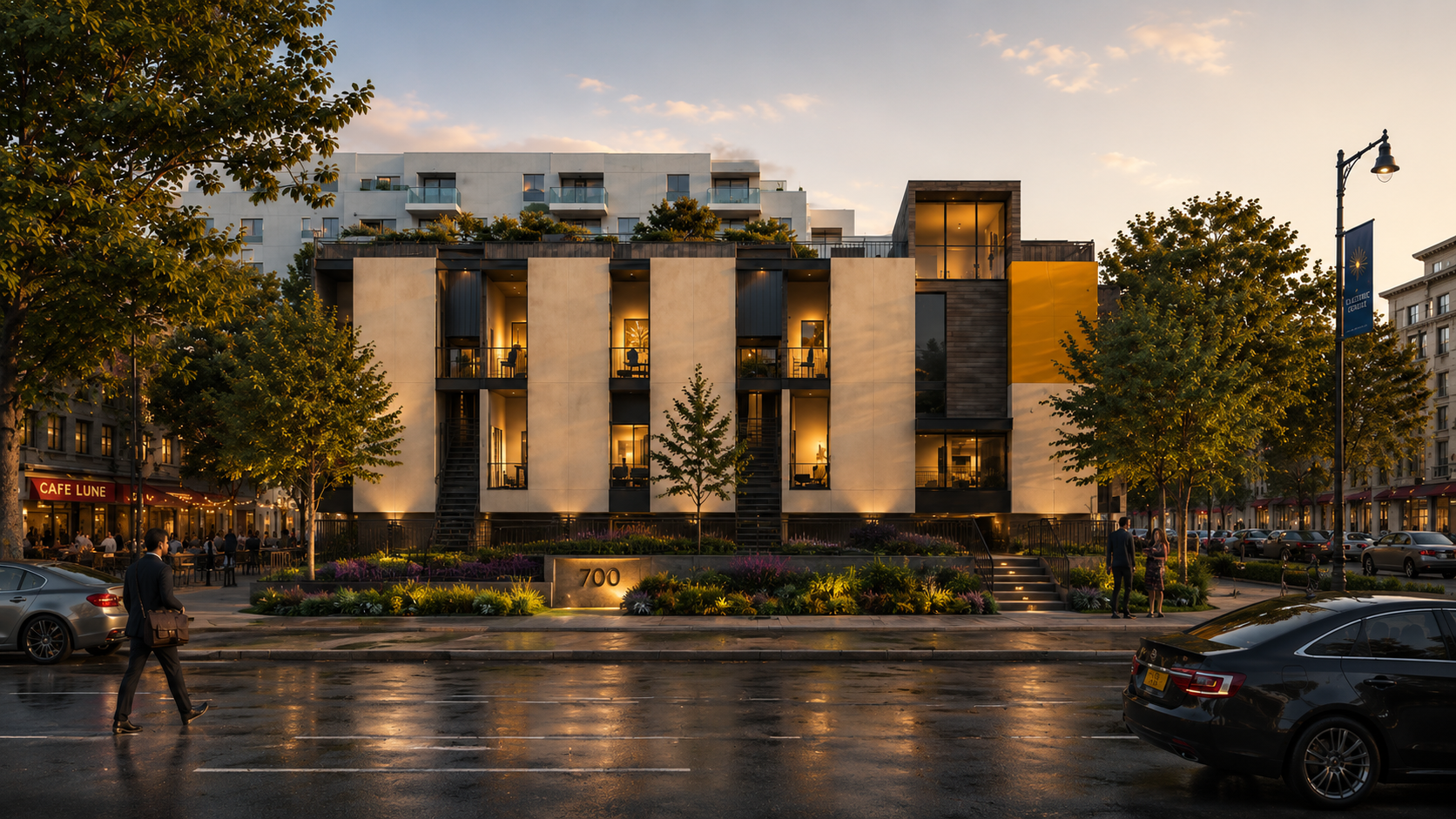
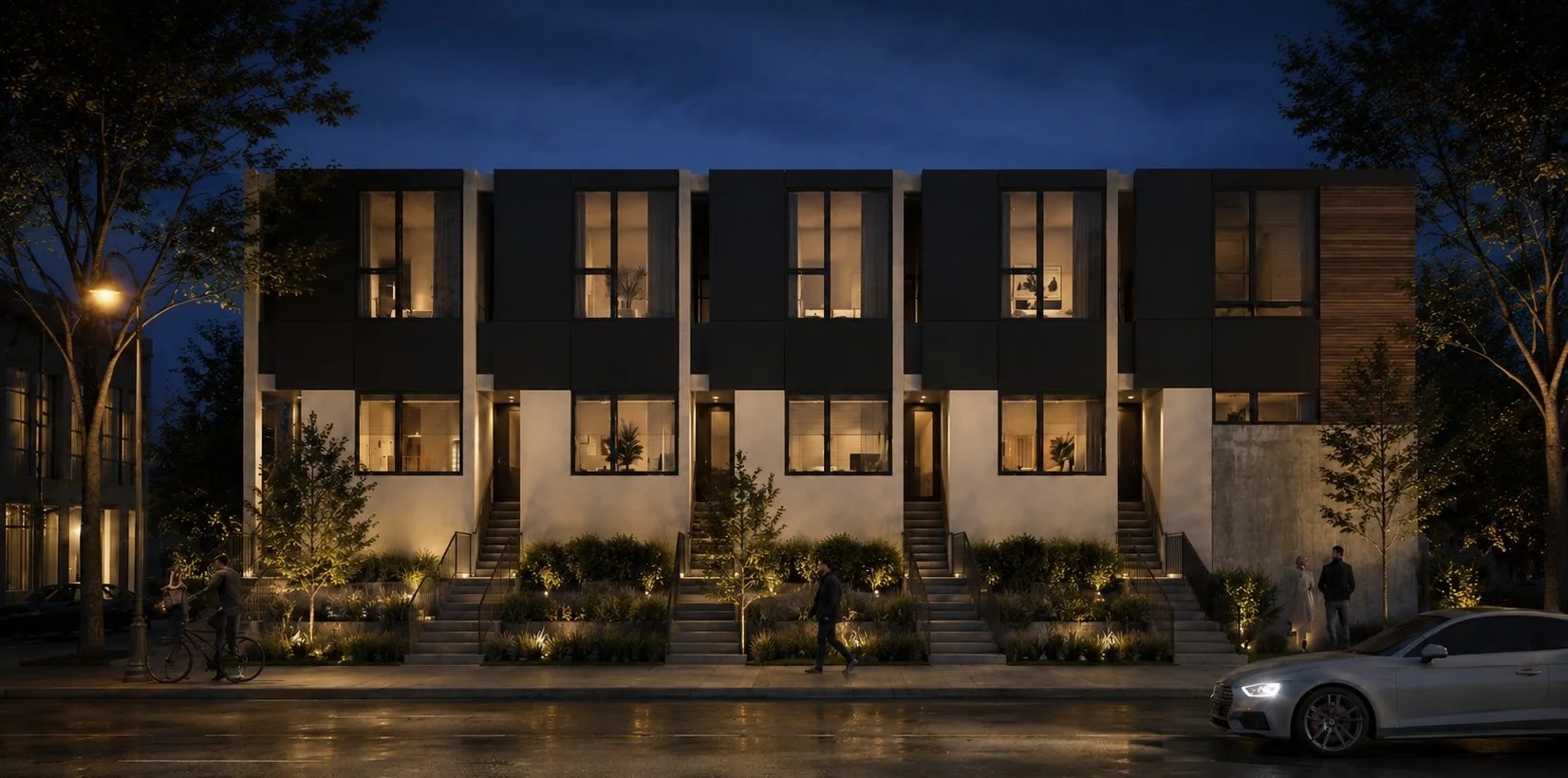
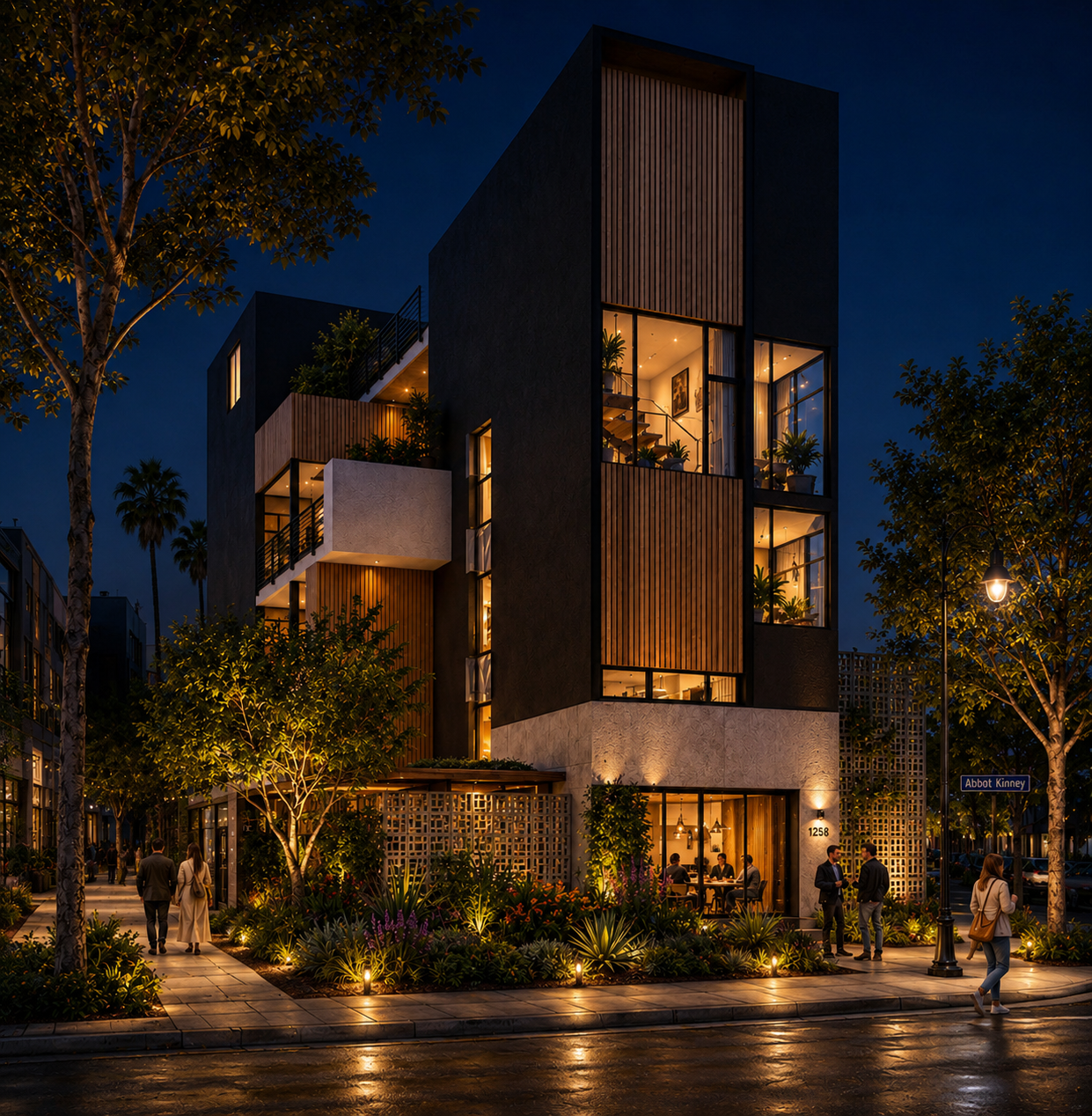
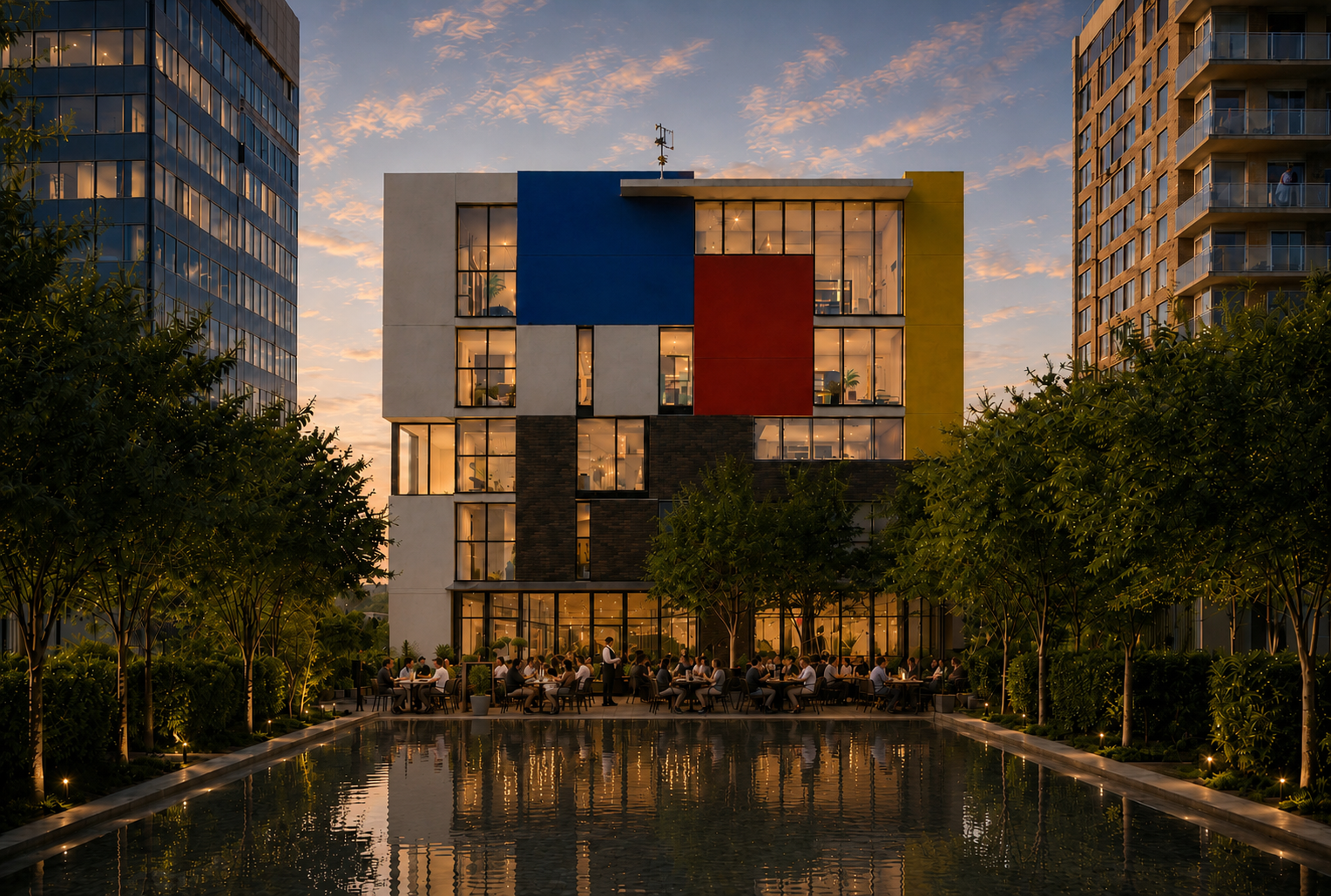
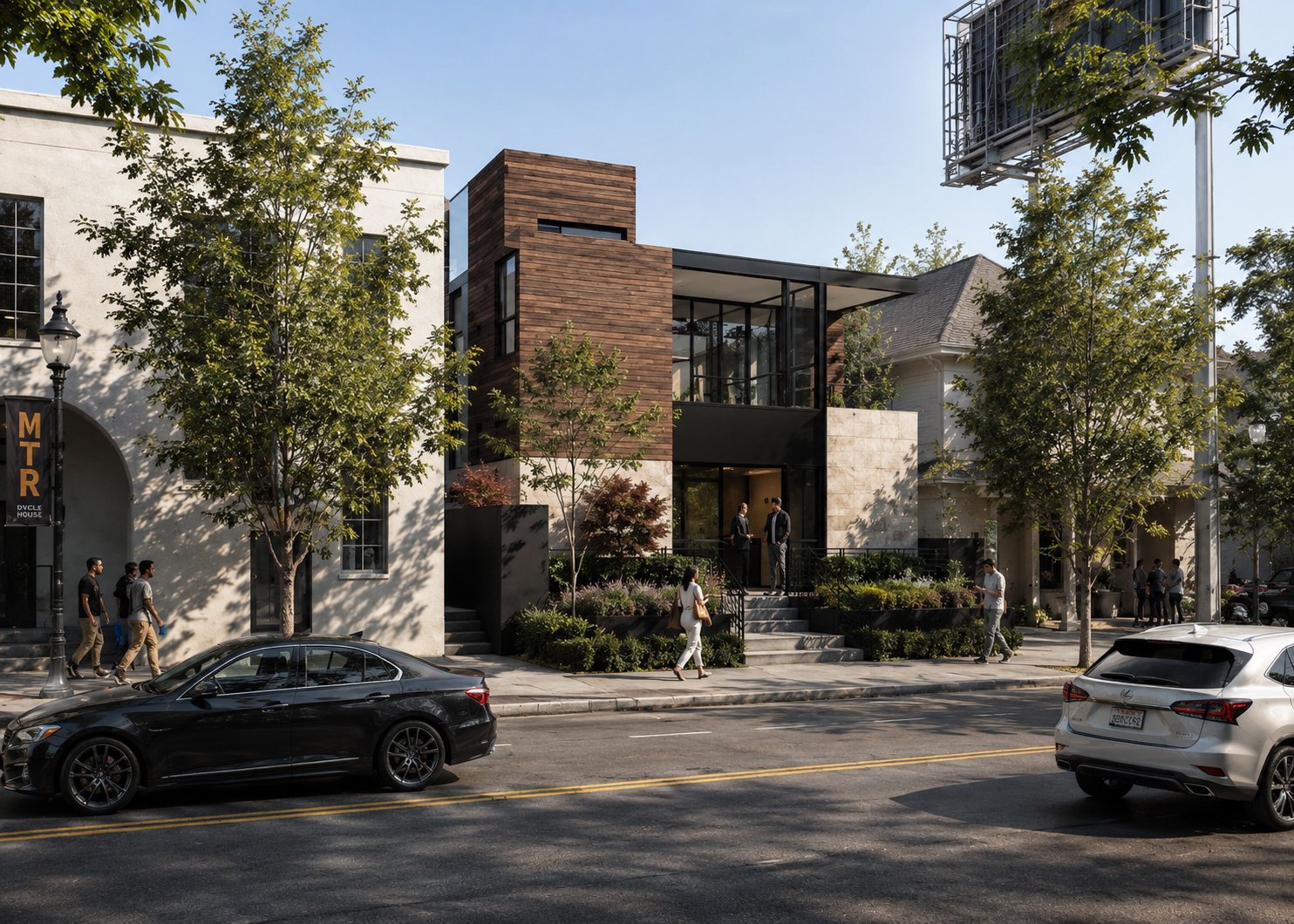
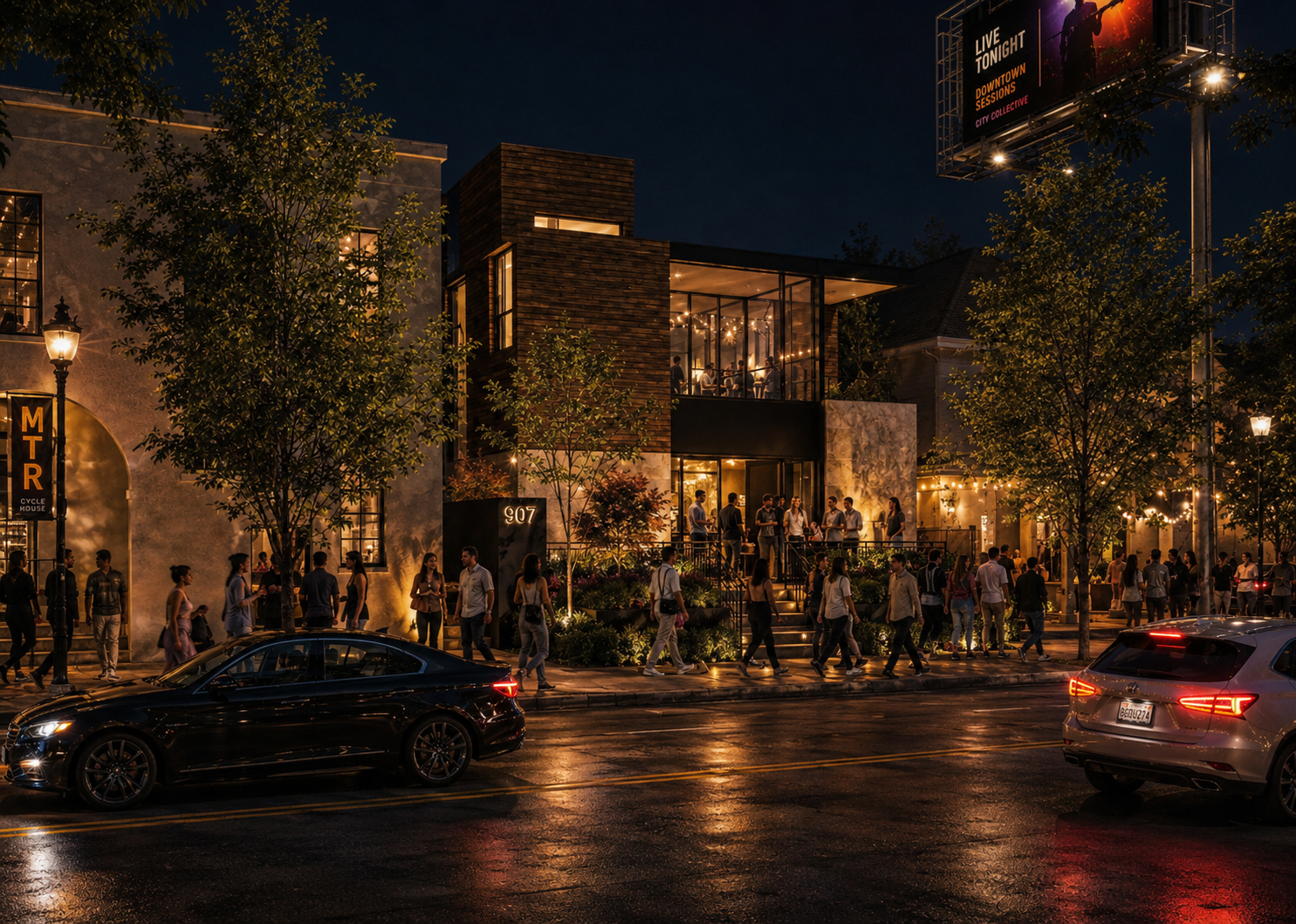
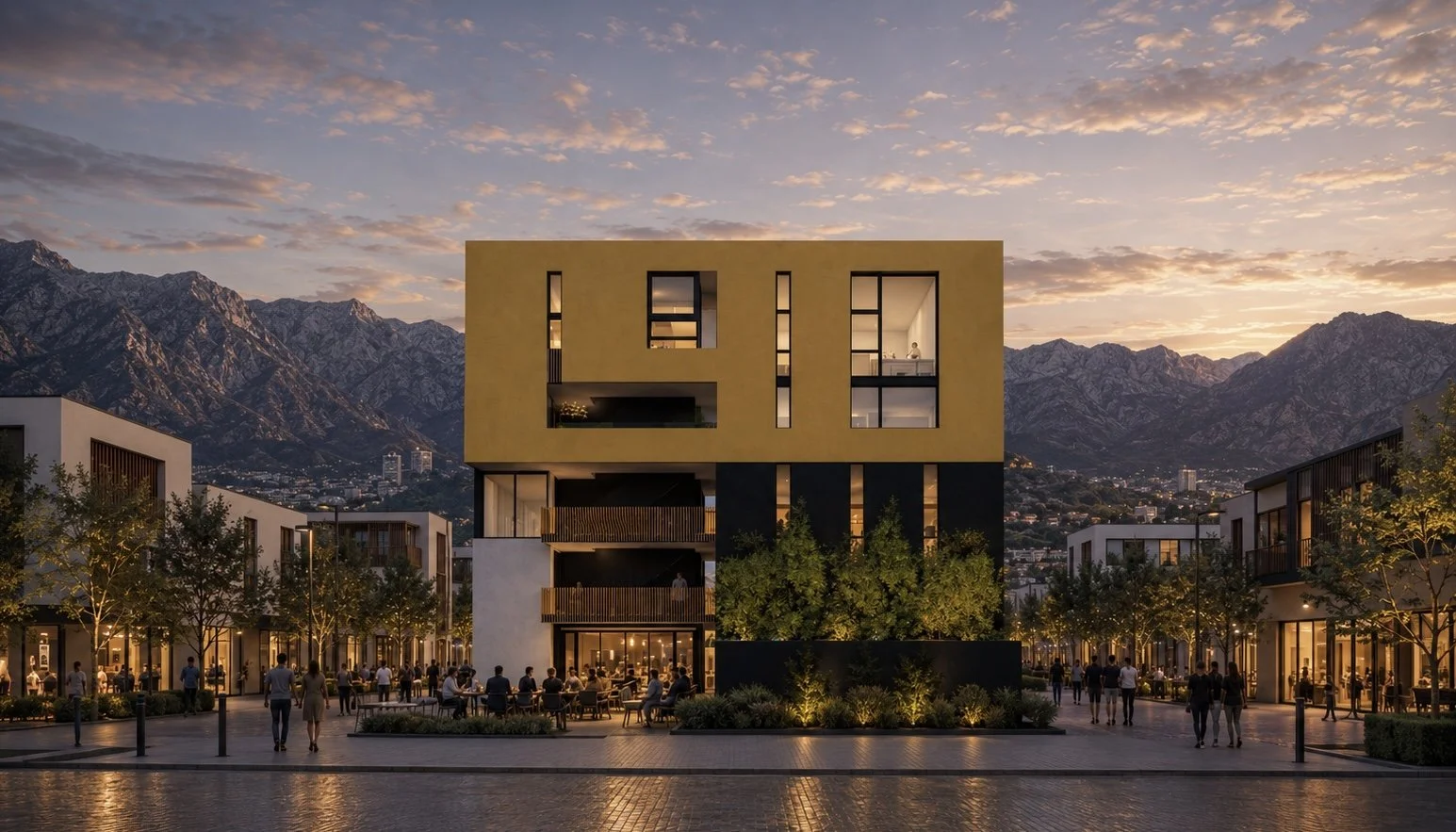
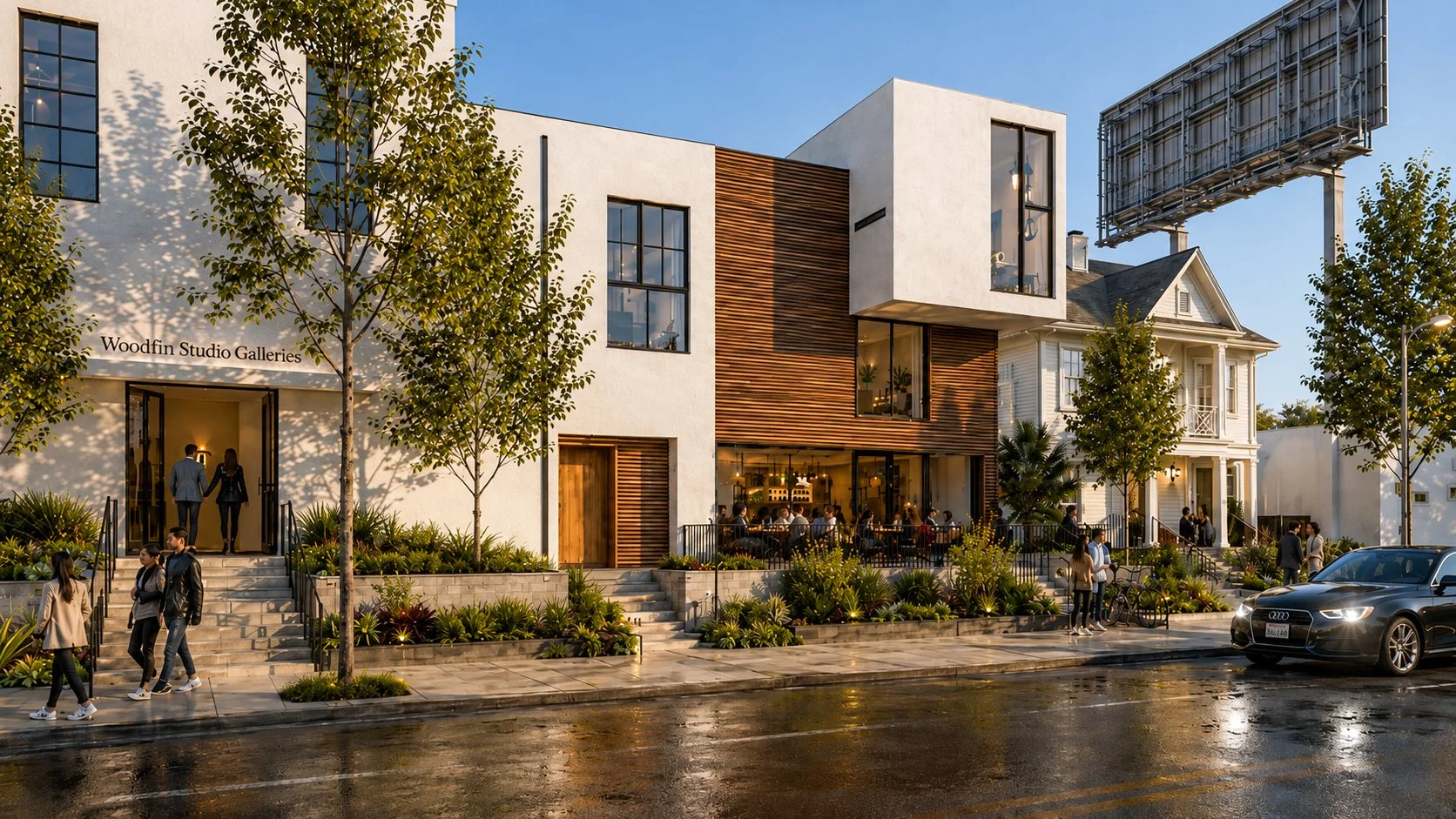
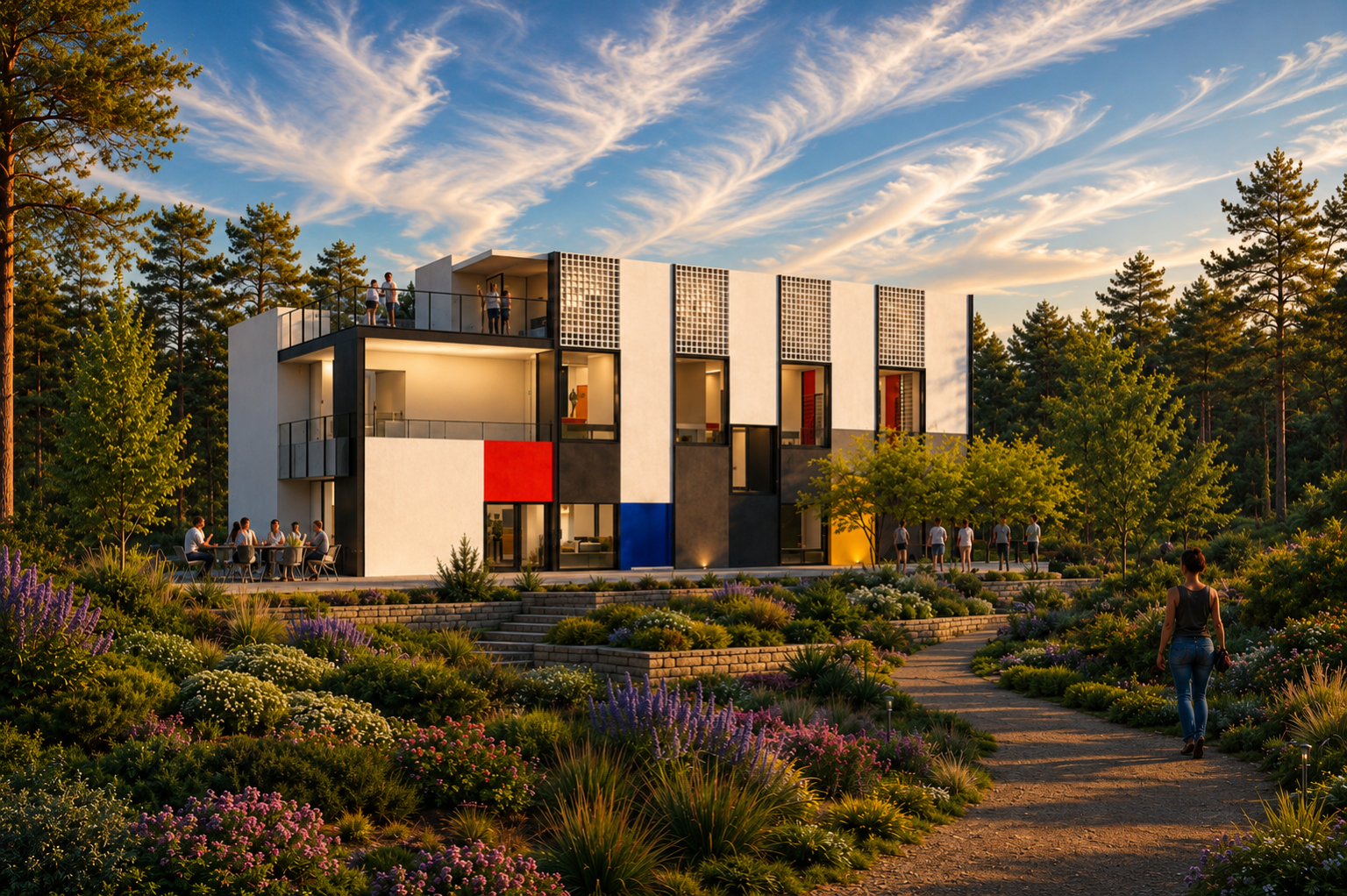
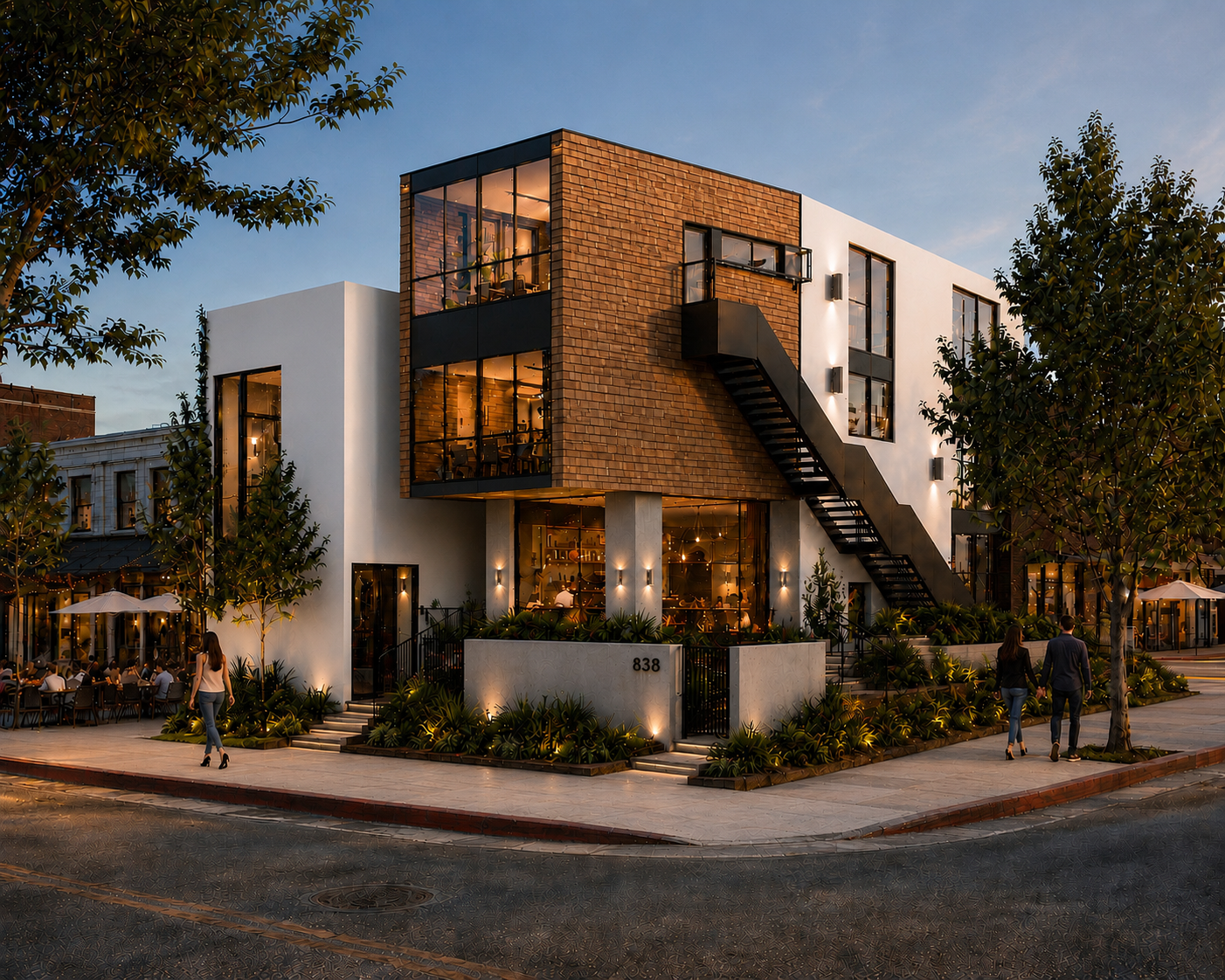
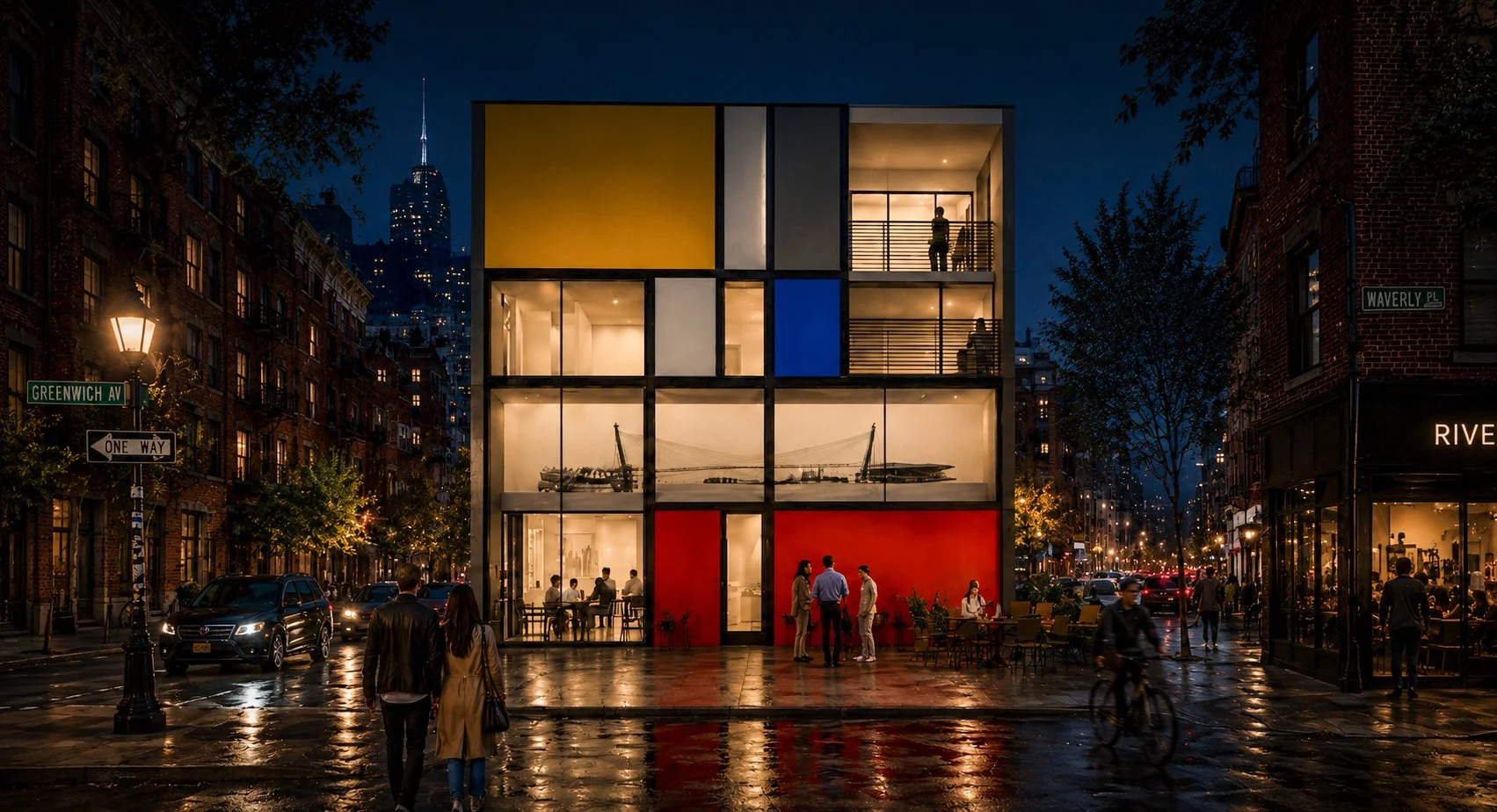
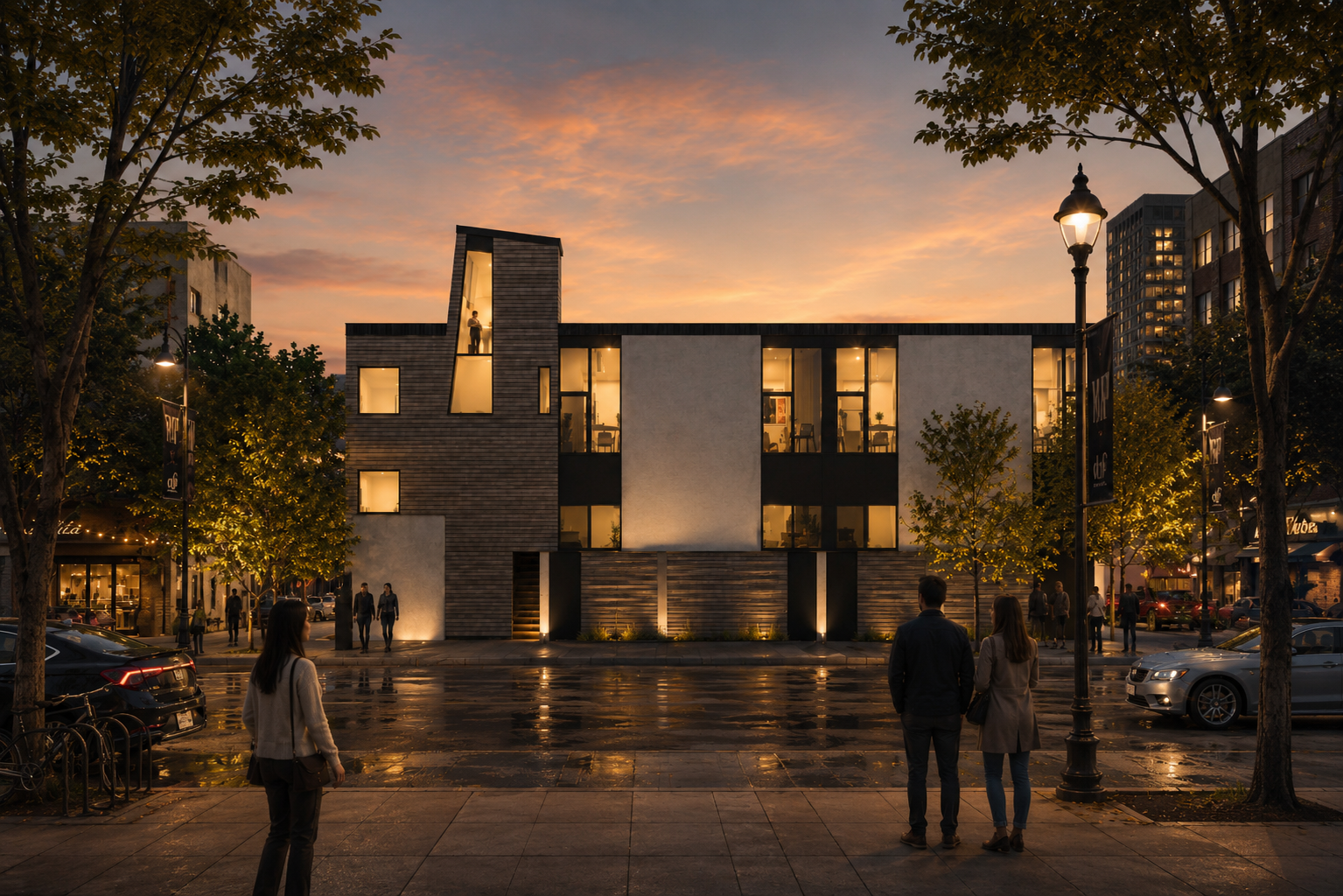
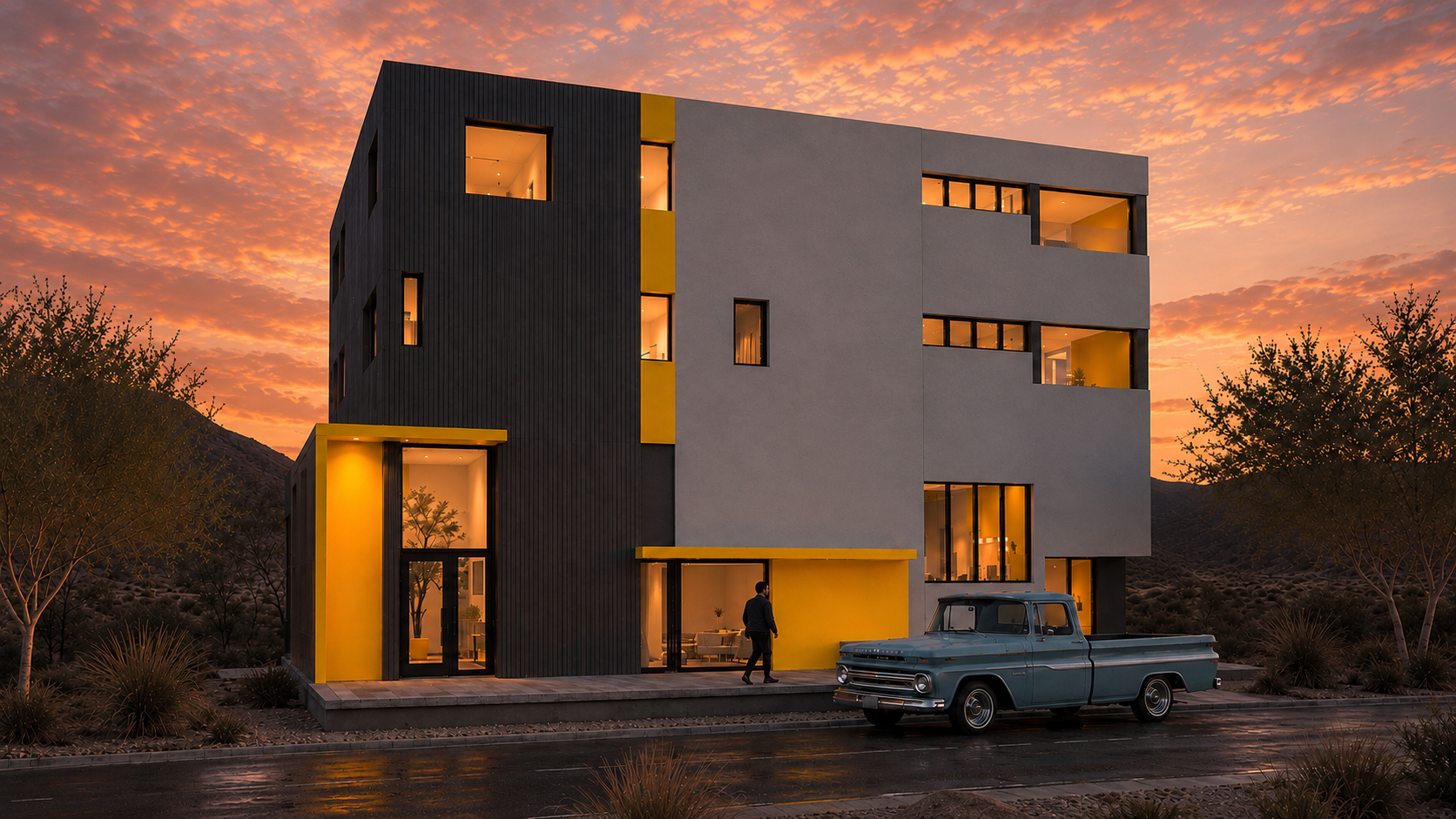
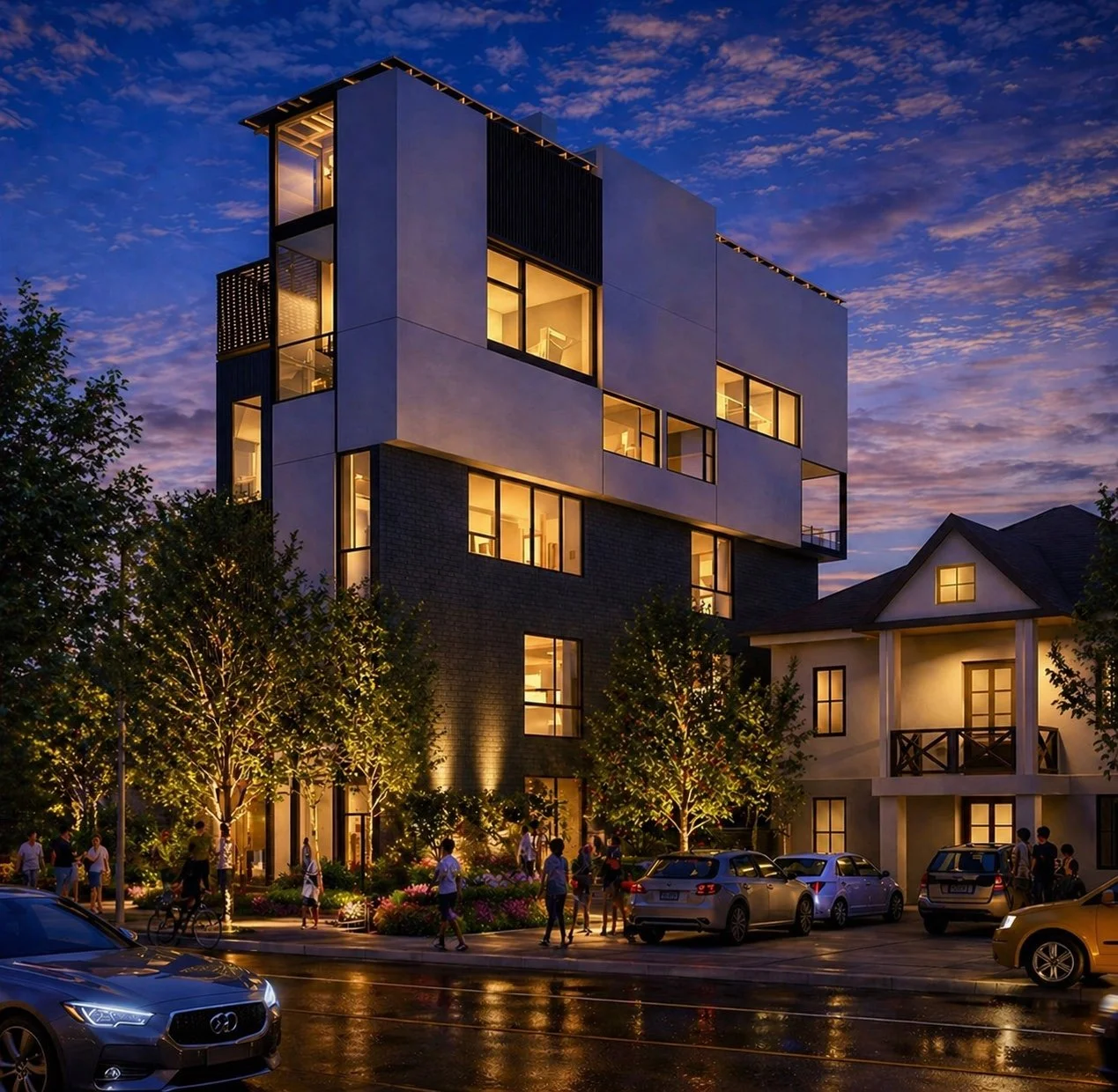
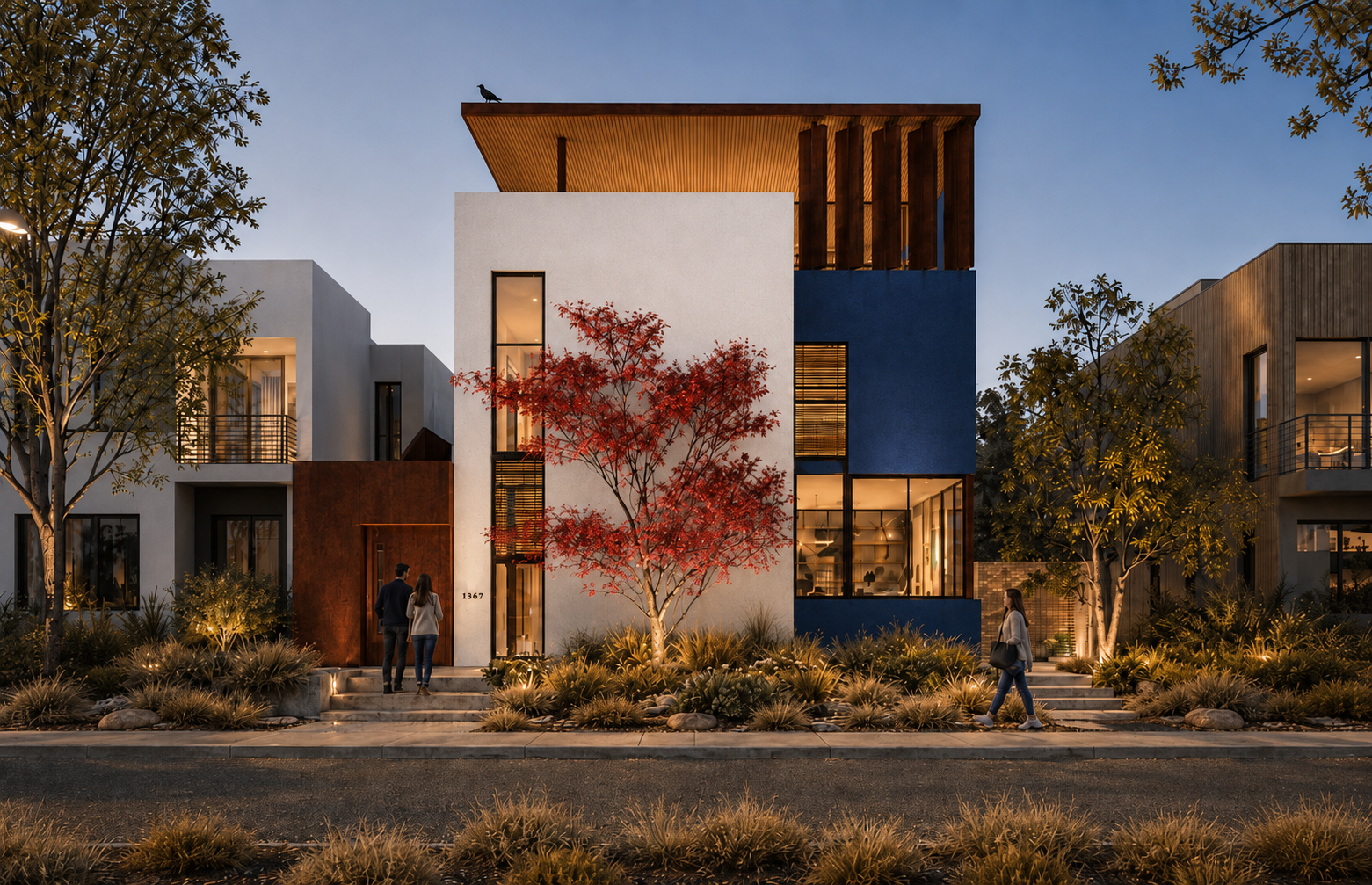
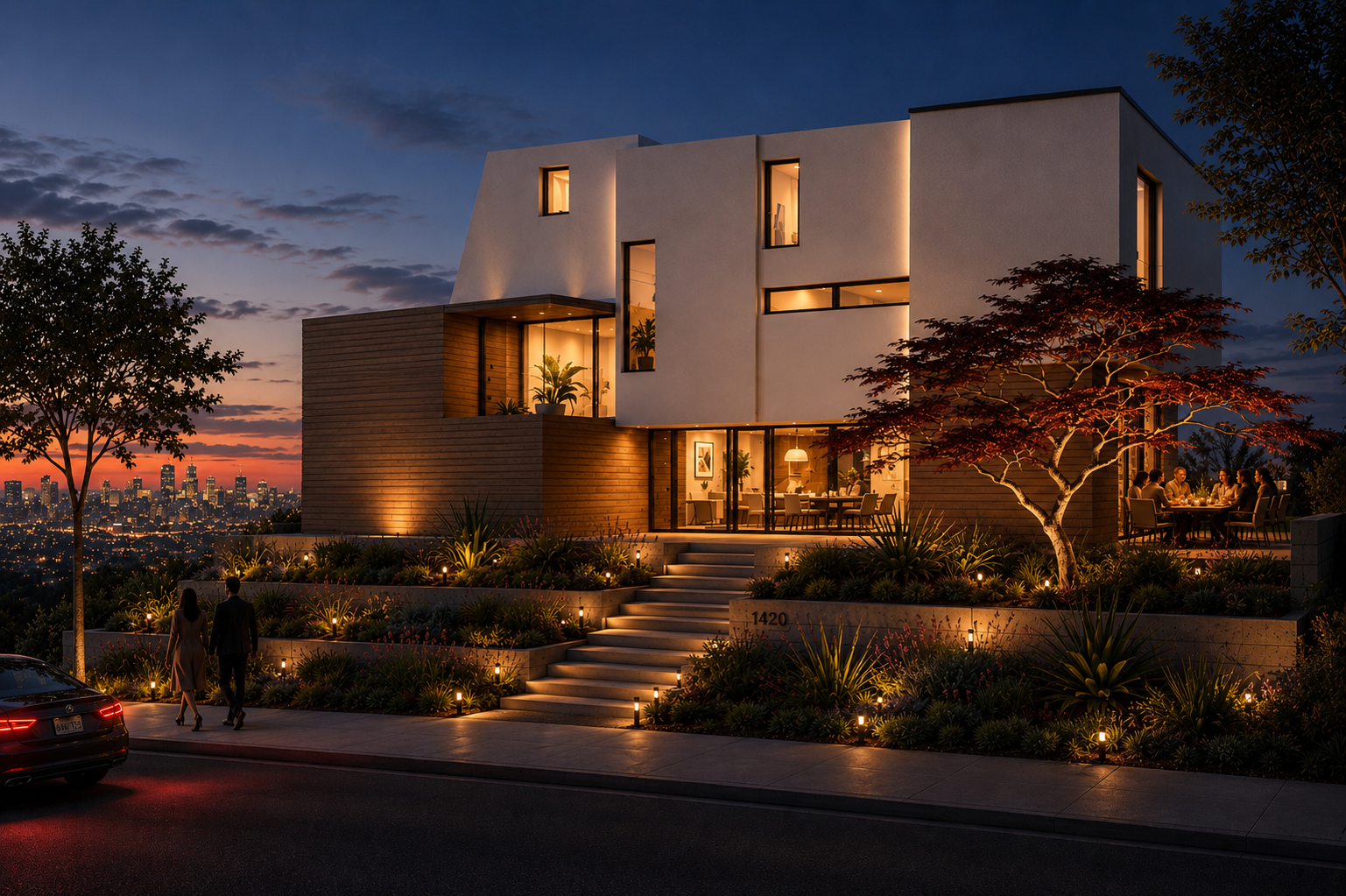
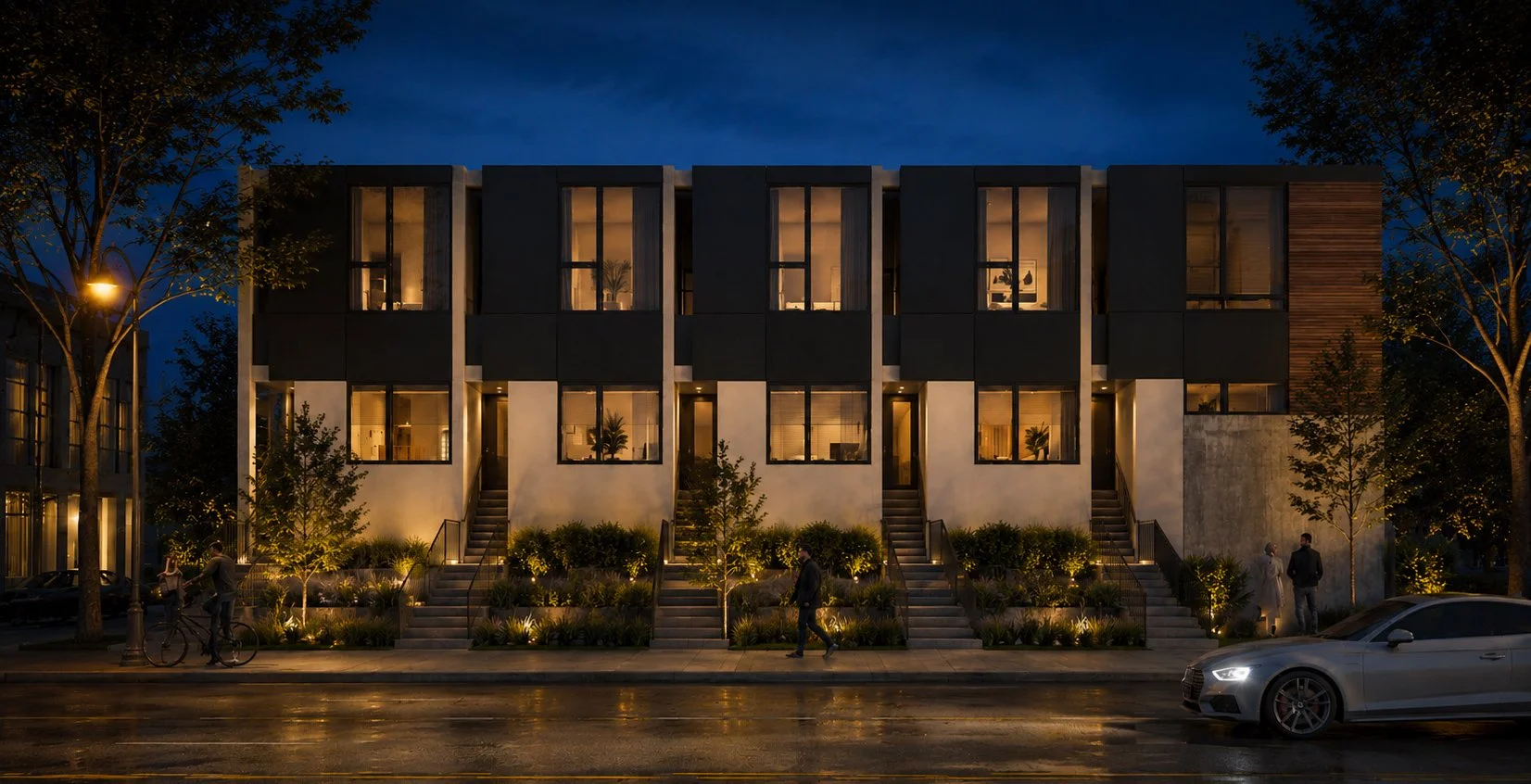
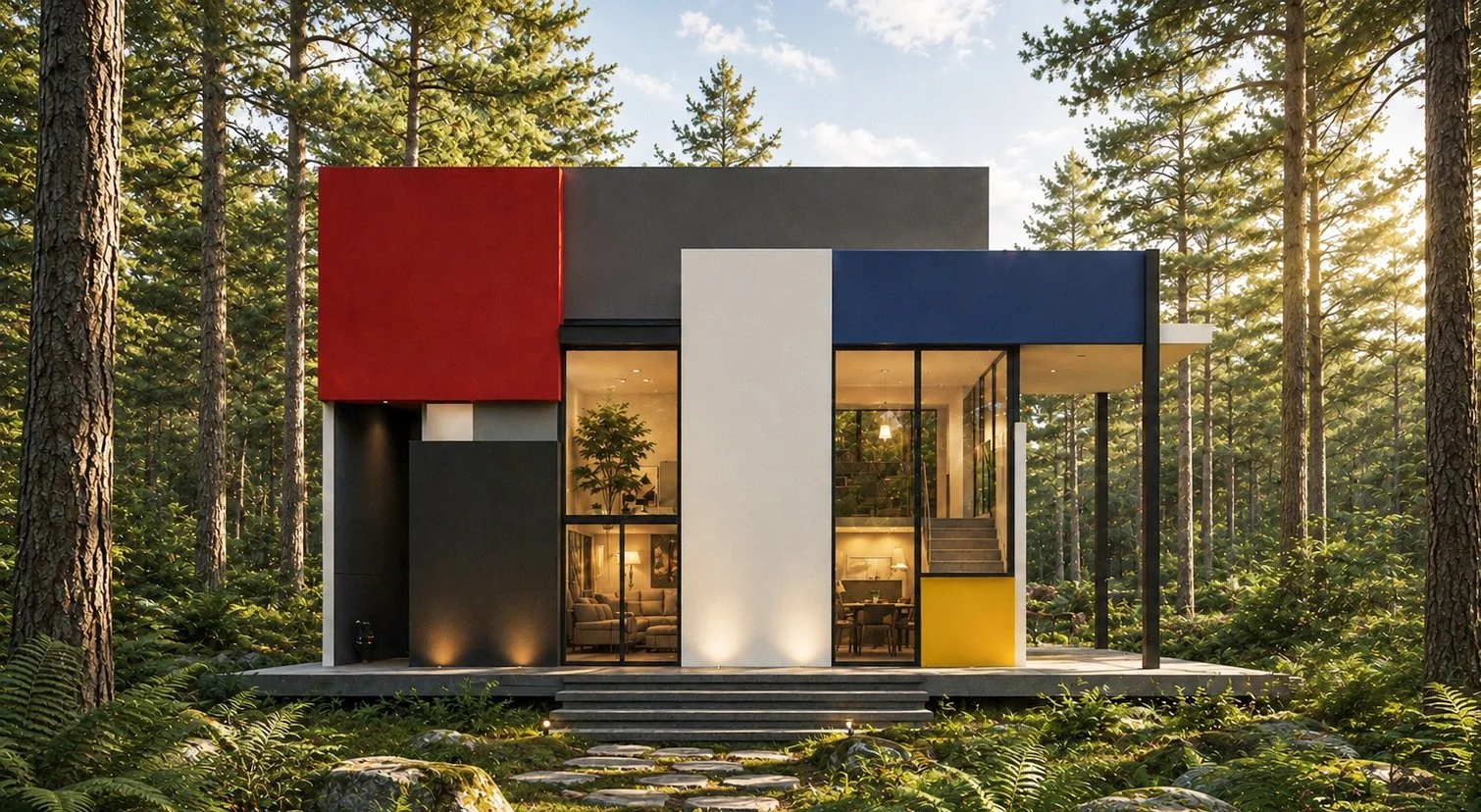
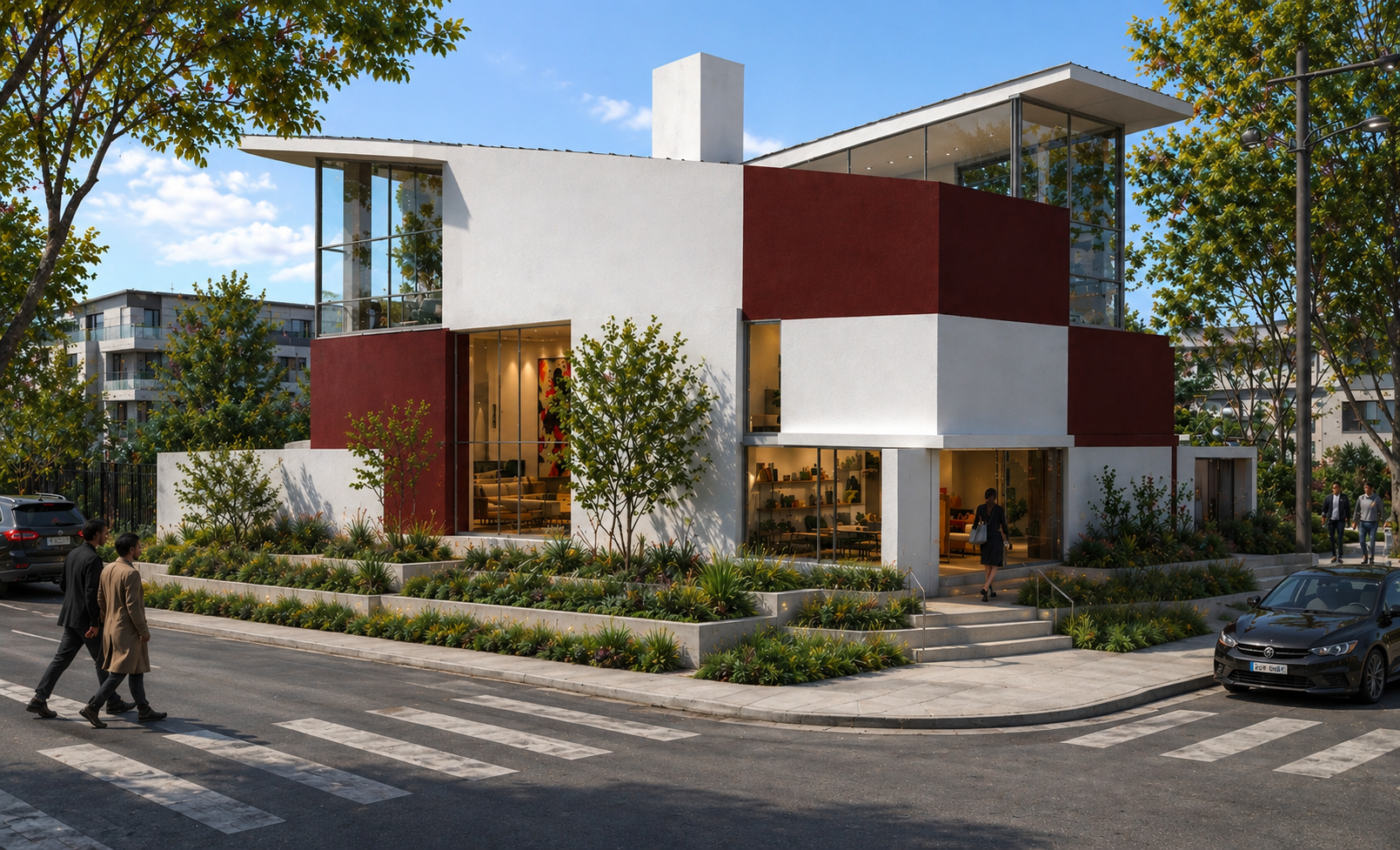
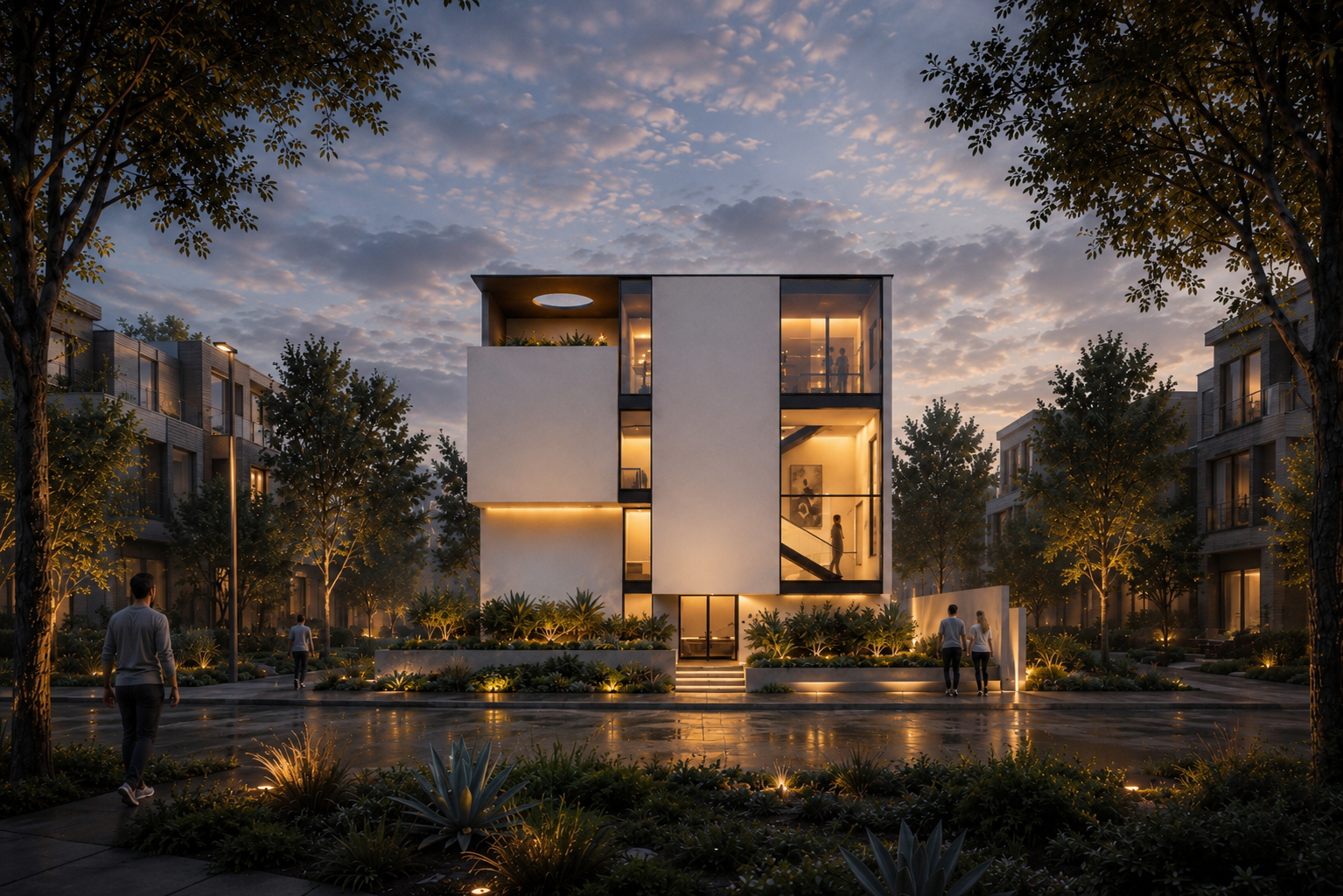
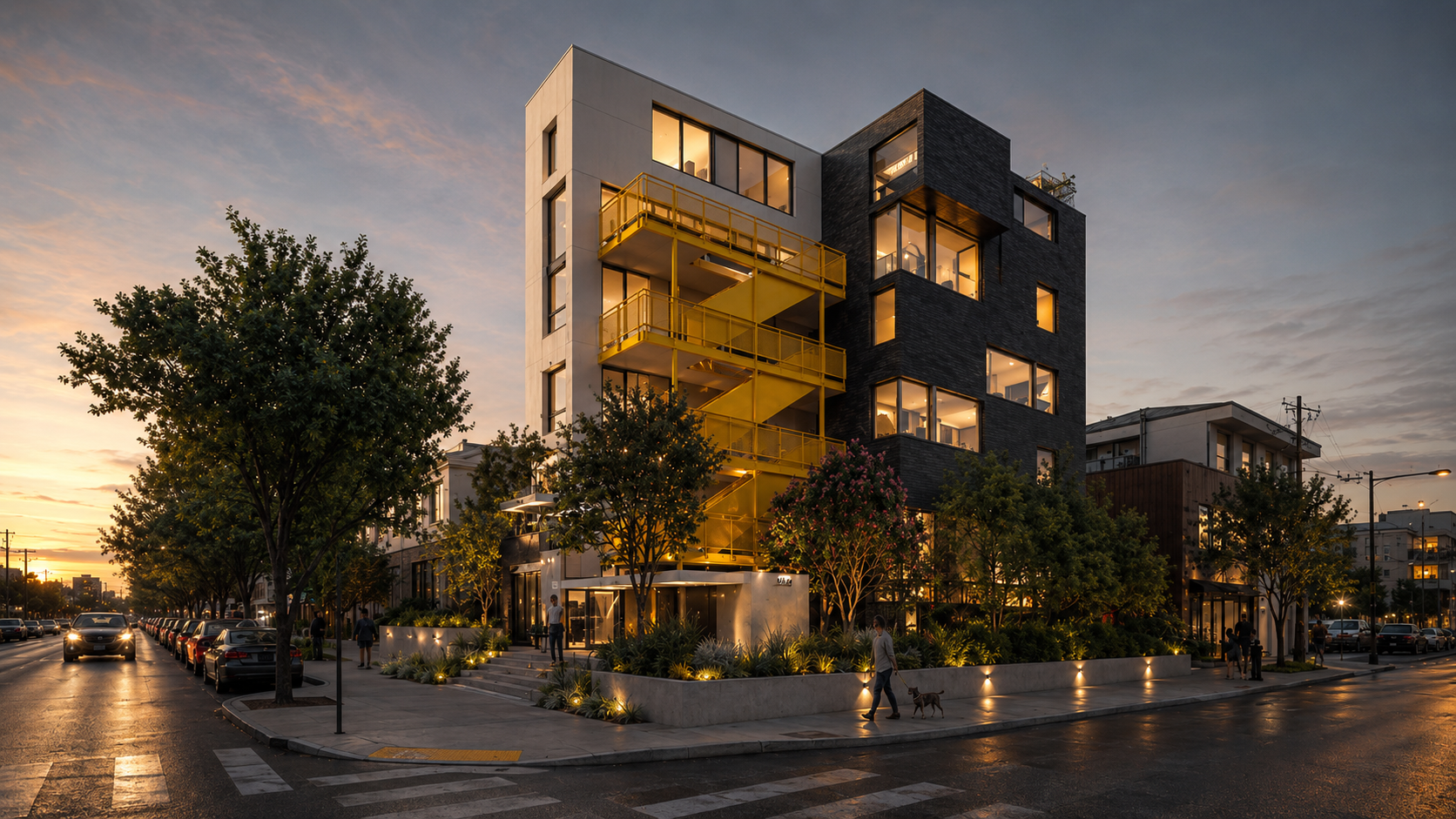
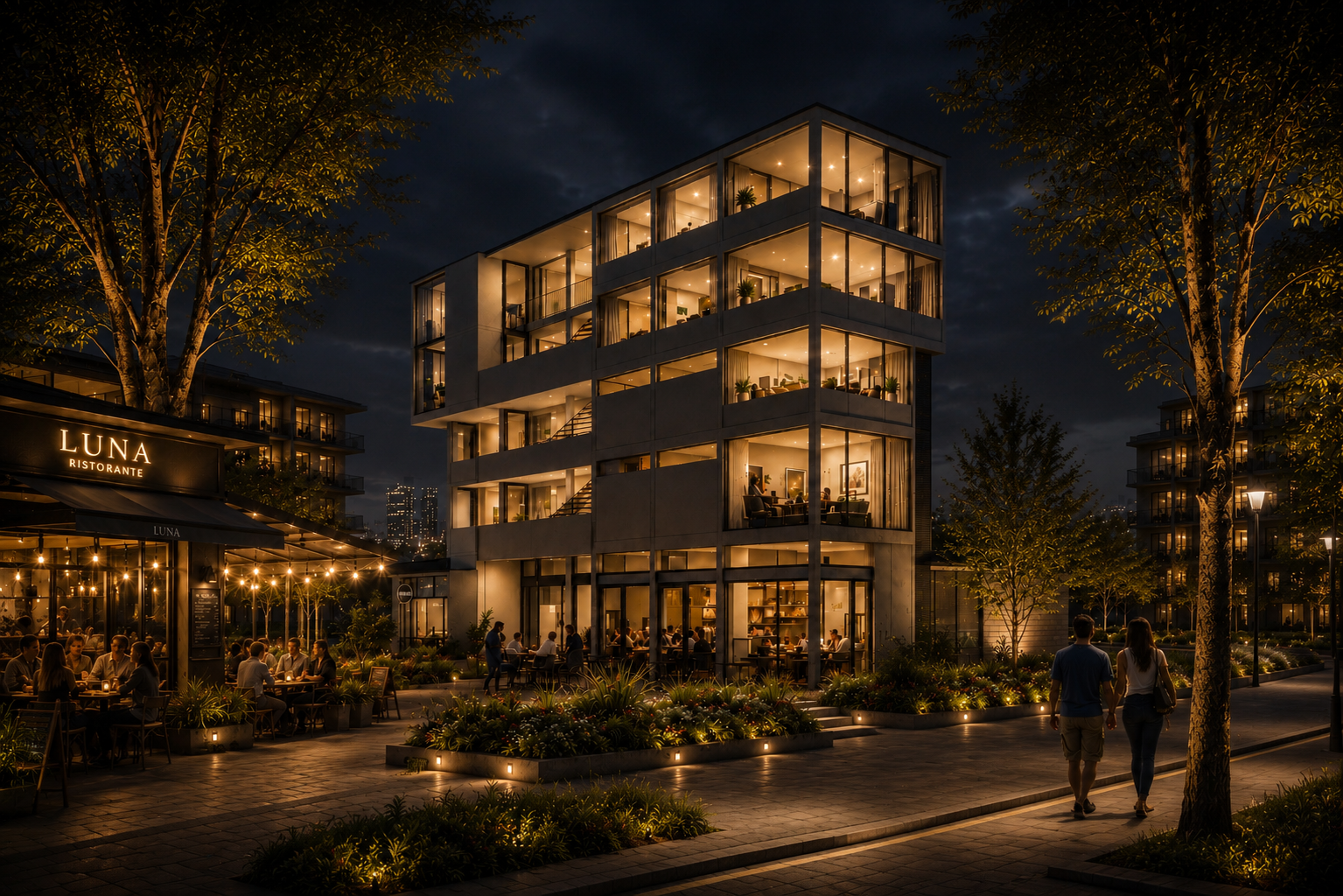
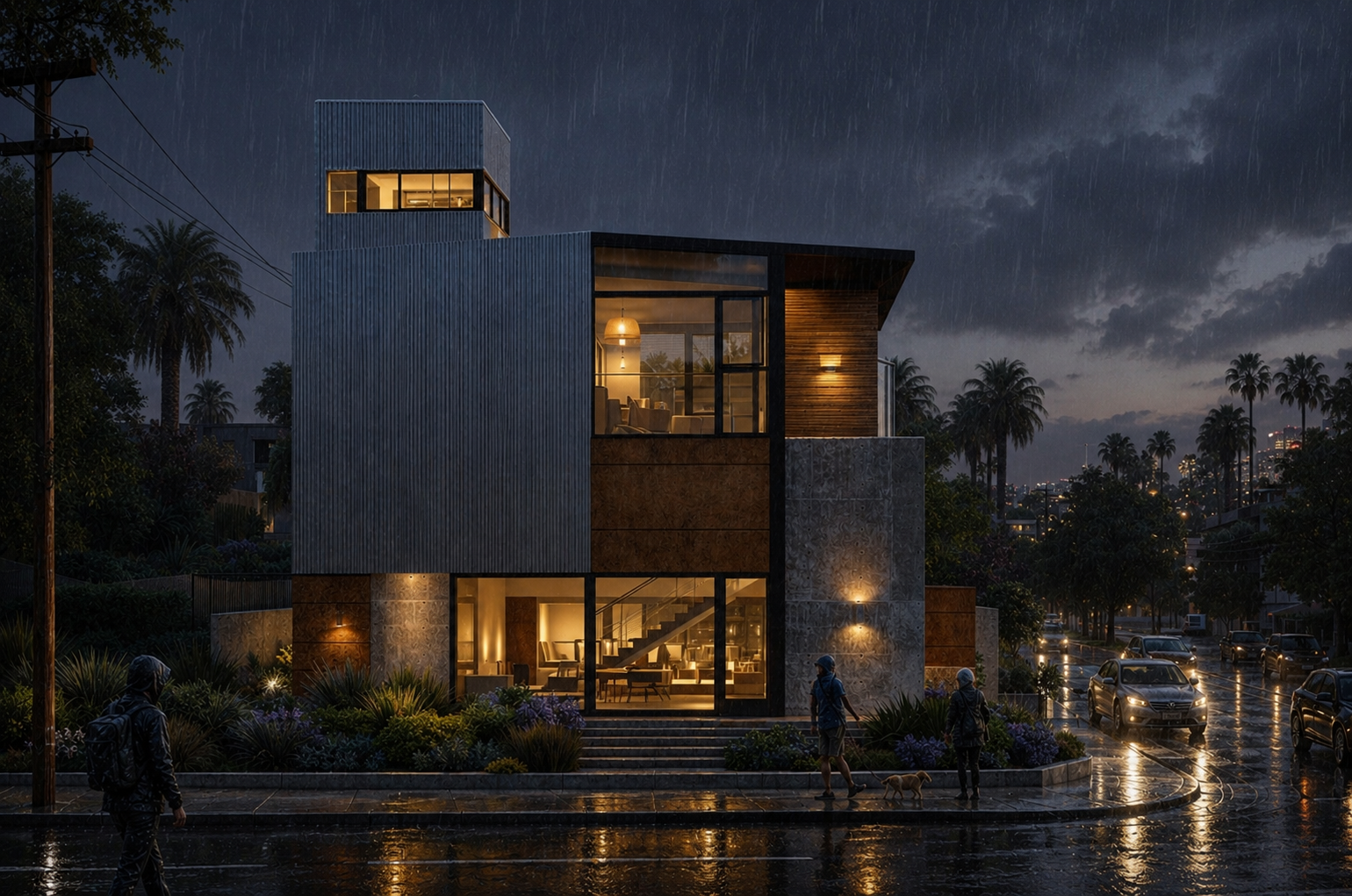
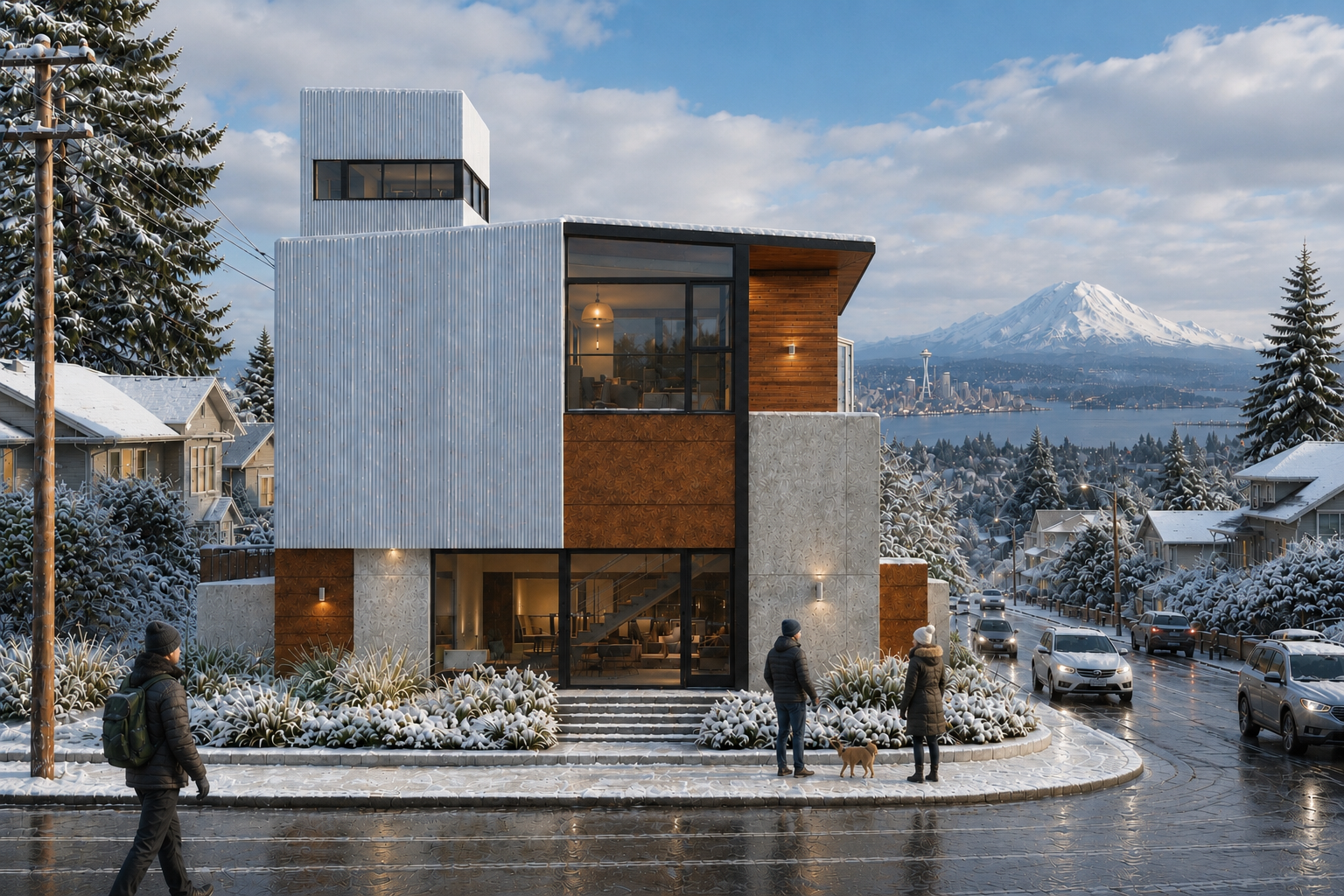
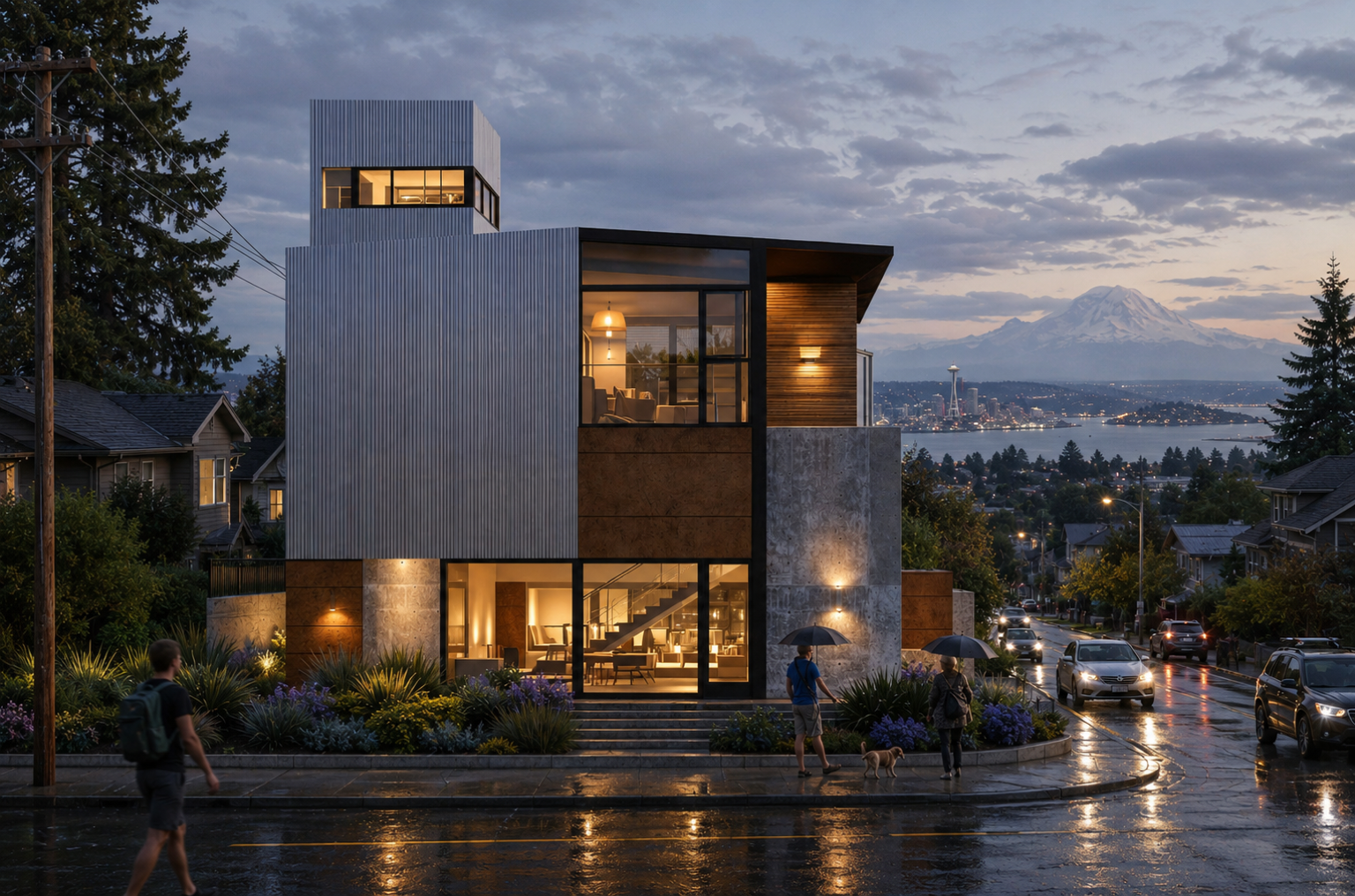
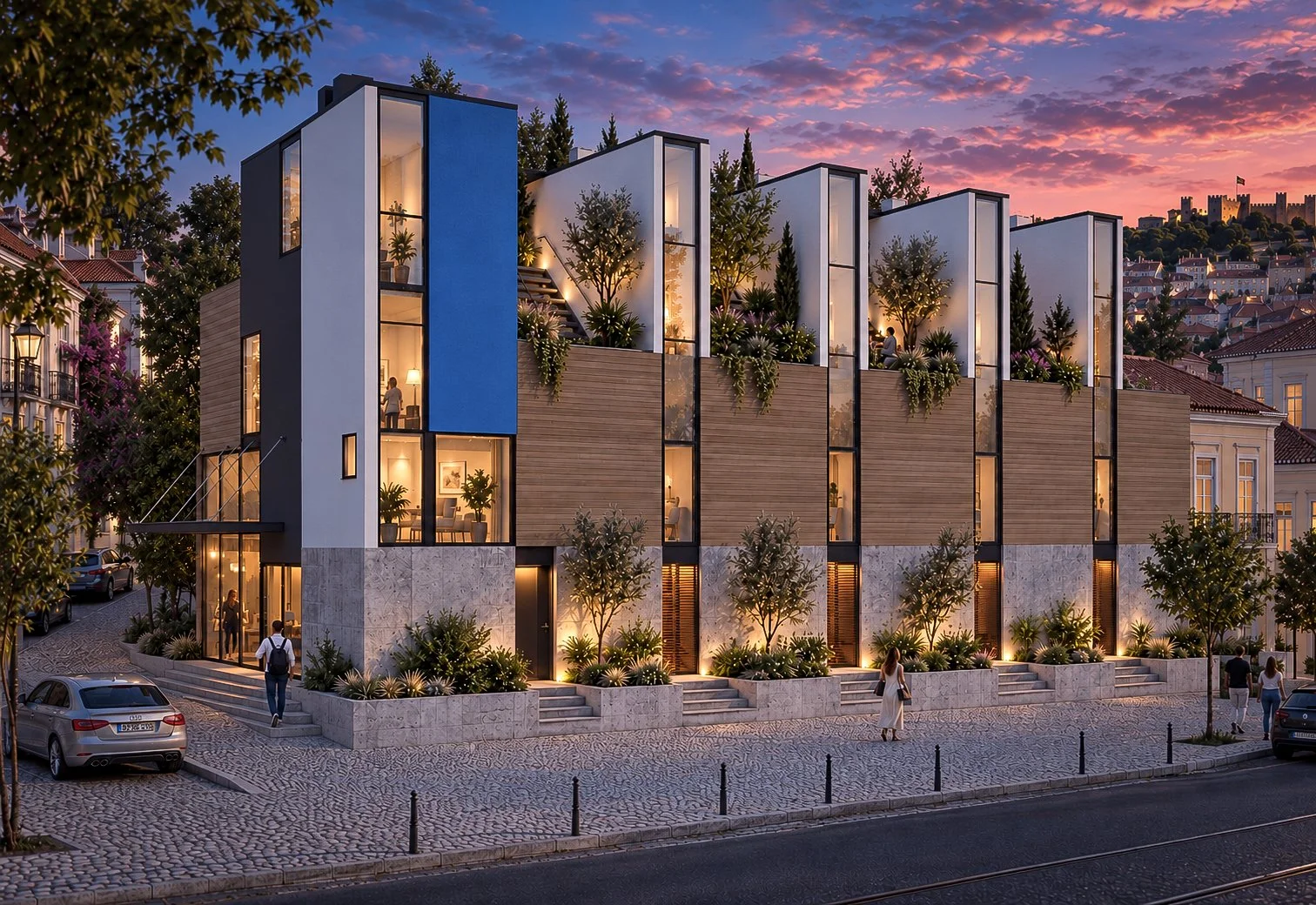
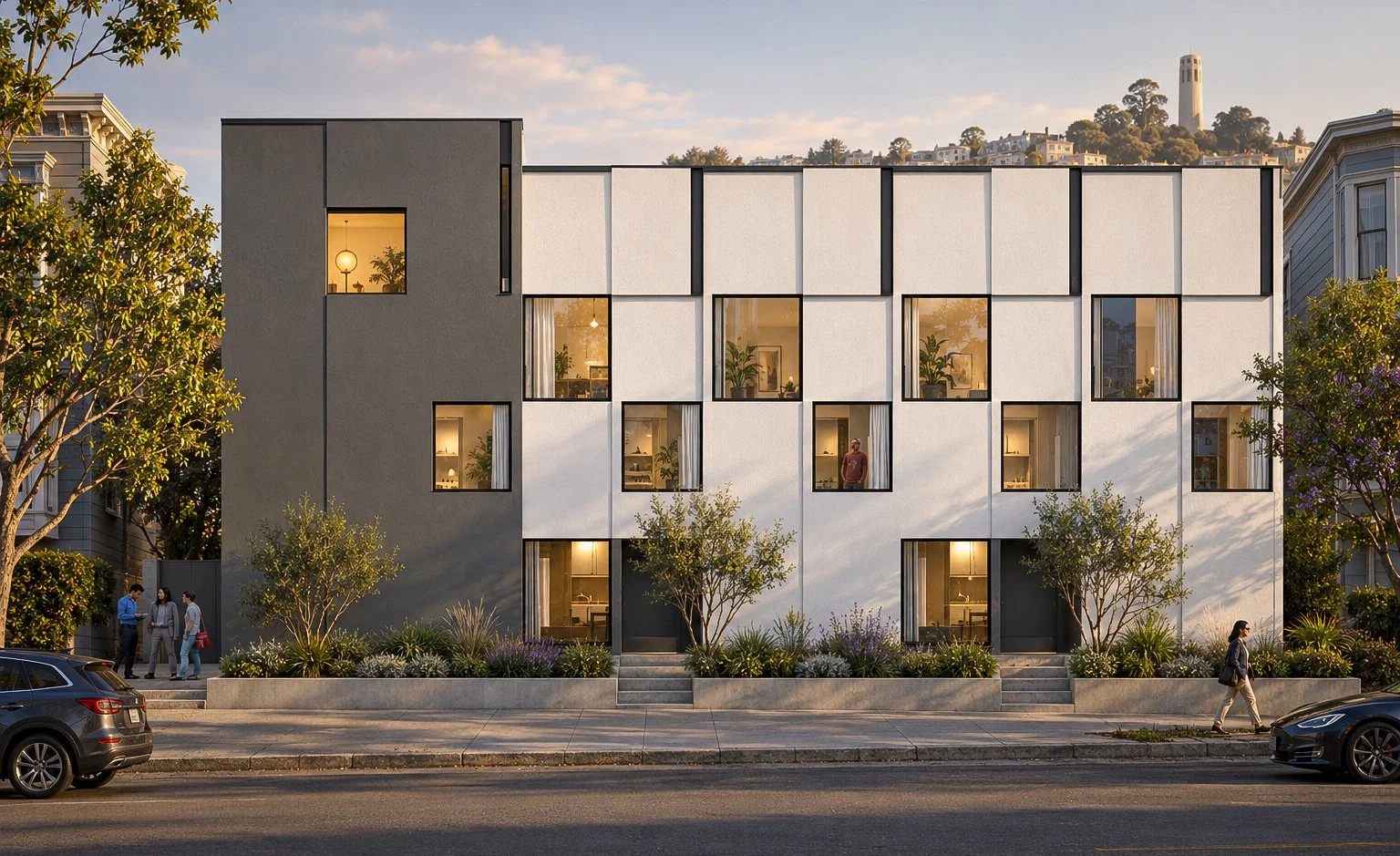
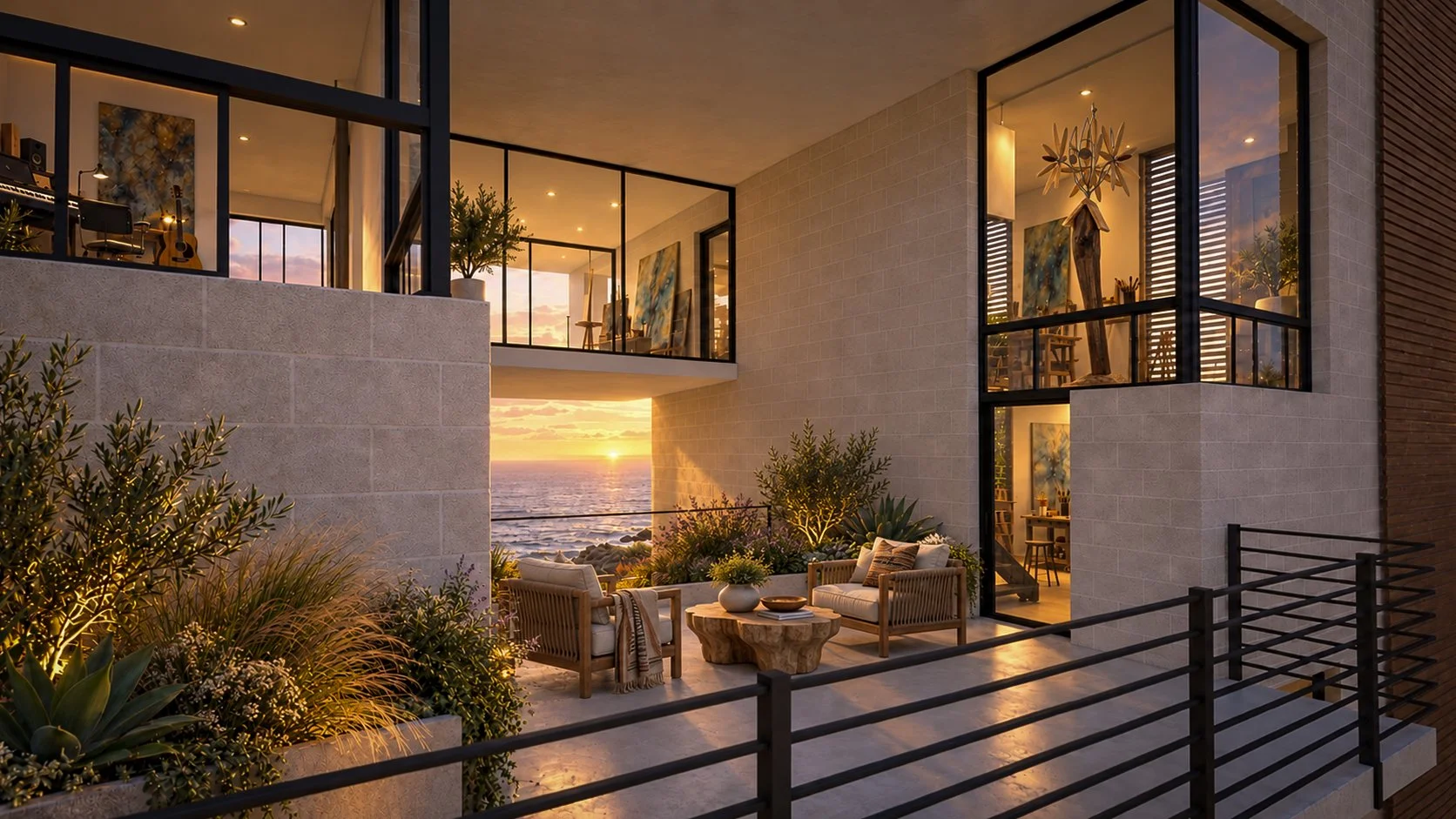
These images are the record of an idea. They represent a series of fully resolved conceptual designs for an apartment building on a 50 × 70’ site in San Diego. Each image is based on a working plan and responds to the zoning and planning requirements established by the City of San Diego for a specific site. With recent advancements in digital rendering, I was able to render numerous contextual variations for each design.
Every work of architecture is built twice: first as an idea, then as a place. For most people, it is experienced only once—through an image. As spatial computing and immersive digital technologies evolve, the line between representation and experience will continue to blur. These images explore the importance of context and the degree to which it shapes our perception of architecture.